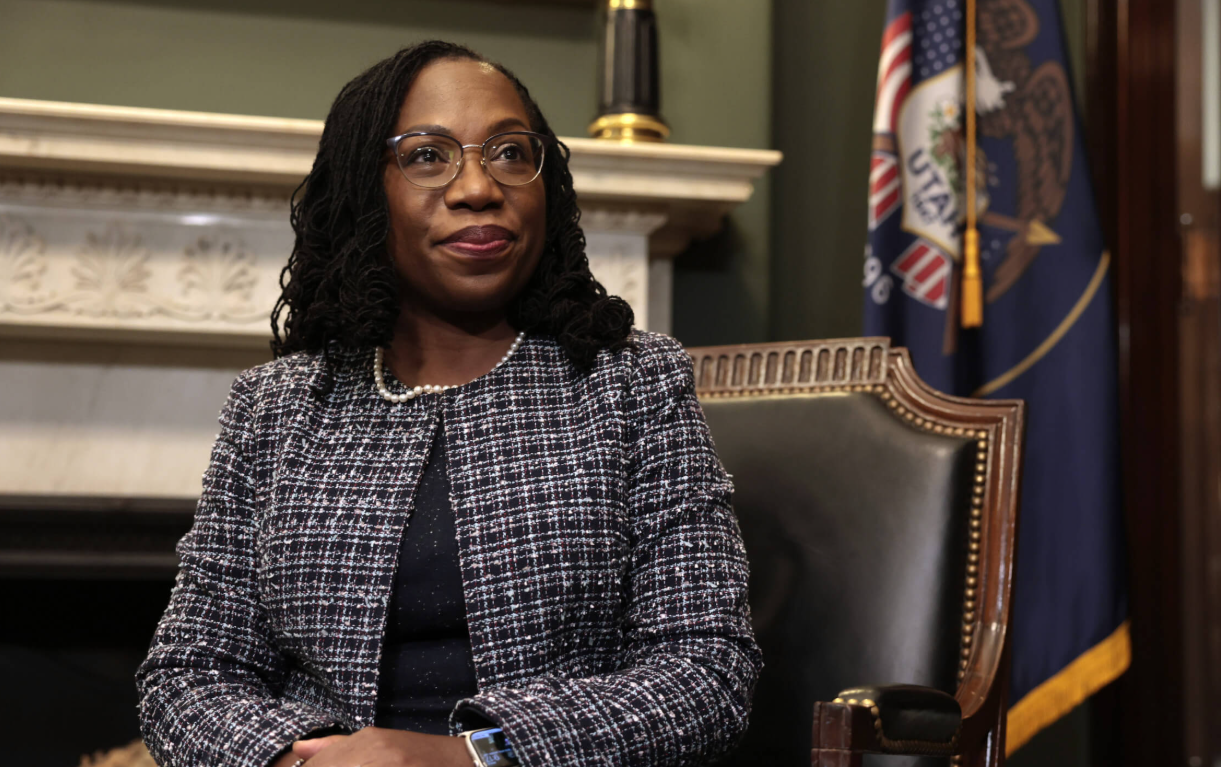
Justice Ketanji Brown Jackson delivered a pointed critique of the Supreme Court’s increasing reliance on its emergency docket, arguing that recent rulings allowing key policies from President Donald Trump to take effect before full legal review could harm both the institution and the country.
Speaking during a public discussion with conservative Justice Brett M. Kavanaugh at a federal courthouse in Washington, D.C., Jackson said the court’s growing willingness to intervene in cases through emergency orders is “a real, unfortunate problem.”
“I think it is not serving our court or our country well at this point,” Jackson told an audience of lawyers and judges attending the annual lecture, which offered a rare public exchange between justices from opposite ideological wings of the court.
The comments come as the Supreme Court has issued several emergency rulings that temporarily allowed major Trump administration policies to remain in place while legal challenges continue. Those decisions have included allowing a ban on transgender service members, permitting the firing of certain independent agency heads, and clearing the way for sweeping changes to the Education Department.
Kavanaugh pushed back on the notion that the court has treated the Trump administration differently from other presidents. He argued that the justices have granted similar relief to policies under President Joe Biden, pointing to decisions that allowed access to the abortion drug mifepristone and upheld military vaccine mandates.
“This is not a new phenomenon in the Trump administration,” Kavanaugh said.
Jackson disagreed, arguing that many of the Biden-related emergency rulings simply preserved the legal status quo, whereas the Trump administration’s cases often involve entirely new policies taking effect before courts fully assess their legality.
“What is happening now is the administration is making new policy, but then insisting that the new policy take effect immediately before a challenge about its lawfulness is determined,” she said.
Jackson suggested the administration has been encouraged to bring more emergency appeals because “the Supreme Court has shown a willingness to grant these emergency motions.”
Emergency docket cases differ from those on the court’s regular calendar because they typically lack oral arguments and involve shorter briefs. The justices also often issue orders without detailed explanations, sometimes before lower courts have completed their review.
Trump’s administration has compiled a strong record in such cases since the start of his second term, a trend that has drawn criticism from Democrats and the court’s three liberal justices.
Kavanaugh argued the rise in emergency litigation reflects a broader shift in governance. With legislation often stalled in Congress, he said, presidents increasingly rely on executive orders that quickly face legal challenges.
“There’s a more aggressive executive branch over the years because it’s difficult to get legislation through Congress,” Kavanaugh said.
Jackson also said her frequent dissents serve a broader purpose beyond the court itself.
“When I am writing a dissent, I am speaking to the American people probably more so than anybody,” she said, adding that she hopes future audiences may ultimately see the issues as she does.