
Following the viral videos showing Philadelphia high school students struggling to read basic words and solve simple math problems, an experienced educator, Keisean Raines, is offering an informed perspective.
While many online commentators have focused blame on students and parents, Raines says the real issue runs much deeper.
“This is not a child failure. This is a systems failure,” Raines said in a recent video responding to the controversy.
The discussion erupted after videos posted by a student at Philadelphia’s Prep Charter High School amassed more than 20 million views across social media platforms.
The clips appeared to show some students having difficulty reading simple sentences, prompting widespread concern and debate about the state of education in America.
Former teachers and education advocates have since pointed to larger structural issues, including students reading below grade level and concerns that some schools have discouraged educators from failing struggling students.
For Raines, known online as “The Calm Coach,” the conversation should not center on ridicule.
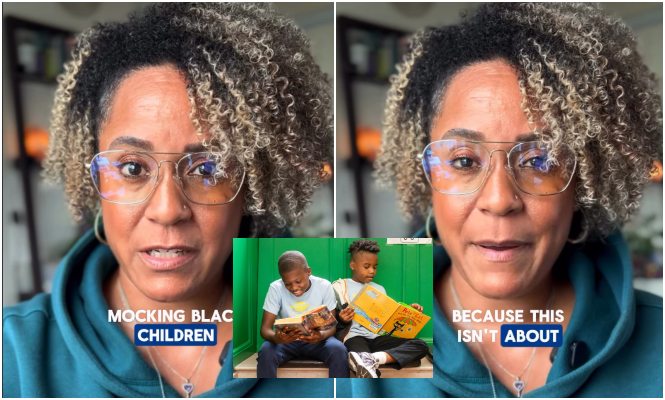
“This isn’t about mocking Black children,” he said. “This is about recognizing that we’re in the middle of a very real literacy crisis, especially in underfunded Black and working-class communities.”
Raines argued that literacy challenges cannot be separated from generations of educational inequity, school funding disparities, and changes in how reading has been taught in classrooms.
According to Raines, many school systems moved away from traditional phonics instruction in favor of methods often described as balanced literacy, whole-language learning, or cueing systems, which encourage students to use context clues and visual cues rather than sounding out words.
“A lot of literacy experts now argue that this approach failed many children, especially students who needed stronger foundational reading instruction,” he said.
He noted that reading is not a skill most children naturally acquire without explicit teaching and practice.
“Children with tutors, highly educated parents, private schools, and enrichment programs often get support outside the classroom,” Raines explained. “But children in underfunded communities must rely entirely on the public school system for literacy instruction. So when the system fails, the consequences compound.”
The educator also placed the issue within a broader historical context, noting that literacy has long been tied to freedom and opportunity for Black Americans.
“There was a time in America where a Black person could be beaten or literally killed for learning to read,” he said. “Why? Because literacy creates independence and economic opportunity.”
Raines explained that newly freed Black communities often made education a top priority after emancipation, understanding the transformative power of reading and learning.
“One of the first things free Black communities built after enslavement ended were schools,” he said. “Because our ancestors understood, if you control literacy, you control opportunity.”
His comments echo concerns raised by education advocates who argue that literacy affects nearly every aspect of life, including employment opportunities, income, health outcomes, civic participation, and long-term economic mobility.
Rather than assigning blame, Raines called for collective action from parents, educators, and communities.
“We stop treating literacy like somebody else’s responsibility,” he said. “Read with children at home. Ask the schools what methods they’re currently using. Stop blaming children who are struggling in a system they did not create.”
He ended his message with a reminder of what is ultimately at stake.
“Literacy is not just about school,” Raines said. “It’s about freedom. And if we want the next generation to thrive, they have to be able to read fluently, critically, and confidently.”
As the viral Philadelphia videos continue to fuel discussion nationwide, Raines’ remarks have added another perspective to the debate, one that shifts attention away from individual shortcomings and toward the systems that shape educational outcomes.
“The Black literacy crisis is not about intelligence,” he wrote in a social media post accompanying the video. “It’s about access. This isn’t a crisis of ability. It’s a crisis of investment.”

