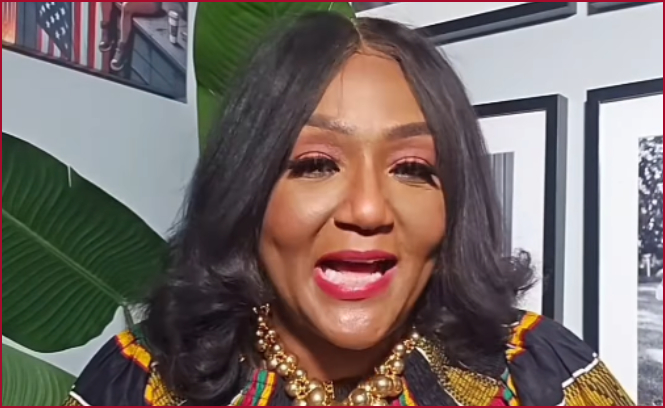
A sharply worded social media post by activist and commentator Nikki Free suggests the tensions that led to the death of Renee Nicole Good started long ago while America slept.
Good, a Minneapolis mother and poet, was fatally shot during an operation involving U.S. Immigration and Customs Enforcement (ICE).
In a post shared on Instagram, Free argued that Good’s death should not be viewed as an isolated incident, but rather as part of a broader historical and systemic pattern in the United States.
“ICE killing Renee Good isn’t a glitch. It’s policy meeting permission,” she wrote, asserting that state violence is rooted in the country’s past, including slavery, genocide, and war.

Accompanying the post was a video in which Free criticized what she described as public “pearl clutching” over recent events, insisting that America had not suddenly changed course.
Instead, she argued, violence by the state is a recurring feature that becomes more visible during periods of political tension. In the video, she traced a historical line from slavery and Jim Crow to redlining, mass incarceration, police violence and immigration raids, saying marginalized communities have long warned about such outcomes.
The remarks come amid heightened scrutiny of ICE operations in the United States following the Minneapolis incident.
The U.S. Department of Homeland Security has said the shooting occurred in self-defense after officers were allegedly threatened during an enforcement action, a claim that has been contested by activists and community groups calling for independent investigations and greater accountability.
Free’s post places particular emphasis on the idea that President Donald Trump did not create cruelty within the system but amplified it by, in her words, “removing the mask.”
She challenged viewers not to ask how the United States arrived at this point, but why long-standing warnings from Black and Indigenous communities were ignored.
The post has resonated strongly across social media, drawing both support and criticism. Supporters have praised Free for articulating frustrations felt by communities affected by aggressive immigration enforcement, while critics have accused her of making inflammatory generalizations about the U.S. state and its institutions.
“Your brain is just as, if not more beautiful as your smile! Your truth is breathtaking! You have won my heart, as well as my undivided attention 😍👏🏿👏🏿👏🏿👏🏿👏🏿👏🏿👏🏿👏🏿👏🏿👏🏿” one commenter said.
Another noted:
“Thank you for your message. Her murder is unconscionable. No excuses. But it always takes the tragedy of someone YT dying for people to pay attention. What about the missing abducted people some of whom are citizens? I’m truly exhausted.”
For observers outside the United States, the debate highlights enduring questions about race, power and state authority in global democracies.
It also underscores how digital platforms are increasingly shaping international conversations around human rights, policing and migration policy.
Free’s now-viral reaction to Renee Good’s death, and the many others illustrate how individual cases can quickly become symbols in wider struggles over history, justice and the future direction of state power.