
While the U.S. unemployment rate remains relatively low at 4.4%, new data and firsthand accounts highlight a stark and troubling disparity: unemployment among Black women has surged to 7.3%, raising alarms among economists, lawmakers, and civil rights advocates who warn the trend signals deeper structural problems in the American economy.
The growing gap comes amid federal job cuts, the rollback of diversity, equity, and inclusion (DEI) programs, and rapid workplace automation, all of which disproportionately affect Black women, who are overrepresented in public-sector employment and roles now being eliminated.
“I loved my job. I loved it, and it made a difference,” said Adrienne Burch, a former U.S. Department of Agriculture employee whose position was eliminated last year.
Forced into early retirement at age 54, Burch told CBS Mornings she now earns one-third of her former salary after more than 35 job applications and no interviews.
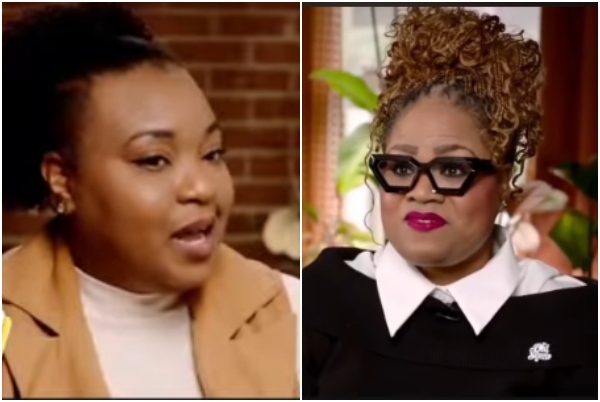
Her story reflects a broader pattern. According to economists cited in the CBS News report, more than 300,000 Black women lost or left their jobs in the first half of 2025 alone, driven by cuts to government agencies, shrinking corporate diversity initiatives, and the expanding use of artificial intelligence in hiring and operations.
Another job seeker, Adrienne Malone, said she applied for more than 150 positions after losing her corporate facilities management job.
“You look at it and you go, ‘I’m not enough. What’s wrong with me?’” she said.
An Early Warning for the Entire Economy
Harvard economist Anna Gifty Opoku-Agyeman described Black women as the economy’s “canary in the coal mine,” explaining that when Black women are pushed out of the workforce, broader economic instability often follows.
“If Black women are not able to be full economic participants,” she said, “our economy shrinks.” She likened the situation to a body losing function in seven percent of its system — an imbalance that inevitably affects the whole.
The consequences extend beyond individual households. Roughly 69% of Black mothers are primary breadwinners, meaning job losses translate quickly into housing insecurity, reduced consumer spending, and long-term economic stress in entire communities.
Policy Decisions Under Scrutiny
Economists and advocates point to the dismantling of DEI initiatives and cuts to federal employment, sectors where Black women are represented at nearly twice the rate seen in the private sector. These policy shifts, critics argue, have accelerated economic inequality under the guise of efficiency and cost-cutting.
Last month, Rep. Ayanna Pressley and more than 20 members of Congress formally urged the Department of Labor to take immediate action to address what they described as an “urgent unemployment crisis” among Black women.
Community organizations are also stepping in. The Gathering Spot, a professional networking group, has launched hiring and recruitment events in Los Angeles, Atlanta, and Washington, D.C., to help connect Black women with employers. While some progress has been made, leaders say the scale of the problem far exceeds available resources.
“We’re not looking for handouts,” said CEO Brian Wilson. “We’re saying: somebody do something.”
Economic Justice as a Civil Rights Issue
Advocates increasingly frame the crisis as more than an economic downturn — calling it a civil rights issue unfolding in real time. As federal and corporate employment structures shift, Black women are often the first to lose jobs and the last to be rehired, reinforcing longstanding disparities in wealth, income, and job security.
Economists warn that ignoring these trends risks destabilizing the broader labor market. As one analyst noted, what happens to Black women today often predicts what the wider economy will face tomorrow.

