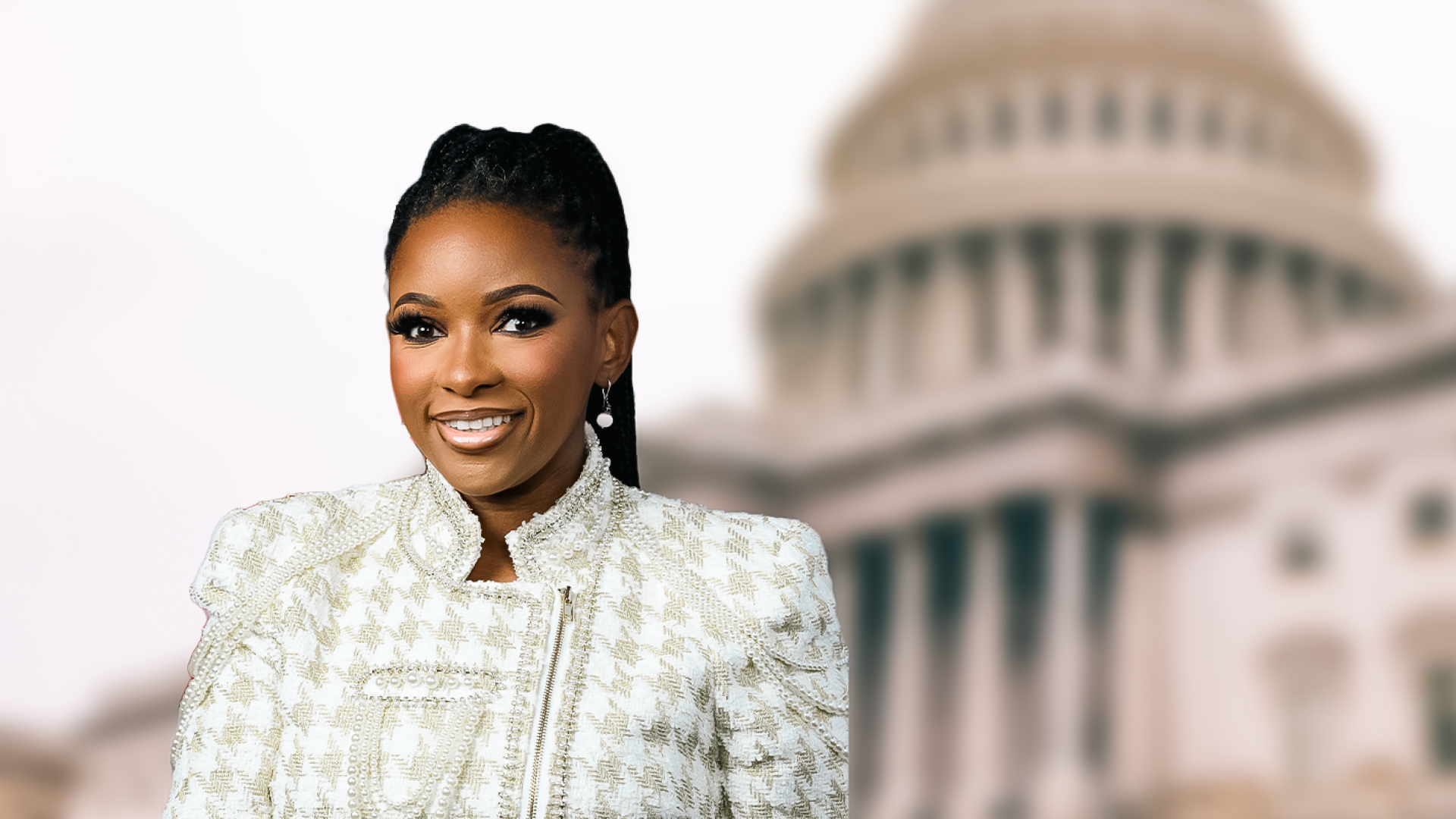
Rep. Jasmine Crockett is turning up the heat on federal law enforcement, demanding full transparency on any connections between President Donald Trump and convicted sex offender Jeffrey Epstein.
In a sharply worded letter sent Wednesday to Attorney General Pamela Bondi and FBI Director Kash Patel, the Texas Democrat accused the Justice Department and the FBI of withholding critical context from the long-awaited Epstein documents and “shielding those involved from accountability.”
The letter comes after the release of new emails that Crockett says show Trump “spent hours alone with a victim or victims of Epstein’s abuse.”
The correspondence has reignited long-standing questions about Trump’s proximity to Epstein’s social orbit — concerns that have been the subject of lawsuits, sworn statements, and multiple allegations dating back decades.

Crockett: “Every delay raises more questions”
“We’re talking about decades of allegations and survivors who’ve waited long enough,” Crockett said in a statement. “You can’t claim to serve justice while keeping the public in the dark. Every delay, every dodge, only raises more questions — so release the files and let the American people see the truth.”
Her frustration echoes a broader public sentiment that has festered since Epstein died in federal custody and intensified with each court battle that keeps portions of the case sealed.
A bipartisan pressure point — at least on paper
The letter was issued the same day the House reached a symbolic threshold: 218 members, representing more than 150 million Americans, have now signed a discharge petition that would force a floor vote compelling DOJ and the FBI to release the Epstein files.
That number is crucial — it is the minimum required to unblock a stalled bill. Rep. Adelita Grijalva’s swearing-in gave Democrats and a slice of Republicans enough signatures to cross the line.
Still, whether the bill will proceed smoothly is far from certain.
A discharge petition forces a vote, not a result, and Republicans have been sharply divided over just how far to go in demanding transparency that could politically damage their own party leader.
Political stakes remain high
For Democrats, Crockett’s push represents a broader attempt to spotlight what they say is a pattern of double standards in how federal authorities handle Trump-related inquiries — particularly those with potential legal, ethical, or national-security implications.
For Republicans, the political calculus is trickier. Some have long demanded full release of Epstein files to expose what they allege is a web of influence involving elites across industries. Others have sought to downplay or redirect the conversation toward Clinton-era associations.
Crockett’s letter, however, zeroes in on one central argument: the public deserves to know exactly why Trump’s name appears in the files, and federal agencies should not be gatekeepers of information involving a sitting president’s past associations.
Survivors still waiting
Lost in the political noise are the survivors whose testimony sparked these investigations in the first place. Advocates have repeatedly said that partial disclosures and redacted documents retraumatize victims and delay closure.
Crockett’s approach — that transparency is a matter of justice, not politics — reflects a truth that often gets obscured in partisan battles: the Epstein case is, at its core, about children and exploitation, not sound bites.