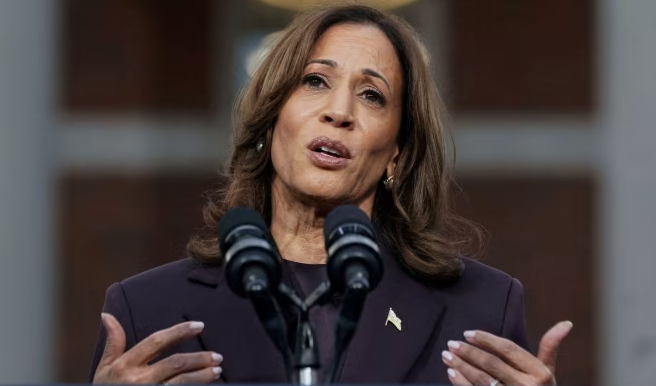
A Republican primary race in Carroll County has become an early test case for Maryland’s new law regulating election-related deepfakes after an artificial intelligence-generated video falsely depicting former Vice President Kamala Harris endorsing a candidate surfaced online.
The controversy began when a supporter of Republican state’s attorney candidate George Psoras posted the AI-generated video on Facebook on Wednesday. The video appeared to show Harris endorsing Psoras’ opponent in the race, Allan Culver, just days after Maryland’s new election deepfake law took effect.
In a news release issued Thursday, Culver condemned the video and questioned whether it violated the recently enacted law, which seeks to address the growing use of deceptive artificial intelligence in political campaigns.
The video was posted by Anthony Birdsong, chairman of the super PAC Small Businesses of Carroll County, which supports Psoras. Birdsong acknowledged posting the video on his personal Facebook page but defended it as political satire.
“It was very obviously AI satire, which is allowed in political campaigns,” Birdsong said.
The incident highlights the challenges lawmakers face as artificial intelligence becomes increasingly sophisticated and accessible. Deepfakes are digitally altered images, audio recordings, or videos created using AI technology to make people appear to say or do things they never actually said or did.
The history of deepfakes dates back to the late 2010s, when advances in machine learning made it possible to generate highly realistic synthetic media. The term “deepfake” emerged in 2017 after users on online forums began sharing AI-manipulated videos. Since then, the technology has evolved rapidly, raising concerns about misinformation, fraud, and election interference. In recent years, lawmakers across the United States have sought to regulate the use of deepfakes in political advertising and campaign communications, particularly as election officials warn that fabricated content could mislead voters.
Maryland’s new law is among the latest efforts to address those concerns. Whether the Carroll County video falls within the law’s restrictions may ultimately depend on how state officials interpret provisions related to satire, disclosure requirements, and voter deception.
As AI-generated political content becomes more common, the dispute underscores the legal and ethical questions that continue to emerge in the digital age.