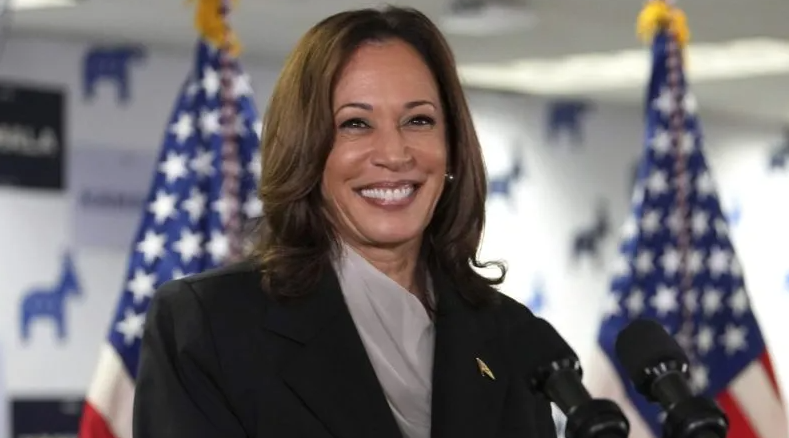
Former U.S. Vice President Kamala Harris has suggested she may make another bid for the White House, telling the BBC in her first UK interview that she would “possibly” be president one day and expressing confidence that a woman will hold the nation’s highest office in the future.
Speaking to Sunday with Laura Kuenssberg, Harris made her strongest indication yet that she is considering a 2028 run after losing to Donald Trump in last year’s election. She dismissed polls that have placed her as an outsider for the Democratic nomination, pointing out that she has never relied on polling in her political career. “If I listened to polls I would have not run for my first office, or my second office—and I certainly wouldn’t be sitting here,” she said.
Harris did not hold back in her critique of Trump, branding him a “tyrant” and claiming that many of her campaign warnings about his authoritarian tendencies have been validated. She cited examples of Trump’s influence over federal agencies and business leaders, including what she described as the silencing of satirists like Jimmy Kimmel, arguing that institutions in America have too often “bent the knee at the foot of a tyrant.”
When asked directly about her future political ambitions, Harris remained measured but optimistic. “I am not done,” she said. “I have lived my entire career as a life of service and it’s in my bones.” She also expressed hope that her grandnieces will see a female president within their lifetime—possibly herself.
Harris’ remarks come amid ongoing Democratic soul-searching following Trump’s decisive victory. Some have blamed former President Joe Biden for not stepping aside sooner, while questions have lingered over whether Harris’ own campaign could have delivered a clearer message on critical issues such as the economy. Harris acknowledged that her late start in the race made it “almost impossible to win,” but emphasized her commitment to remaining engaged in politics.
Currently on a book tour promoting 107 Days, her account of the campaign, Harris’ carefully choreographed travel schedule hints at a continued public presence—and perhaps, she implies, the possibility of a return to the national stage.