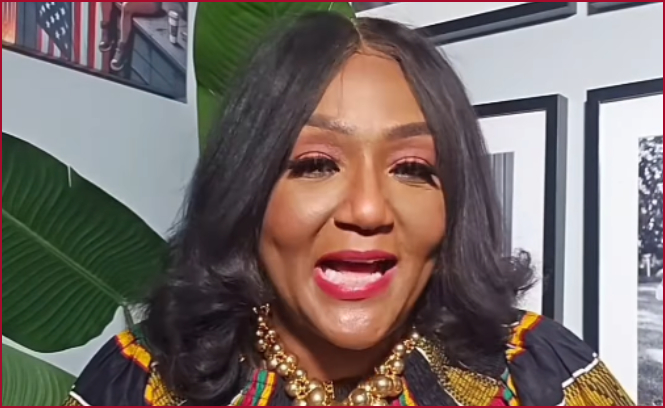
Podcast host and commentator Nikki Free has delivered a pointed warning about what she calls the evolution of racial politics in America, arguing that modern discrimination has become more polished, strategic, and embedded in public policy.
In a viral Instagram video titled “Welcome To The Southern Strategy 2.0,” Free connected the historical Southern Strategy, a political approach widely associated with racially coded messaging following the Civil Rights Movement, to contemporary conservative policy proposals linked to Project 2025.
“The most dangerous racism in America today does not sound like hatred,” Free said in the video. “It sounds like policy.”

Her remarks come amid growing national debate over voting rights, diversity initiatives, education restrictions, immigration policy, and efforts to reshape federal civil rights oversight.
Free argued that after the Civil Rights era, openly racist political rhetoric became less socially acceptable, forcing political messaging to evolve.
“Instead of saying we oppose Black progress, politicians started saying ‘law and order,’ ‘states’ rights,’ ‘welfare dependency,’ ‘protecting our neighborhoods,’ ‘traditional values,’” she explained. “The language got cleaner, but the targets stayed the same.”
The commentator said many Americans fail to recognize how racial coding operates in modern political discourse because it no longer resembles the overt racism of earlier decades.
“Some of y’all are still waiting for racism to sound like 1963 before you recognize it,” she said. “If you only recognize racism when somebody is screaming slurs and turning on fire hoses, you will completely miss the sophisticated, polished, suit-and-tie version rewriting policy right in front of our faces.”
Free described Project 2025 as the next stage of that political evolution, claiming it transforms coded rhetoric into institutional governance.
“It’s what happens when coded racial politics stop being campaign rhetoric and start becoming governing policy,” she said.
Throughout the video, Free pointed to attacks on diversity, equity, and inclusion programs, restrictions on Black history education, book bans, immigration crackdowns, and efforts to weaken civil rights oversight as examples of policies she believes disproportionately impact marginalized communities while avoiding explicitly racial language.
“They still rarely say Black because they learned they don’t have to,” she added.
The emotional commentary resonated widely across social media platforms, especially among Black voters and younger audiences concerned about voting rights, racial equity, and the future of democratic institutions in the United States.
Free ended her message with a stark warning that by the time many Americans recognize the broader implications of such policies, major legislative and structural changes may already be in place.
“By the time you realize what’s happening,” she said, “the laws will already be passed.”
The video has fueled renewed discussion surrounding the legacy of the Southern Strategy, the future of civil rights protections, and the role race continues to play in American political messaging and policymaking.