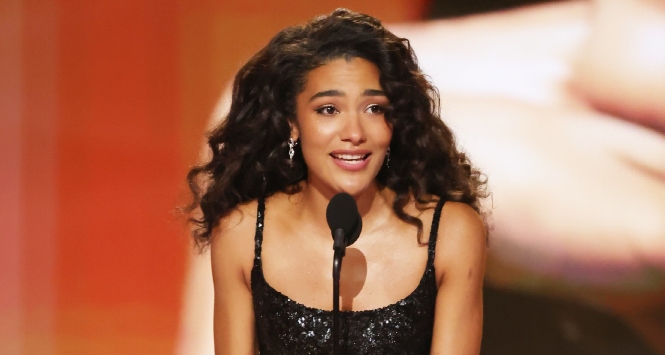
When Olivia Dean stepped onto the Grammy stage to accept Best New Artist at the 2026 awards, she didn’t just thank the room. She spoke to history, to family, and to the quiet courage that so many immigrant stories are built on.
“We’re nothing without each other,” she said, grounding one of music’s biggest moments in something deeply human.
The 26-year-old British soul-pop singer won one of the night’s most coveted awards at the 68th Grammy Awards, beating out seven other nominees and capping off a breakout year that quietly turned her into a global force. But it wasn’t the win alone that stopped people in their tracks. It was what she chose to do with the microphone.
Visibly emotional, Olivia Dean accepted the award from last year’s winner, Chappell Roan, clutching the golden gramophone as tears welled in her eyes. She admitted she never imagined standing on that stage, let alone winning.
“I’m up here as a granddaughter of an immigrant,” she said. “I am a product of bravery. And I think those people deserve to be celebrated.”
Dean’s grandmother emigrated from Guyana to the U.K. at just 18 years old as part of the Windrush generation, the postwar wave of Caribbean migrants who helped rebuild Britain while often facing hostility and erasure. She built a life from scratch, had Dean’s mother young, and made sacrifices that would ripple forward into generations. That legacy stood front and center at the Grammys.
For fans who’ve followed Dean’s career closely, the moment felt familiar. She has long honored her grandmother’s influence, most notably through her song “Carmen” and during a Glastonbury Festival performance where she wore a custom outfit featuring her grandmother’s portrait. On that stage too, Dean described herself as “a product of her bravery.”
This time, the audience was global.
Born in London’s Haringey borough to a Jamaican-Guyanese mother and an English father, Olivia Dean grew up surrounded by music and meaning. Even her middle name, Lauryn, nods to Lauryn Hill, an influence that can be heard in her warm vocals and thoughtful songwriting.
Still, the internet did what it does best.
Moments after her win, social media lit up with confusion and side-eyes. “Nobody knows who Olivia Dean is,” some users wrote, questioning how a relatively low-profile British artist could take home Best New Artist over more mainstream contenders.
But the noise missed the point.
Olivia Dean’s music has been building quietly across borders, playlists, and live stages, especially among listeners who value soul, storytelling, and restraint in an era of excess. Her win wasn’t about virality. It was about craft, consistency, and connection. And her speech made it clear that she knows exactly where she comes from and why that matters.
For many Black American viewers, her words struck a nerve. Immigration, lineage, and survival are not abstract ideas. They are family stories. Dinner table memories. Names carried forward. In a moment when immigrant communities are often reduced to headlines or political talking points, Olivia Dean chose to center dignity and gratitude instead.