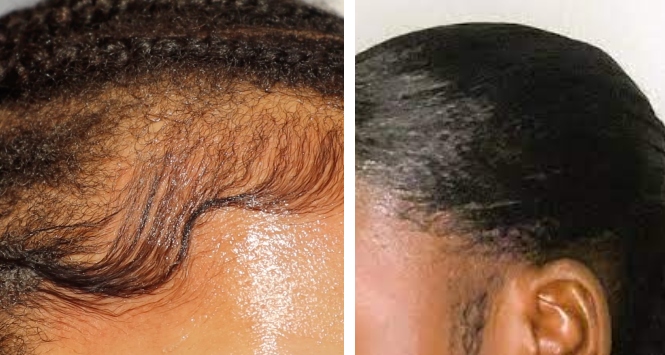
News recently broke from Jamaica that a prominent high school for girls has reportedly banned students from wearing styled edges or baby hairs on campus.
Edges and baby hairs have become significant aspects of Black culture, representing style and pride. Recently, a controversy erupted when St. Andrew High School for Girls (SAHS), a well-known all-girls school in Kingston, Jamaica, announced a ban on styled edges for students.
Founded in 1925 by the Presbyterian and Wesleyan Methodist churches, SAHS has established itself as one of Jamaica’s most prestigious educational institutions. With the motto “Life More Abundant,” the school aims to nurture its students holistically, including mentally, physically, and spiritually. Currently, around 1,500 young women attend SAHS, many of whom pursue successful careers in fields such as law, medicine, and politics.
“Please be advised that the wearing of ‘edges’ is now officially banned on campus. Remember, curtains belong in the house, not on foreheads! Let’s keep our looks neat and school-ready. We appreciate your cooperation in upholding our standards of excellence as we continue honoring the legacy and inspiring the future!” the notice on their student body social media handle read.
Despite its esteemed reputation, the institution is facing backlash over this new rule against styled edges and baby hairs. Some supporters of the ban argue that schools should emphasize academics, not fashion, and that such uniformity fosters discipline and character. Conversely, many critics see this regulation as an unfair attempt to police Black hair, a narrative that resonates deeply within the community. They assert that edges are not merely a styling issue but an important expression of identity and beauty.
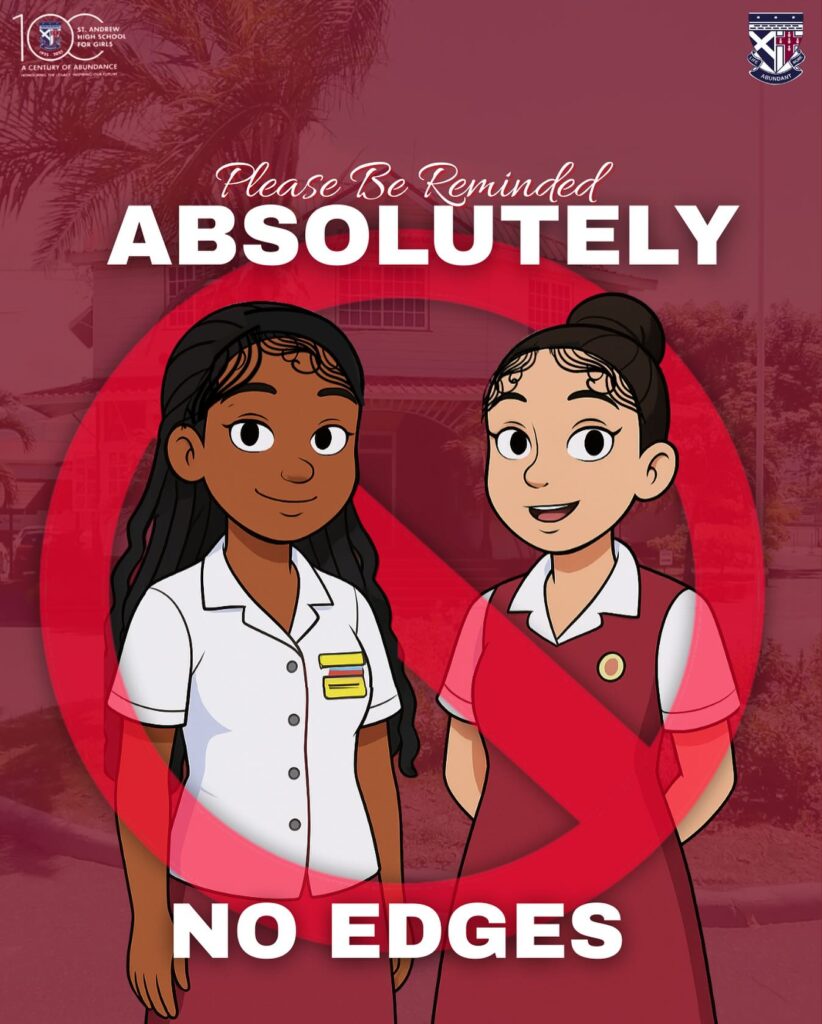
Social media has exploded with reactions, with countless individuals deeming the ban unnecessary and out of touch. Others perceive it as part of a broader trend where Caribbean schools restrict cultural expression under the guise of tradition.
This isn’t the first instance where hair has sparked debates in educational settings. The struggle over wearing dreadlocks in Jamaican schools and discussions in the U.S. regarding natural hair discrimination highlight an ongoing fight within Black communities for the right to express their identity through their hairstyles.
The impact of SAHS is significant, given its long-standing history, and it now faces the challenge of balancing tradition with the evolving notions of modern Black identity.