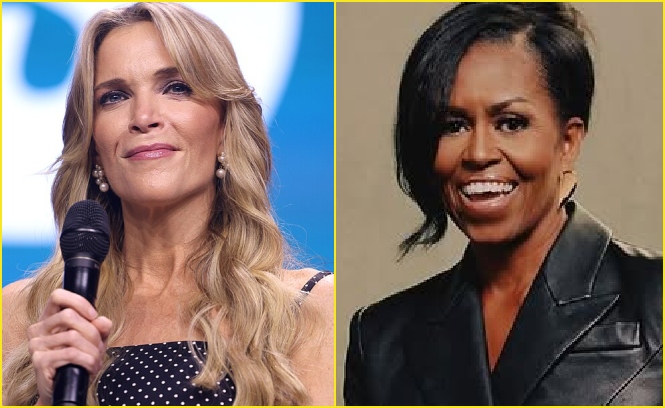
Former First Lady Michelle Obama has once again found herself at the center of a cultural flashpoint—this time, over her hair.
While promoting her new book The Look, Obama reflected on the pressures she faced as the nation’s first Black first lady, including the decision to wear her hair straight rather than natural.
The former first lady said she feared how her appearance might be received in a political climate unaccustomed to a Black woman in such a visible, historic role.
“As women of color, the way our hair naturally grows out of our head is beautiful,” Obama said. “But if we struggle to make it look like the standard, that means we are spending thousands of hours and lots of money straightening out what is naturally curly hair. And that takes time out of your life. It costs money.”

Her reflection resonated with many Black women who saw in it a familiar struggle: the unspoken pressure to conform to Eurocentric beauty standards to be accepted in professional or public spaces.
But not everyone got the message.
On the Nov. 4 episode of The Megyn Kelly Show, conservative commentator Megyn Kelly took issue with Obama’s remarks—calling them “bull—.”
Kelly dismissed the racial and cultural context of Obama’s comments, saying, “Virtually every woman I know spends a ton of time on her hair and wants it to look better than God made it. It’s not a Black thing. It’s a human thing.”
The remarks struck many as tone-deaf, especially given Kelly’s history of controversial takes on race-related issues. Critics pointed out that equating universal grooming habits with the unique scrutiny faced by Black women—especially those in positions of power—misses the entire point.
For Michelle Obama, the conversation goes far beyond aesthetics. During her eight years in the White House, her clothing, hair, and even her expressions were parsed and politicized in ways few public figures endure. In The Look, she explores how personal style became both armor and message—an expression of resilience, identity, and quiet defiance.
“It became clear that I was being held to a very different standard,” she writes. “Yet the upside was the number of women who told me they felt more comfortable showing their arms after seeing me in these dresses or tops.”
Kelly’s remarks, if anything, reinforce Obama’s central thesis—that even years after leaving Washington, her image and choices continue to invite a level of scrutiny that speaks volumes about race, gender, and visibility in America.
The timing of the debate also highlights the ongoing relevance of laws such as the CROWN Act, which seeks to ban discrimination based on hair texture or style—a form of bias still documented in workplaces and schools.
If Michelle Obama’s reflections are about self-acceptance and cultural honesty, Kelly’s reaction underscores how uncomfortable that honesty can still make some people.
In a sense, this isn’t about hair at all. It’s about who gets to define what’s “acceptable”—and why, after all these years, that definition still seems to depend on who’s in the mirror.
Michelle Obama’s candor continues to unsettle those who would rather she simply smile and stay silent.
Yet her words endure precisely because they touch a truth that can’t be brushed away: for many Black women, hair is never just hair—it’s politics, perception, and personal history intertwined.