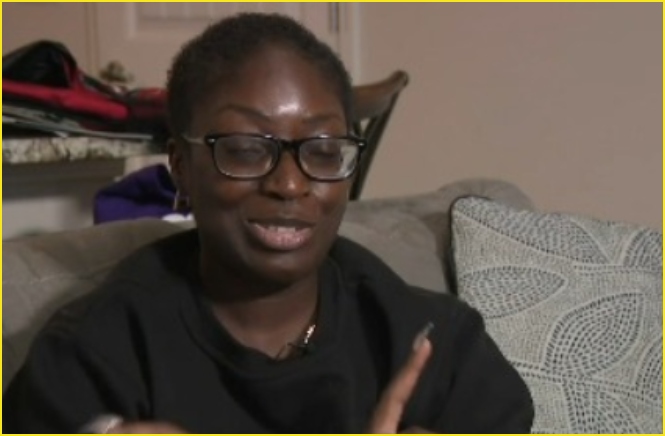
When Shana Pinnock Glover opens the folders neatly stacked on her kitchen table, she’s not looking through memories — she’s flipping through evidence of effort.
Each one holds a résumé, a cover letter, and another attempt.
“I’ve applied to about 800 jobs,” she told CBS News Atlanta, her tone calm but the exhaustion just beneath it. “Searching for a job has become my full-time gig.”

Glover, 39, isn’t just fighting unemployment — she’s fighting cancer. Two kinds, in fact. Stage 1 triple negative in her left breast, and stage 3 ER positive in her right.
“I didn’t even know that was possible,” she said, managing a wry smile. “But I’m an overachiever, I guess.”
She’s endured chemotherapy, postponed her wedding, and weathered the fear of not making it to another Christmas with her husband and stepchild. Yet even as she celebrates completing radiation this week, the job hunt continues — relentless and uncertain.
“Cancer puts things into perspective,” she said. “I take it as a blessing that hasn’t fully blossomed yet. I have to trust there’s something bigger and better for me.”
A Wider Crisis for Black Women in the Workforce
Glover’s story is both deeply personal and painfully common. In the past several months, more than 300,000 Black women have lost jobs or left the workforce, according to labor data cited by CBS.
Economists say the trend underscores structural inequities that have long left Black women more vulnerable in economic downturns.
Dr. Maisha Williams, an associate professor of economics at Spelman College, said the decline reflects systemic barriers compounded by automation, AI adoption, and public-sector job cuts — sectors where many Black women have traditionally found stability.
“In this low moment for the economy, the best we can probably do is what we’ve always done — try to invite Black women to become entrepreneurs or make it more appealing to them,” Williams said.
But for many, like Glover, entrepreneurship is out of reach when medical bills loom large.
“From January to September, my insurance company paid out $1.6 million for my care,” she said. “I’m grateful — but I still have to keep applying. I have to keep going.”
A System in Need of Repair
The broader unemployment rate for young Black workers now exceeds 15 percent, one of the highest in recent years. For Black women specifically, job insecurity is compounded by caregiving responsibilities, pay inequities, and the lingering aftershocks of the pandemic.
Despite their growing representation in professional and managerial roles, Black women remain among the most underpaid and least promoted demographics in the U.S. workforce. When layoffs hit — especially in education, healthcare, and public administration — they often fall hardest on them.
The numbers tell one story, but Glover’s tells another — one of grit, resilience, and the emotional toll of a system that too often demands double the effort for half the return.
We’re Going to Rise
Even as she closes in on the end of her treatment, Glover’s optimism remains fierce. She’s kept her sense of humor, her bald head unhidden, her spirit unbowed.
“One thing a Black woman is going to do,” she said with a quiet smile, “is fight — and rise.”
Her words carry weight beyond her own life. They echo the sentiment of thousands of women navigating layoffs, health battles, and a job market that too often overlooks their worth.
Equity isn’t a slogan for women like Shana Pinnock Glover — it’s survival. And until systems catch up with their strength, the fight continues.
Shana’s story lays bare what statistics often obscure: behind every data point is a woman juggling courage and exhaustion, faith and frustration.
As the economy reshapes itself through technology and austerity, the burden of inequity lands hardest on those already fighting to stay afloat.
If resilience were currency, Black women would be billionaires. But until equity follows effort, stories like Shana’s will remain less about perseverance and more about a nation still learning how to value its most determined workers.