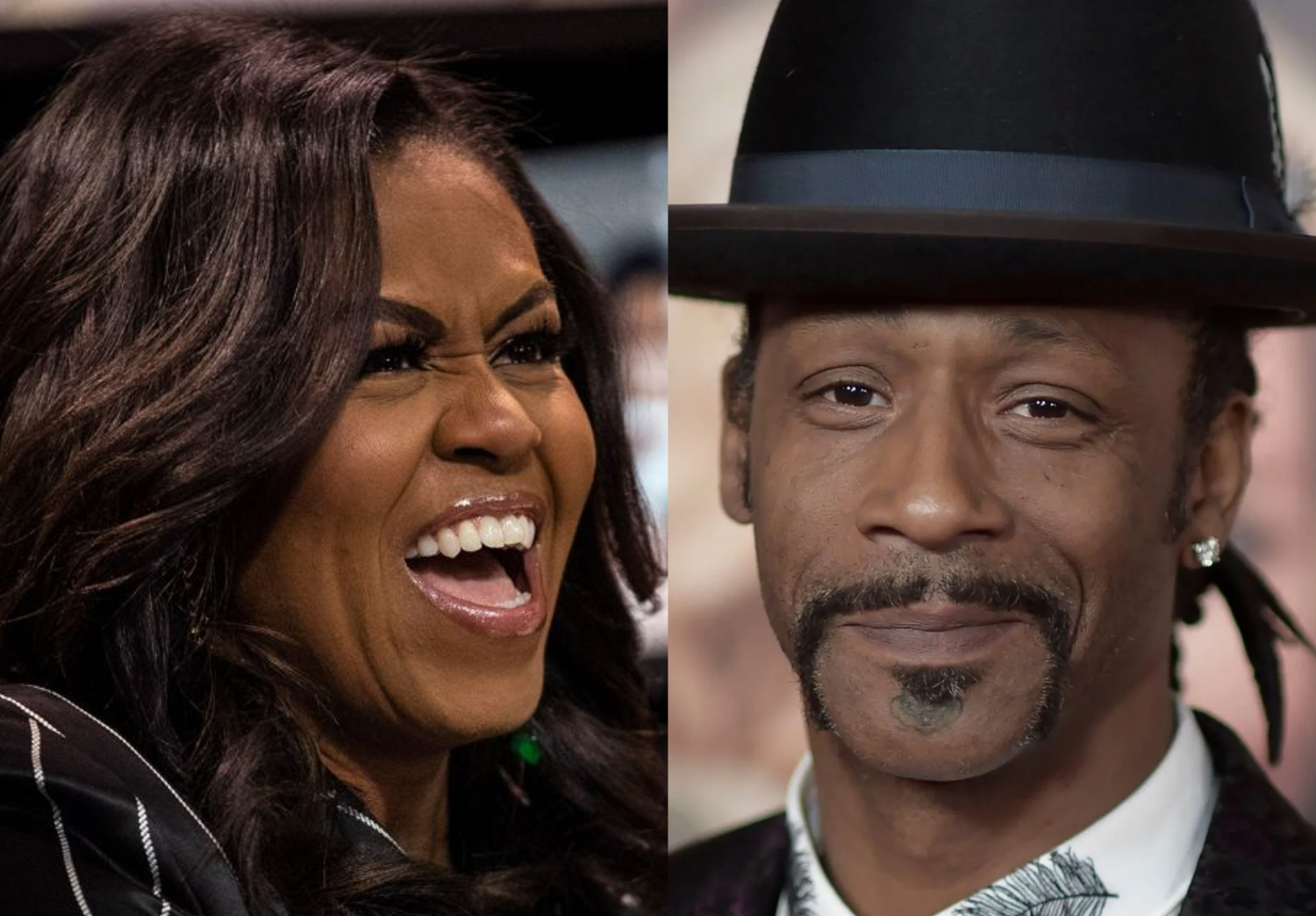
Legendary comedian Katt Williams got candid, reflective, and uproariously funny during a nearly two-hour conversation with Michelle Obama and her brother Craig Robinson on the “IMO Podcast,” promoting his latest tour, The Golden Age. The conversation offered a layered memoir, tracing Williams’ life from survival to service, comedy, and parenthood, while revealing lessons shaped by hardship, resilience, and joy.
Williams opened up about his childhood, describing himself as a voracious reader and a runaway teen who emancipated himself from his Jehovah’s Witness home at age 13—Rottweiler in tow. He recounted moving to Miami alone, sleeping in unhoused encampments, and eventually stumbling into comedy, which became both his vocation and a lifeline. A chance encounter with Prince at age 12, he said, profoundly influenced his trajectory.
Parenthood, Williams explained, became central to his life. He described stepping in when his son’s siblings were placed in an orphanage due to their mother’s addiction crisis. “They are the siblings of my son. And I did all the research… it takes a million dollars to raise a child. Lord, are you… saying I’m gonna have 10 million dollars to take care of 10 kids? Fine. Let’s do it,” he said. He embraced adoptive fatherhood with devotion, leaving behind his bachelor superstar lifestyle and prioritizing family over fame.
The comedian did not shy away from dark truths. Williams spoke movingly about the loss of a child, calling it “probably the worst thing that can happen to you on this earth,” and explained how grief reshaped him. Comedy and joy, he said, became his survival tools.
Williams also reflected on formative experiences abroad, including a two-year missionary stay in Haiti. There, he learned Creole and French and aided families with life-saving advice for dehydrated infants, describing the time as “magnificent.”
Throughout the podcast, Obama and Robinson navigated Williams’ offbeat anecdotes with curiosity and empathy, challenging his claims and exploring the meaning of faith, success, and family. The hosts highlighted Williams’ work ethic, his layered artistry, and the life experiences that inform his comedic perspective. By the end, listeners were left with a portrait of a man whose personal struggles and deliberate choices—rooted in love, resilience, and service—have not only shaped his comedy but also defined his legacy as an artist and father.