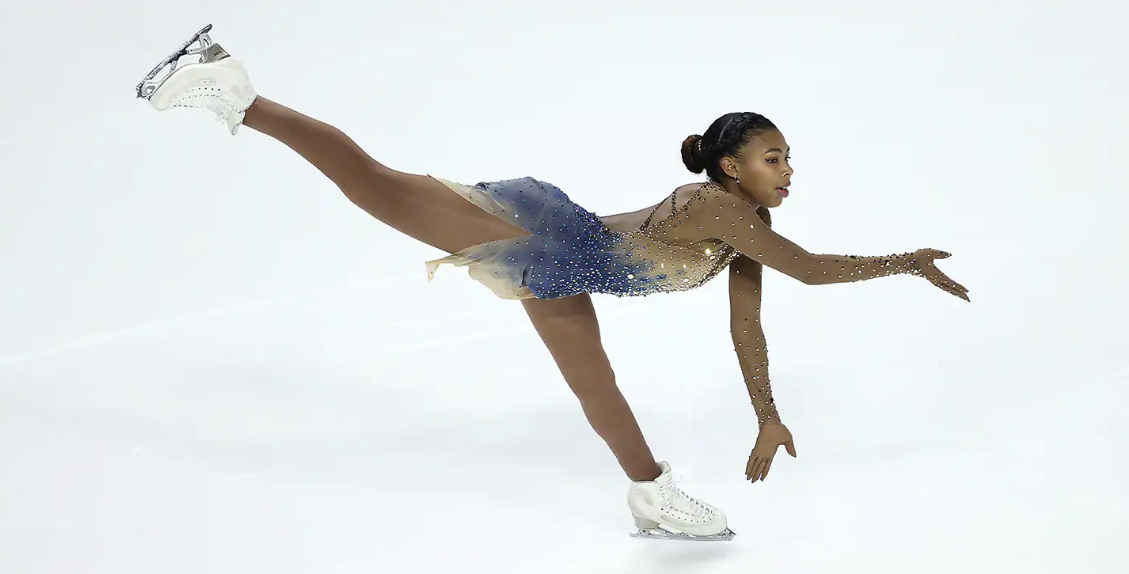
More than three years after her breakthrough performance at the U.S. Figure Skating Championships, Starr Andrews’ historic achievement continues to inspire many across the sport, particularly as conversations around diversity, perseverance, and athlete health remain central in 2026.
In 2023, Andrews made history by becoming the first Black woman in 35 years to win a medal at the U.S. Nationals, finishing fourth overall and earning the pewter medal at the SAP Center in San Jose, California. Her result marked only the second time a Black woman had stood on the national podium since Debi Thomas, who won gold in 1988.
Posting a combined score of 188.24, Andrews finished alongside champion Isabeau Levito, silver medalist Bradie Tennell, and bronze medalist Amber Glenn—a moment she described as both emotional and historic.
“To be able to be the next African American woman to stand on a podium is amazing,” Andrews said following the competition.
A Career Defined by Resilience
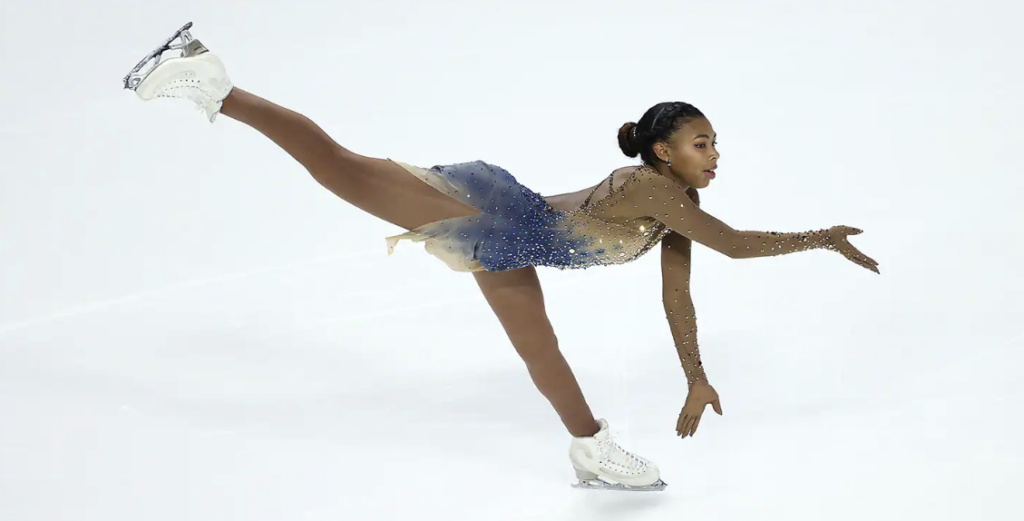
Andrews’ milestone performance came after years of adversity that continue to shape her legacy today. Competing in a sport where youth is often prioritized, Andrews faced age-related skepticism—being considered “old” at 21—alongside repeated injuries and a serious heart condition that required surgery in 2022.
Despite those challenges, she returned to elite competition later that year and won silver at Skate Canada, underscoring her determination and resilience. Her journey has since become a touchstone for discussions about athlete longevity, medical transparency, and mental strength in elite sports.
Representation That Matters
As one of the few Black women competing at the highest levels of U.S. figure skating, Andrews’ impact has extended far beyond competition results. She has frequently spoken about receiving letters and videos from young skaters who say her success inspired them to step onto the ice for the first time.
“I can’t believe I’m the person they saw,” Andrews said at the time. “I’m so glad that I can be that person.”
That influence remains significant in 2026, as U.S. Figure Skating and international bodies continue to grapple with issues of access, representation, and inclusion in traditionally exclusive sports.
A Family Legacy on Ice
Figure skating runs deep in Andrews’ family. Her mother and longtime coach, Toshawa Andrews, is a former skater who has supported her daughter despite battling a severe microvascular heart disease that has resulted in multiple heart attacks and a stroke.
Starr Andrews has repeatedly credited her mother’s strength and dedication as a defining force in her career, describing her perseverance as a daily source of motivation.
Looking Ahead
Following her nationals performance, Andrews was named first alternate for the U.S. women’s team at the World Figure Skating Championships, reinforcing her status as a top-tier competitor. Her long-term goal—to compete on the Olympic stage—has remained a central focus as the 2026 Winter Olympics approach.
While Andrews has often said the podium finish was not the exact medal she envisioned, her achievement stands as a powerful reminder that progress in sport is measured not only by gold, silver, or bronze—but by barriers broken and futures inspired.
“It’s never going to be an easy road,” Andrews reflected. “There are ups and downs—but that’s how you become a great athlete, and how the sport helps you in regular life too.”