
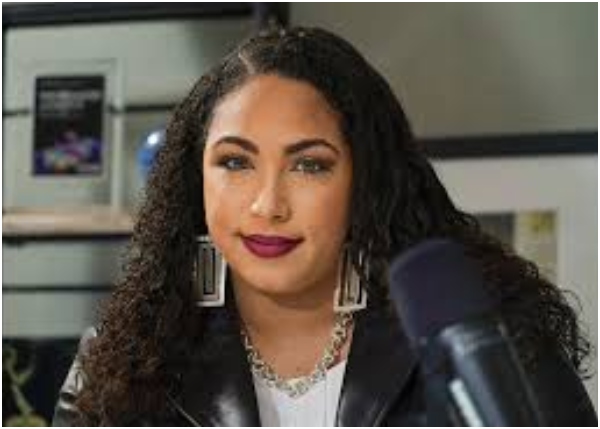
Award-winning independent journalist Georgia Fort was arrested by federal agents on Jan. 30, 2026, at her home in Minnesota after livestreaming her own detention.
The incident has since sparked widespread concern over press freedom, retaliation against reporters, and the particular risks faced by women and journalists of color in the United States.
Fort, founder of BLCK Press and the Center for Broadcast Journalism, was charged with federal offenses including conspiracy against the right of religious freedom and interfering with the exercise of religious freedom under the Freedom of Access to Clinic Entrances (FACE) Act.
The charges stem from her coverage of a Jan. 18, 2026, anti-ICE protest at Cities Church in St. Paul, where demonstrators disrupted a service. Former CNN anchor Don Lemon and others were also indicted in connection with the event.
In a dramatic Facebook livestream posted just before her arrest, Fort explained that agents were at her door with a warrant obtained through a grand jury.
“As a member of the press, I filmed the church protest a few weeks ago, and now I’m being arrested for that,” she said, as her children’s cries were heard in the background.
She maintained she was present solely as a journalist documenting the demonstration, not participating. Prosecutors unsuccessfully sought to detain her pretrial, arguing the offense was violent; she was released after a federal court appearance.
Fort, an Emmy-winning journalist with over 15 years in commercial and nonprofit media, has focused on community-driven reporting often overlooked by mainstream outlets. She left traditional newsrooms, citing discrimination related to her identity as a Black woman, her voice, and appearance, choosing instead to build platforms centering marginalized voices.
The arrests drew swift condemnation. The National Association of Black Journalists (NABJ) declared:
“Press freedom is not conditional and it is not subject to political convenience,” warning that such actions disproportionately endanger Black journalists and the communities they serve. Seth Stern of the Freedom of the Press Foundation called the arrests “naked attacks on freedom of the press.”
Advocacy groups like the Reporters Committee for Freedom of the Press and Reporters Without Borders highlighted the incident as part of broader concerns over journalist safety during protest coverage.
The case raises serious questions about the protection of journalistic activities—especially for freelancers and women of color—who often lack institutional backing and face heightened risks of harassment, bias, and legal targeting.
Experts note women journalists are more likely to work in contingent roles without robust legal or union support, amplifying vulnerability in politically charged environments.

