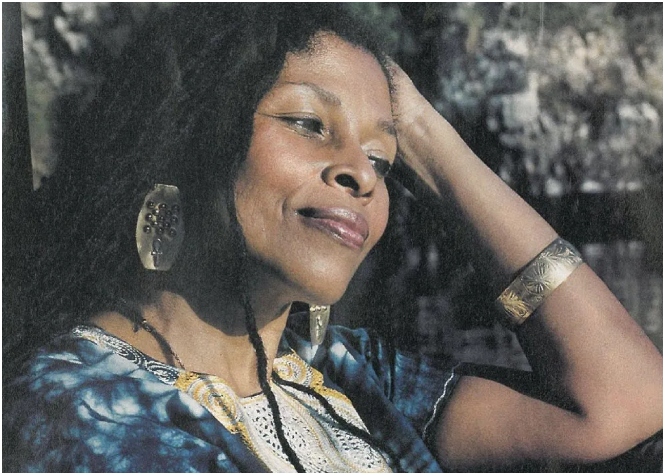
An icon of Black resistance, whose name evoked fear in some quarters and hope in others, Assata Olugbala Shakur passed away on Sept. 25, 2025, at age 78 in Havana, Cuba.
Today we remember not a perfect legend, but a fiercely committed woman whose life strained the bounds of what it means to resist, to endure, and to dream freedom in a system built to deny it.
Roots, Radicalization, and Reinvention

Born Joanne Deborah Byron in Queens, New York, in 1947, Assata was raised partly in the segregated South, where injustice was not a concept but daily life.
Her early life gave her a deep sense of self, and by the late 1960s, she was drawn into political struggle: the Black Panther Party, community programs, and movements across race, war, and liberation.
She would abandon her “slave name” and adopt Assata Olugbala Shakur — “she who struggles, savior, thankful one” — embracing an identity that anchored both memory and defiance.
Joining the Black Liberation Army in the early 1970s, Assata’s methods became sharper, more clandestine. She was arrested in 1973 after a traffic stop escalated into a shootout on the New Jersey Turnpike — a case still contested in facts, memory, and myth.
Despite an all-white jury convicting her in 1977 of murdering a state trooper, she maintained—and many supporters believe—that she was shot while her hands were raised, that she was framed, and that her trial was tainted by systemic racism and political calculation.
In 1979, she escaped prison. In 1984, she arrived in Cuba under asylum. Since then, she lived in exile — a fugitive, a symbol, a myth made flesh.
Why She Mattered
For many Black women and girls, Assata was more than a headline. She was a mirror: someone whose defiance spoke to fears, wounds, and possibilities. She challenged the narratives of criminality imposed on Black women while refusing to be silenced or demoted to spectacle.
She did not claim perfection. But she held to a radical dignity: justice for political prisoners, critique of state violence, radical caring for communities often ignored. Her 1987 memoir, Assata: An Autobiography, is required reading in many Black Studies and prison abolition circles.
Over decades, her image and words seeped into culture — music, art, protest. She stood as a bridge between the 20th century’s bold movements and 21st century’s resurgence of protest against police violence.
A Death of Many Meanings
Cuban officials attributed her death to “health issues and advanced age.” Her daughter Kakuya Shakur announced the passing: “At approximately 1:15pm on Sept. 25, my mother … took her last earthly breath.”
In the U.S., reactions ranged from solemn acknowledgment to outrage. New Jersey officials lamented she died without facing full legal accountability.
Some will treat her death as the closing chapter on a controversial life. But for many, it’s a moment to redouble commitment — to justice, memory, and transformation.
What Her Legacy Calls Us To
- Center Black women’s stories in histories of resistance.
- Protect political prisoners and demand humane, fair systems.
- Sustain culture, memory, and critique in the face of erasure.
- Embody courage, even when the state demands silence.
Assata once said, “It is our duty to fight for our freedom. It is our duty to win. We must love and support one another. We have nothing to lose but our chains.”
Her life was never tidy, never safe — but always purposeful. In her name, we remember that resistance is generational, that our refusal to forget is itself a form of power.