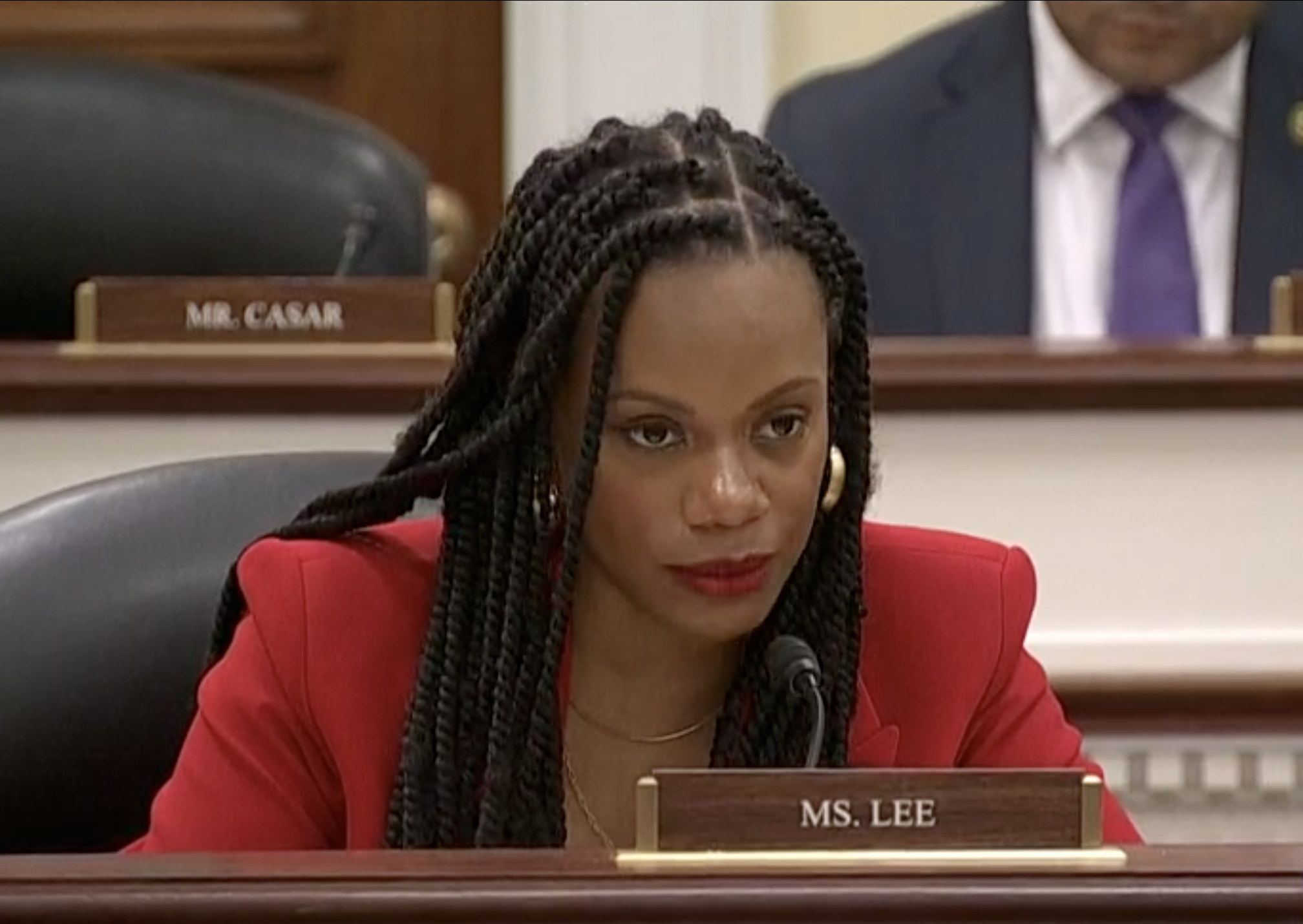
Rep. Summer Lee is pushing back against Republican criticism of diversity and inclusion initiatives in schools, arguing that equity-focused policies are essential to ensuring that all students, particularly those from marginalized communities, have access to quality education and equal opportunities.
In remarks during a House Education and Workforce Committee hearing, Lee accused conservatives of using divisive rhetoric to undermine programs designed to address longstanding disparities affecting students with disabilities, racial minorities, LGBTQ+ youth and other underserved groups.
“Equity policies are necessary to reverse harm caused by systemic discrimination,” Lee said, framing the debate as a struggle over whether schools should actively address historical inequalities or ignore them.

The Pennsylvania congresswoman’s comments came during a contentious hearing focused on educational equity and inclusion policies. According to Lee, the hearing sought to portray equity initiatives as harmful rather than beneficial.
“Conservatives want us to fear the definition of equity so they can weaponize it against policies that simply give kids a fair shot,” she said.
Lee pointed to several landmark policies and legal developments that she argued demonstrate the importance of equity in education.
She cited the Individuals with Disabilities Education Act (IDEA), which guarantees educational accommodations for students with disabilities, as well as Title IX protections and court-ordered school desegregation efforts that expanded opportunities for Black students.
“Our country established equity policies like IDEA to give children with disabilities an equal education and policies like Title IX to end unequal treatment based on sex,” Lee said.
The congresswoman argued that critics of diversity, equity and inclusion initiatives often present expanded educational access as a threat to other students, a characterization she rejected.
“So-called parents’ rights groups want you to believe so badly that expanding access for marginalized children comes at the expense of children who already have all of their needs met,” Lee said.
Her remarks come amid an ongoing national debate over diversity, equity and inclusion programs in schools and universities. Republican lawmakers in several states have sought to limit or eliminate DEI initiatives, arguing that such programs can be divisive or discriminatory.
Supporters, meanwhile, contend that the policies help address structural barriers that have historically disadvantaged certain groups of students.
Lee also criticized recent efforts by the federal government to challenge diversity and inclusion programs, referencing legal disputes involving the U.S. Department of Education.
“This administration’s Department of Education already tried to ban diversity, equity, inclusion and accessibility,” she said. “It didn’t work. They lost the case.”
The congresswoman suggested that hearings scrutinizing school districts’ diversity efforts could have a chilling effect on educators and administrators across the country.
“Republicans are forcing school superintendents before this committee to scare them into compliance,” Lee said, alleging that the goal is to pressure districts into abandoning inclusive policies.
According to Lee, the broader objective of equitable education is straightforward: ensuring that students are supported regardless of race, gender, disability status, socioeconomic background, language or immigration status.
“Hearings like this are trying to make an example of districts that want all kids,” she said.
Lee concluded by arguing that policymakers focused on improving educational outcomes should prioritize student well-being and opportunity rather than political battles.
“When you legislate from a place of actually wanting children to have a quality education where kids are safe and seen, you don’t have to rely on fear tactics,” she said.
Her comments underscore the continuing national debate under the Trump administration over how schools should address inequality and whether equity-based policies remain a necessary tool for expanding educational opportunity in the United States.