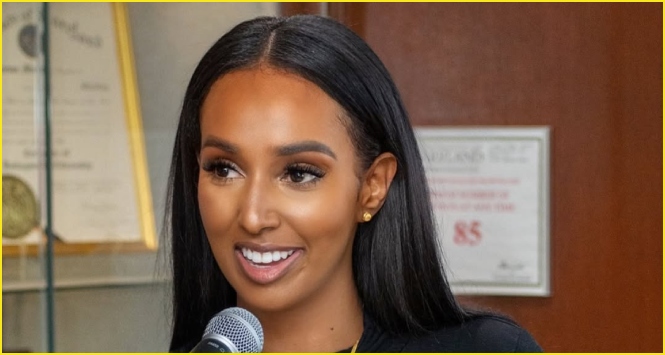
When Yasmin Abdi fled Somalia’s civil war as a child, she could hardly have imagined that one day she would be protecting nearly a billion people online.
Yet, by the age of 25, she was doing exactly that: leading security engineering at Snapchat and safeguarding 850 million daily users from hackers and data breaches!
Now, the self-taught hacker turned entrepreneur is taking her mission even further. As CEO and founder of NoHack, Abdi is using artificial intelligence to bring advanced cybersecurity tools to small businesses, the kinds of companies often left most vulnerable to online attacks.
Her journey reads like the blueprint of modern resilience. Growing up as a refugee in the U.S., Yasmin found her sanctuary in technology.
“I didn’t hack to destroy,” she’s said in past interviews, “I hacked to understand.” That curiosity soon became purpose.
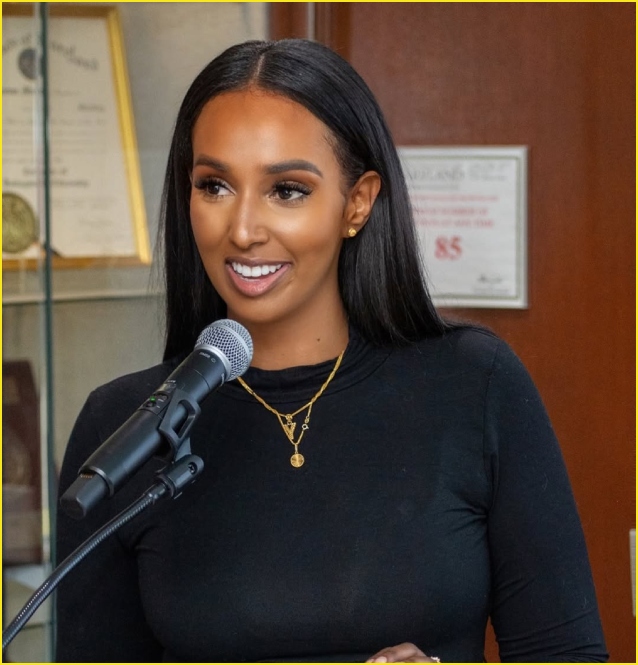
At 17, she dismantled and reprogrammed her first phone just to figure out how it worked. At the University of Maryland, she majored in computer science and business, balancing code and commerce with a laser focus on security. Internships at Snap, Meta, and Google followed.
By her mid-twenties, Abdi had joined Snap Inc. full-time, helping design and deploy in-house systems to protect users from leaks, scams, and breaches. Her leadership was key in scaling security architecture for one of the world’s most widely used apps.

But Yasmin wasn’t content to stay behind the scenes. In 2020, she co-founded Meemo, an AI-powered social finance app that blended payments and social sharing. Within two years, Coinbase acquired it for a staggering $95 million. That exit marked her arrival as one of Silicon Valley’s rising innovators — and one of the few Black Muslim women to have built and sold a venture-backed startup at that scale.
Her latest company, NoHack, was born from both experience and empathy. The platform uses AI to detect and prevent cyberattacks in real time — something that’s increasingly vital as ransomware and phishing scams target small companies lacking the deep pockets of big tech.
“Small businesses deserve big protection,” she has stated in talks.
Beyond her technical achievements, Yasmin is also reshaping who gets to belong in tech. She regularly mentors minority students and early-career engineers, encouraging more women and refugees to enter cybersecurity. Her advocacy aims to bridge what she calls the “representation gap” between talent and opportunity.
With over seven years of experience across Snap, Meta, and Google, Yasmin’s impact is already etched into the backbone of the internet. The systems she helped engineer serve hundreds of millions daily, and her work at NoHack could ensure the next wave of innovation is safer for everyone, not just those who can afford it.