
In a candid and unscripted conversation streamed live from Capitol Hill, U.S. Representative Jasmine Crockett (D-TX) sat down with Representative Brendan F. Boyle (D-PA) to unpack one of the most contentious budget fights unfolding in Congress.
Experts say the fight could slash billions from programs millions of Americans depend on to survive.
What began as an informal chat between two lawmakers quickly evolved into a piercing indictment of what Crockett and Boyle describe as a “backdoor budget heist”.
They say this backdoor budget heist was an attempt to use procedural loopholes to push through historic cuts to Medicaid and SNAP (food assistance) while the public’s attention drifts elsewhere.
At the heart of the issue is the budget reconciliation process, a little-understood but immensely powerful legislative mechanism that allows the majority party to bypass the Senate filibuster and pass budget-related bills with a simple majority vote.
The Quiet Weaponization of Reconciliation
As Rep. Boyle explained, “Reconciliation is a fancy way of basically saying the majority party can get around the filibuster in the Senate.”
Under normal circumstances, passing major legislation requires 60 votes in the Senate to overcome a filibuster. But reconciliation, a process dating back to the Congressional Budget Act of 1974, lets lawmakers push through certain fiscal measures once per year using only 51 votes provided the bill focuses mainly on budgetary issues.
Boyle reminded viewers that the procedure had been used sparingly in the past decade, once by Republicans under Donald Trump’s first administration to pass massive tax cuts for the wealthy, and again by Democrats for the Inflation Reduction Act, which included measures like Medicare drug price negotiations.
Now, Boyle said, Republicans are attempting to wield that same tool “to pass the biggest cuts to Medicaid and food assistance in American history, all to help pay for new tax cuts for the top one percent.”
Crocket Fires Back
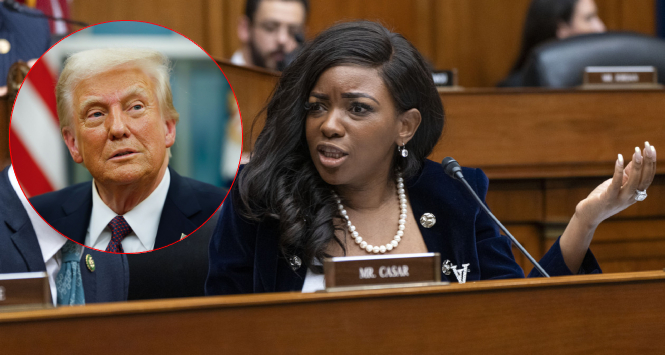
Rep. Crockett, known for her fiery transparency and no-nonsense communication style, didn’t mince words as she broke down how these cuts would affect everyday Americans.
“So, like, we’re not gonna believe that, right?” Crockett said, responding to GOP claims that Democrats were exaggerating the impact of their proposed cuts. “They keep trying to call us liars, and y’all know I always got receipts.”
Crockett and Boyle explained that the House Budget Resolution pushed by Republicans sets the stage for committees to impose targeted cuts. Under this resolution, the Energy and Commerce Committee was ordered to cut $880 billion from Medicaid, a move that sparked internal dissent within the Republican ranks and prompted the committee to cancel its markup hearing.
Similarly, the Agriculture Committee, responsible for overseeing SNAP and other nutrition programs, also postponed its markup session amid growing backlash from voters learning what the cuts would mean in real terms.
“The American people are finding out about the biggest Medicaid cuts in American history,” Boyle said. “And they’re not too popular.”

How It Hits Home
Crockett stressed that part of the confusion lies in the way Medicaid is branded differently in each state.
“In every single state, Medicaid is called something else. It’s not called the same thing,” she said. “So it gets kind of confusing, and they try to play on the fact that people don’t understand that what they are getting is actually Medicaid.”
To counter that confusion, Boyle said he has launched a website that breaks down the proposed cuts district by district, showing precisely how many families stand to lose coverage or food assistance.
“These cuts aren’t theoretical,” Crockett said. “They’re real. They’re about whether people can see a doctor or feed their children.”
The Human Cost Behind Political Calculations
What makes this issue resonate beyond the Beltway is its human toll. If enacted, these cuts would force millions of low-income families, particularly in rural and urban communities, to choose between healthcare and groceries, a choice that no American should have to make.
Boyle, a Philadelphia native, put it bluntly: “I’m from Philly. You probably can tell in my accent. We’ve got families already struggling with rent, inflation, and food costs. Taking away SNAP and Medicaid now? It’s cruel policy disguised as fiscal responsibility.”
Crockett nodded in agreement, adding that the GOP’s budget strategy was not only heartless but politically short-sighted:
“You can’t call yourself pro-family while cutting programs that keep families alive.”
When Policy Becomes a Crime of Conscience
While the debate over the federal budget may not fit the mold of traditional “true crime,” the moral implications are undeniable. When elected officials deliberately use procedural tricks to strip millions of Americans of food and healthcare, it becomes a crime not just against policy, but against decency itself.
The reconciliation fight may seem procedural, but its consequences are visceral, a mother losing her child’s medical coverage, a senior citizen skipping meals, a working family pushed further into poverty.