Supreme Court Justice Ketanji Brown Jackson issued a sharp dissent in Diamond Alternative Energy v. Environmental Protection Agency, warning that the high court’s latest ruling could deepen public perception that the judiciary favors powerful corporate interests over everyday citizens.
In a 7-2 decision handed down in 2024—but continuing to reverberate in 2025—the Court ruled that fuel producers had standing to challenge the Environmental Protection Agency’s (EPA) approval of California’s stringent vehicle emissions regulations.
The ruling reversed a lower court’s decision and allowed oil and fuel companies to move forward with their lawsuit, which argues that California’s rules go beyond local air quality concerns and unlawfully target global climate change.
Justice Jackson, one of the two dissenting votes alongside Justice Sonia Sotomayor, criticized the majority for what she described as a selective application of standing doctrine—one that opens the door to corporate litigants while shutting out ordinary citizens with similar injuries.
“When courts adjust standing requirements to let certain litigants challenge the actions of the political branches but preclude suits by others with similar injuries, standing doctrine cannot perform its constraining function,” Jackson wrote. She further warned that “such selectivity begets judicial overreach and erodes public trust in the impartiality of judicial decision making.”
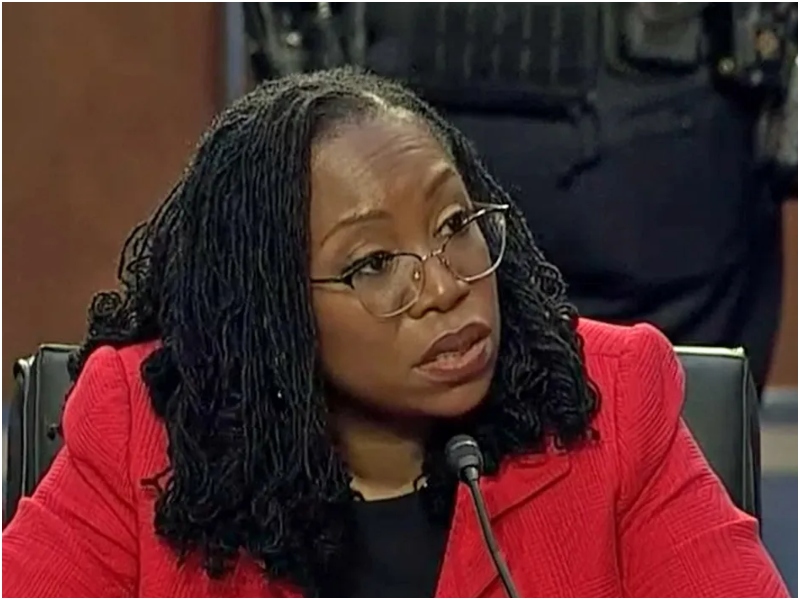
Her dissent directly addressed what she termed the “reputational cost” of such decisions, cautioning that even the appearance of favoritism toward “moneyed interests” undermines confidence in the Court’s impartiality—an institution already facing declining public trust.
According to a 2024 Pew Research Center survey, just 47% of Americans view the Supreme Court favorably, down from 76% in 1987. Meanwhile, 51% now view the Court unfavorably, citing concerns about political influence and inconsistent rulings.
Justice Brett Kavanaugh, who authored the majority opinion, pushed back on Jackson’s criticism. He defended the Court’s application of standing doctrine, noting that a review of past decisions “disproves” the suggestion of selective treatment.
But Jackson’s dissent continues to resonate with those concerned about increasing corporate influence and diminishing environmental protections.
Environmental and civil rights advocates argue that allowing indirectly affected corporations to challenge EPA decisions sets a dangerous precedent that could erode regulatory power and stall progress on climate change. Critics of the ruling fear it could embolden further lawsuits against state-level environmental actions.
Meanwhile, conservative legal groups and small business advocates praised the ruling. Beth Milito of the National Federation of Independent Business called the decision a victory for “small businesses” and a blow against “unreasonable standards” set by lower courts.
Kristen Waggoner, president of Alliance Defending Freedom, framed the decision as an opportunity for broader constitutional challenges, including cases involving religious liberty.
As the Supreme Court approaches the end of its term, Diamond Alternative Energy v. EPA stands as a flashpoint in a growing debate over the Court’s direction and legitimacy.
Justice Jackson’s dissent—anchored in concerns over judicial fairness and the erosion of public trust—adds fuel to that fire.