
When Shawna Rochelle Kimbrell was a little girl in Parker, Colorado, she would look to the sky and imagine herself there, not as a passenger, but as the one at the controls.
In 1999, that childhood dream carried her into history as she became the first Black woman to earn fighter-pilot wings in the U.S. Air Force, flying the F-16 Fighting Falcon and later completing combat missions in Operation Allied Force.
For decades, America’s fighter pilot culture—steeped in tradition and tight-knit bonds—was a space where women, and especially women of color, were rarely seen. Kimbrell changed that, not by trying to become a symbol, but by refusing to let a system decide what she could be.
“It wasn’t about proving anyone wrong,” she has said on the podcast Long Blue Line “It was about following the plan I had for my life.”
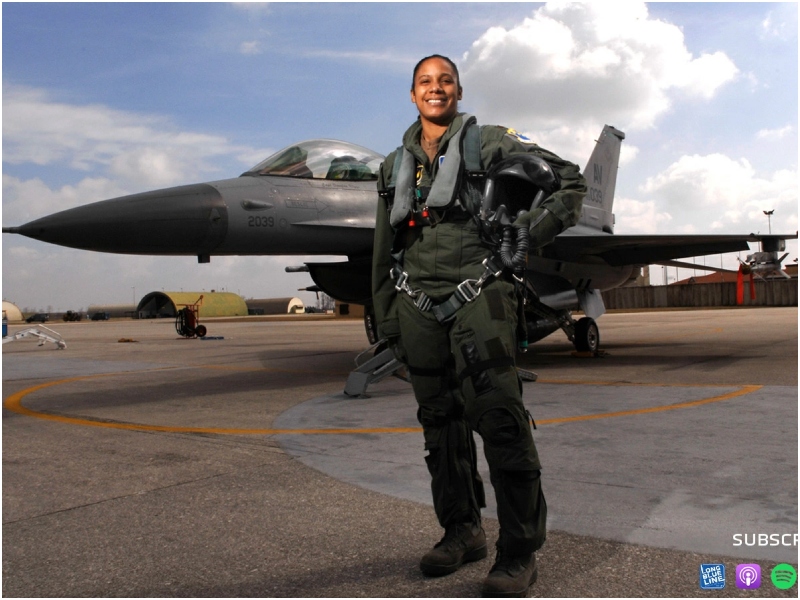
A Childhood Dream That Refused to Fade
Growing up as a young Black girl in a small Colorado town, Kimbrell heard a familiar refrain: You can’t. You shouldn’t. That’s not for you.
But her parents insisted otherwise.
“My parents always told us to chase our dreams and forge our own paths,” she recalled.
So she mapped out her future as meticulously as any flight plan. She joined Civil Air Patrol, sought out leadership roles, excelled academically, and earned her appointment to the U.S. Air Force Academy.
Along the way came obstacles—like failing a class, switching majors, and learning the uncomfortable but necessary art of recovering from setbacks.
“You learn that there are many paths that can lead there,” she said. “Everybody’s going to have a setback.”
Breaking Barriers at 30,000 Feet
When she earned her F-16 qualification in 1999, Kimbrell didn’t just break a glass ceiling—she flew straight through it.
But being “first” isn’t a title. It’s a weight.
Kimbrell faced issues her male peers rarely had to consider: gear and flight suits that weren’t designed for women, barriers in accessing the right medical support, and the personal and professional strain of navigating pregnancy and motherhood in a military culture still adjusting to these realities.
None of it stopped her. Her combat missions during Operation Allied Force sealed her place in military history, but her impact reached far beyond the cockpit.
A Second Service: Empowerment and Mentorship
After 13 years on active duty, Kimbrell transitioned to the Air Force Reserve, then into a new chapter—public speaking, entrepreneurship, and mentorship. The shift wasn’t a retreat from the military ethos but an expansion of it.
“I want to impact people’s lives,” she said. “I want to empower people to be their best selves.”
Today she speaks nationally about discipline, resilience, dreaming boldly, and—most importantly—planning your life with the same care most people reserve for summer vacations.
“I think we plan our vacations really well,” she tells audiences. “But we don’t plan our lives really well.”
Her message resonates. For young girls of color who rarely see themselves represented in cockpits or command centers, she is proof that representation is not only possible but powerful.
Why Her Story Matters Now
In a country still grappling with representation across institutions—from corporate boardrooms to military ranks—Kimbrell’s story is more than military history. It’s a reminder that breaking barriers is neither fast nor comfortable. It requires endurance, clarity of purpose, and the stubborn belief that being the “first” should never mean being the last.
Kimbrell’s journey is an American story: one of grit, vision, and a refusal to accept the limits imposed by others.
And for those who now look to the sky and see possibilities instead of barriers, her legacy is already doing its work.

