
As Black History Month draws to a close, scholars and cultural institutions across the United States are spotlighting the enduring legacy of trailblazing writer, anthropologist, and folklorist Zora Neale Hurston, whose work reshaped American literature and preserved vital pieces of Black cultural history.
Hurston rose to prominence in the 1930s and 1940s during a period marked by deep racial segregation and systemic barriers for Black artists.
Despite those challenges, she built a career defined by bold storytelling and groundbreaking anthropological research that documented African American folklore at a time when much of it risked being erased.
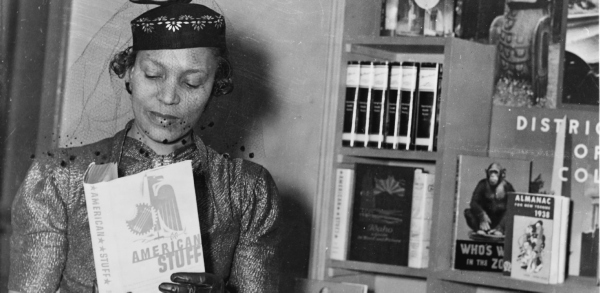
A Literary Landmark That Outlived Its Critics
In 1937, Hurston published her most famous novel, Their Eyes Were Watching God, a work now widely regarded as a cornerstone of American literature. The novel’s exploration of identity, independence, and Black womanhood broke new ground.
However, at the time of its release, the book received mixed reactions and was often dismissed by critics, including some within Black intellectual circles. Undeterred, Hurston continued her mission to record oral histories and cultural traditions across Black communities in the American South and the Caribbean.
Historians say her anthropological work provided a rare, authentic record of Black life during the early 20th century, ensuring that stories rooted in everyday experience were preserved for future generations.
A Legacy Nearly Lost
Despite her achievements, Hurston’s later years were marked by financial hardship and declining public attention. She died in 1960 in relative obscurity and was buried in an unmarked grave in Florida.
Her legacy began to resurface in the 1970s, largely due to author Alice Walker, who helped rediscover Hurston’s work and brought renewed attention to her contributions. Walker famously located Hurston’s grave and helped secure a proper marker, sparking a broader revival of interest in her writing.
That rediscovery led to Hurston’s works being reintroduced into academic curricula and widely recognized as essential to understanding both American literature and Black cultural history.
A Lasting Cultural Impact
Today, Hurston is celebrated globally as a literary pioneer whose work continues to influence writers, scholars, and artists. Experts say her life reflects a broader pattern in which visionary figures are often overlooked in their own time but later recognized for shaping cultural narratives and historical memory.
As Black History Month concludes, educators note that Hurston’s story serves as a reminder of the importance of preserving cultural identity and amplifying voices that might otherwise be marginalized.
Her legacy, scholars say, stands as proof that creativity, truth, and cultural memory can ultimately transcend silence and neglect.