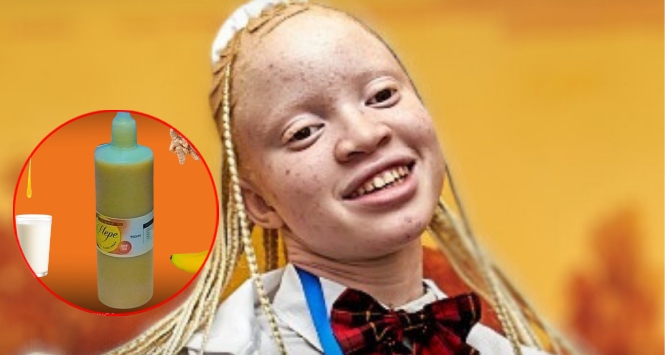
A 15-year-old student is making waves in public health and innovation with a life-saving creation born of personal tragedy and determination.
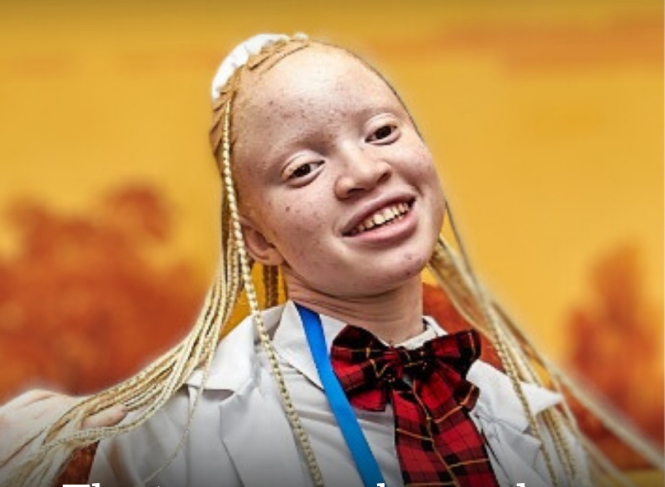
Mwape Chimpampa, a student at Naboye Secondary School in Kafue, has developed an affordable, organic sunscreen to protect people with albinism from the harsh effects of the sun. Mwape, who herself has albinism, was inspired to act after losing her father—who also had albinism—to skin cancer in 2017.
“My father had albinism like myself and my little sister, but he grew up in a very poor family which could not afford this very expensive sunscreen,” she said.
In many parts of Africa, especially sun-intense regions like Zambia, people with albinism face disproportionately high risks of developing skin cancer due to lack of melanin and limited access to protective skincare. Sunscreen, while medically necessary, remains out of reach for many due to cost and availability.
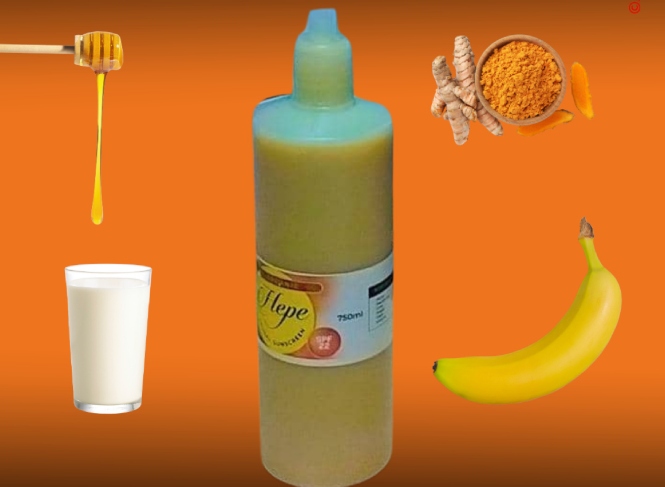
Mwape’s sunscreen, developed using natural ingredients such as fruits, vegetables, spices, and Aloe vera, boasts an SPF of 22 and is designed for high UV environments.
Her innovation made its public debut at the 2024 National Junior Engineers, Technicians, and Scientists (JETS) Fair, where it received national attention and earned her a spot among the top finalists.
Her project has since caught the attention of the Zambia Research and Development Centre (ZRDC), which is now supporting further development, scientific testing, and preparations for broader distribution.
But Mwape’s initiative is more than a school science project. It is part of a wider advocacy movement seeking systemic change.
Muluka-Anne Miti Drummond, the UN Independent Expert on the enjoyment of human rights by persons with albinism, has reiterated calls for sunscreen to be reclassified as an essential medicine by the World Health Organization (WHO).
“For people with albinism, sunscreen isn’t optional. It can be life-saving,” Drummond emphasized in a recent statement.
Mwape’s work is now being incubated for clinical testing, and there are plans to make the product available through local clinics and health centers. In addition to safeguarding lives, the initiative could have economic ripple effects by reducing reliance on imported sunscreens and creating jobs through local production.
The long-term goal? Train communities to produce their own sunscreen, ensuring sustainability and empowerment at the grassroots level.
Mwape’s story reflects the transformative power of youth-led solutions, combining science, advocacy, and community health.