An Ontario mother of nine is facing deportation to Nigeria even as one of her daughters continues to battle acute myeloid leukemia in a Windsor hospital.
Taiwo Fayemi and her family, who crossed into Canada from the United States three years ago seeking asylum, say they now face an impossible choice: leave behind the country they’ve come to call home, or risk being torn apart while one of their own fights for her life.
According to a report by CTV National News, Canadian immigration authorities have rejected the family’s refugee claim, ruling there wasn’t sufficient evidence to prove that they would be in danger if returned to Nigeria.
But the family’s story — and the circumstances surrounding their deportation — reveal a painful human dilemma that challenges Canada’s humanitarian image and raises urgent ethical questions about compassion, bureaucracy, and medical justice.
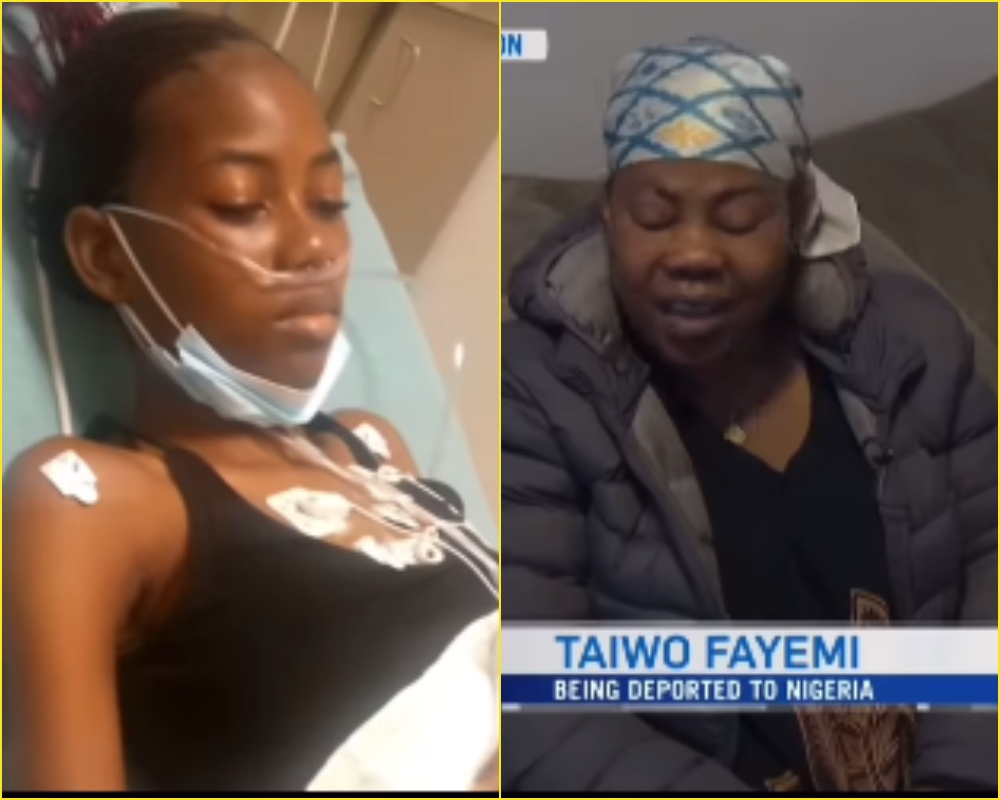
This is the worst day of our lives
Standing amid packed bags and tears in their Fort Erie, Ontario home, Taiwo Fayemi struggled to find words.
“I never ever dreamed this could happen,” she told CTV through tears. “I don’t wish this on my worst enemy.”
The family’s removal date has been set, leaving them just days to say goodbye to their friends, community, and the life they have built over three years.
Taiwo and her nine children — six biological and three stepchildren — came to Canada after her husband, a Nigerian opposition party politician, was kidnapped and targeted because of his political affiliation. Though he eventually escaped, the family feared returning to Nigeria, where violence and political persecution remain rampant.
Since arriving in Canada, Taiwo worked as a personal support worker, and her children began attending school and integrating into their new community. But their hopes for a permanent future came crashing down when Immigration, Refugees and Citizenship Canada (IRCC) denied their asylum claim.
The family has filed an appeal on humanitarian and compassionate grounds, but deportation orders are proceeding before that application can even be heard.
A Daughter’s Fight for Life

What makes the Fayemi case especially tragic is the condition of the leukemia patient, Amirat, one of Taiwo’s stepdaughters, who was diagnosed in 2022 with acute myeloid leukemia, a fast-progressing and aggressive form of cancer.
She has spent much of the past two years in and out of hospital in Windsor, Ontario, undergoing treatment that requires the full support of her family.
“One of us has to stay, but they’re not letting anybody stay to be able to donate the bone marrow for her,” a family member explained.
Without that critical support, her survival chances could dramatically decrease. The deportation not only separates a family — it threatens to deprive a sick child of potential life-saving care and familial donors.
IRCC has not responded to media requests for comment on the family’s case or on how deportations are handled in situations involving critically ill dependents.
The Human Cost of Policy
Immigration lawyers and human rights advocates say the Fayemi family’s ordeal underscores a deeper systemic issue — the rigidness of Canada’s asylum system and the slow, often detached process of humanitarian appeals.
While Canada is lauded globally for its refugee policies, critics say the system often fails in practice to balance procedural efficiency with compassion, especially when medical emergencies are involved.
In cases like the Fayemis’, advocates argue that deporting a family before their humanitarian claim is reviewed amounts to a denial of due process and a violation of Canada’s commitment to protecting vulnerable individuals.
“When policy becomes more important than people, the system has failed,” said one immigration advocate familiar with the case.
The family’s local community in Fort Erie has reportedly rallied around them, organizing petitions and social media campaigns urging Minister Marc Miller and the IRCC to suspend the deportation until Amirat’s medical treatment is complete.
A Question of Humanity
The Fayemi family’s story is more than a bureaucratic dispute — it’s a deeply human story of a mother’s love, a daughter’s battle against illness, and a country forced to reckon with its own moral responsibilities.
As their deportation date looms, Taiwo and her children face a terrifying unknown: returning to a country they fled in fear, while one of them lies in a hospital bed, clinging to life in a place they hoped to call home.
For now, all they can do is wait — and hope that compassion will outweigh procedure.