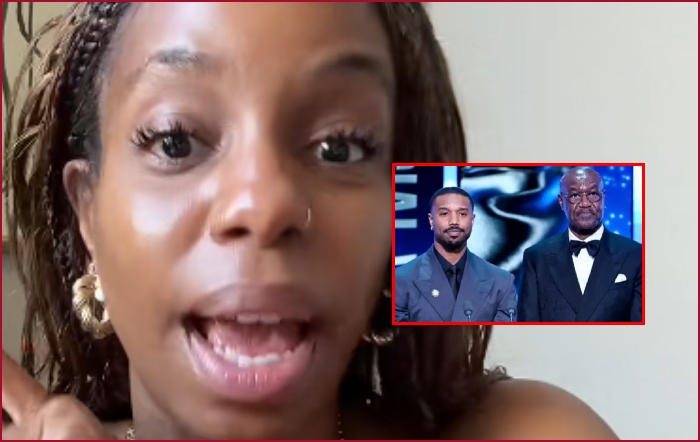
Black British comedian and media personality London Hughes says the BBC and the BAFTA are experiencing a level of public criticism they have “never felt before.”
She is arguing that growing scrutiny from Black American audiences is reshaping accountability for British media institutions.
In a widely circulated TikTok video, Hughes delivered a blunt assessment of the shifting dynamics around race and representation in the United Kingdom.
“Black Americans stand on business,” Hughes said. “Any time BAFTA has played in Black people’s faces in the past, nothing was done about it. Now they don’t know peace.”

Longstanding Tensions Resurface
Her comments followed the recent incident at the 2026 BAFTA Film Awards, where Tourette syndrome activist John Davidson had several involuntary vocal tics during the ceremony. One of those outbursts included him shouting a racial slur {N-word) while actors Michael B. Jordan and Delroy Lindo were on stage presenting an award.
The incident was audible in the venue and initially went out in the broadcast. Host Alan Cumming apologized during the ceremony for “strong language” heard and thanked viewers for understanding Tourette’s.
Because the show’s broadcast was delayed by two hours to edit out political and inappropriate comments, critics are asking why the racial slur by Davidson was left in the broadcast by the BBC.
Many, like Hughes, believe the outburst was left in the final broadcast because that is part of the BBC’s latent racism in their broadcasts. The BBC later confirmed that some offensive audio was edited in subsequent broadcasts after backlash.
Davidson later issued a public apology, saying he was “deeply mortified” and stressing that his vocal tics are involuntary symptoms of Tourette syndrome. The debate has, however, moved from Davidson’s alleged involuntary tic to why the BBC would leave the inappropriate outburst in their broadcast.
Hughes said concerns about racism and exclusion in British media have existed for years, but rarely generated sustained institutional pressure.
She pointed to past controversies, including criticism over a lack of diversity in BAFTA nominations and a 2020 BBC broadcast that aired a racial slur.
According to Hughes, the smaller size of the UK’s Black population historically limited the scale of organized backlash.
“We don’t really have the numbers in the UK,” she said, noting that Black Britons make up only a small percentage of the population.
A Shift Driven by Global Attention
Hughes argued that the situation has changed as criticism from Black Americans — amplified through social media — brings new international scrutiny.
She suggested that this cross-Atlantic attention could force meaningful change, citing growing discussions about potential boycotts and increased pressure campaigns.
“I kind of love watching Black Americans hold them accountable,” she said. “I know some real change will come from this.”
Institutions Yet to Respond
Neither the BBC nor BAFTA has publicly addressed Hughes’ latest remarks.
However, debates around representation and inclusion in British entertainment and broadcasting continue to intensify amid broader global conversations about racial equity in media.