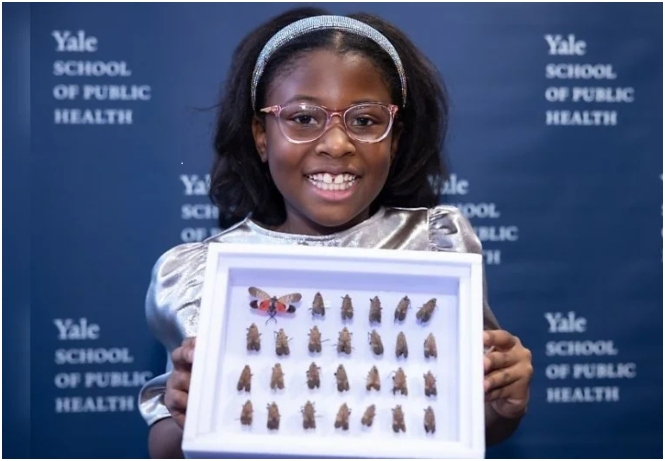
In a celebratory moment for science, education, and resilience, 9-year-old Bobbi Wilson has been honored by the Yale School of Public Health as a “donor scientist” for her contributions to combating invasive species—transforming a once-distressing incident into a story of inspiration and national recognition.
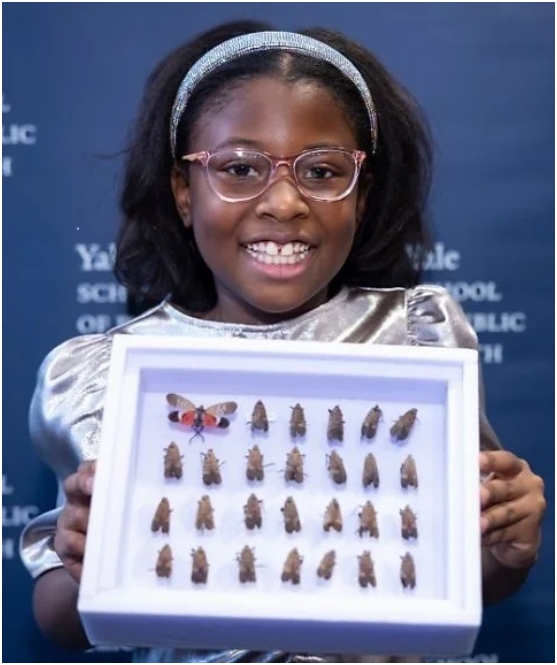
Bobbi, a fourth-grade student with a passion for environmental science, was formally recognized during a special ceremony in January 2023. Yale researchers added her collection of 27 spotted lanternfly specimens—an invasive insect known to damage trees and ecosystems—to the Peabody Museum of Natural History database.
“We wanted to show her bravery and how inspiring she is,” said Yale assistant professor Ijeoma Opara. “We just want to make sure she continues to feel honored and loved by the Yale community.”
From Backyard Science to National Spotlight
Bobbi’s scientific curiosity began with a school lesson about the destructive spotted lanternfly, a species that has spread rapidly across parts of the United States. Motivated to help, she created her own insect repellent inspired by online tutorials and began collecting the bugs around her neighborhood in Caldwell, New Jersey.
Armed with determination and a homemade solution, Bobbi moved from tree to tree, removing the insects and placing them into a container—actively contributing to New Jersey’s “Stomp it Out!” campaign aimed at controlling the infestation.
Her initiative reflects a growing trend of youth engagement in environmental stewardship, where even small-scale efforts can contribute to broader ecological awareness and action.
Turning a Painful Moment into Progress
Bobbi’s story first gained national attention following an unsettling encounter in October 2022, when a neighbor reported her to police while she was collecting lanternflies. The situation, widely criticized as an instance of racial profiling, sparked public outrage and concern.
Despite the fear and confusion of the moment—captured in her question to responding officers, “Am I in trouble?”—the incident became a catalyst for widespread support.
Community leaders, scientists, and educators rallied behind Bobbi, ensuring that her passion for science was not diminished. She later received a Sustainability Award from the Caldwell Environmental Commission, along with encouragement from members of the scientific community who recognized her potential.
A Symbol of Representation and Resilience in STEM
Yale’s recognition of Bobbi goes beyond honoring a single achievement—it reflects a broader cultural and social movement aimed at increasing diversity and inclusion in STEM fields.
For many observers, her story underscores the importance of representation, mentorship, and community support for young Black scientists, particularly in the face of adversity. By inviting Bobbi to campus and connecting her with accomplished Black female scientists, Yale sought to replace a negative experience with empowerment and belonging.
Bobbi’s mother, Monique Joseph, described the overwhelming support as transformative, noting that the scientific community embraced her daughter as one of their own.
“The whole community got together and said, ‘She’s one of us,’” Joseph said. “We’re not going to let her lose her passion for STEM.”
Inspiring the Next Generation
Bobbi’s recognition as a “donor scientist” is not only a personal milestone but also a message to young learners everywhere: scientific discovery has no age limit.
As conversations around environmental responsibility and equity in education continue across the United States, Bobbi’s journey highlights how encouragement and recognition can shape the future of science—one young mind at a time.