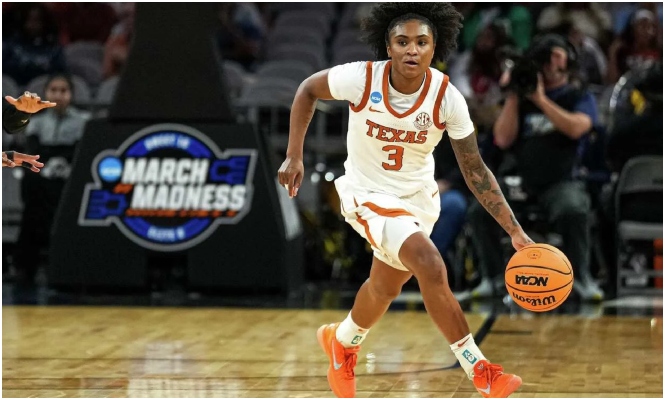
Rori Harmon has been trending nationwide over the last several hours after an emotional speech from her head coach, Vic Schaefer, went viral, reigniting debate over recognition in women’s college basketball.
In remarks that quickly spread across social media, Schaefer passionately defended Harmon’s legacy, highlighting her historic statistical achievements while criticizing what he described as a glaring lack of national recognition.
“I want everybody in the room to write this down,” Schaefer said. “Rori Harmon has scored 1,616 points, 977 assists, 659 rebounds, and 388 steals—and not one agency has ever voted her All-American. That is a crying shame.”
He went further, arguing that no player in the history of the sport has matched that combination of production across those four statistical categories, calling into question the credibility of major awards that have overlooked her.
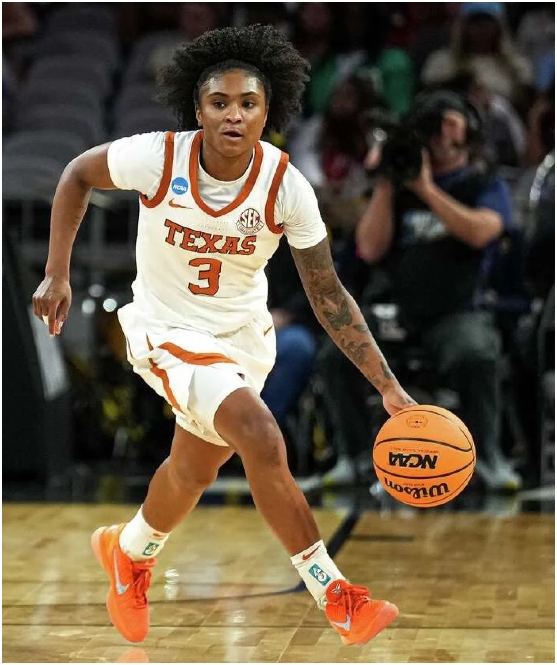
A Career Defined by Impact, Not Just Scoring
Harmon, a 5-foot-6 point guard from Houston, has built one of the most complete résumés in recent college basketball history despite not being a high-volume scorer. Known for her elite defense, court vision, and leadership, she is the Texas Longhorns’ all-time leader in both assists and steals.
Her influence extends beyond the stat sheet. Harmon has helped lead Texas to multiple deep NCAA Tournament runs, including two Final Four appearances and four Elite Eight berths. She has also been widely regarded as the “heartbeat” of the team, even during periods when she was sidelined.
In 2023, Harmon suffered a torn ACL that ended her season while Texas was undefeated and ranked among the top teams in the nation. Despite the injury, she remained a vocal leader off the court as the Longhorns continued to contend. Her return the following season was marked by strong play and another All-American honorable mention selection.
Recognition Gap Sparks Debate
Schaefer’s comments have fueled broader discussions about how excellence is measured in women’s basketball. While scoring often dominates award considerations, players like Harmon—who excel in defense, playmaking, and leadership—can be overlooked despite their comprehensive impact on the game.
The viral moment has prompted fans, analysts, and former players to revisit award criteria and question whether traditional metrics adequately capture a player’s value.
Harmon’s case also underscores a recurring issue in women’s sports: the visibility and recognition gap compared to men’s athletics, as well as disparities within the women’s game itself when it comes to media attention and accolades.
A Larger Moment for Women’s Sports
As women’s college basketball continues to grow in popularity and visibility, moments like this are increasingly shaping the conversation around equity and recognition. Advocates argue that honoring players like Harmon is essential not only for fairness but also for accurately representing the evolution of the game.
With her name now trending and her accomplishments under renewed scrutiny, Harmon’s legacy is being reassessed in real time—potentially influencing how future players are evaluated and celebrated.
Whether or not formal accolades follow, Schaefer’s remarks have ensured one thing: Rori Harmon’s impact on the game is no longer being overlooked in silence.