
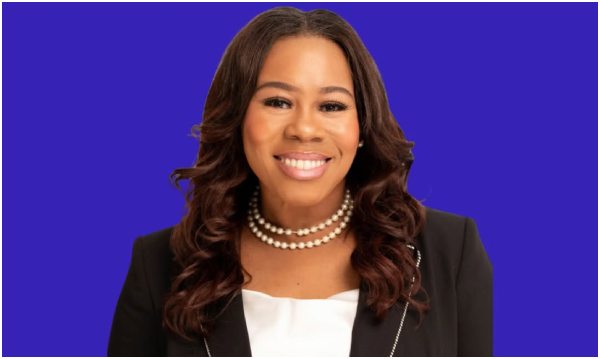
Deputy Public Defender and law professor Rhonda A. Haymon says a courtroom confrontation that resulted in a contempt citation helped solidify her decision to seek a seat on the bench herself.
Haymon, who is running for Superior Court Judge Seat 64 under the campaign banner “The People’s Dream Judge” in 2026, recently discussed her motivations during an interview with legal commentator A.B. Burns-Tucker.
The longtime public defender said her career has been dedicated to representing some of society’s most vulnerable individuals, people who often enter the justice system feeling disadvantaged before their cases even begin.
“I represent the indigent, marginalized, people who feel broken down by systems,” Haymon explained. “I meet them at their most vulnerable moments when they’ve been charged with a crime.”
According to Haymon, years of advocating aggressively on behalf of her clients exposed her to tensions within the courtroom, particularly when she challenged judicial decisions or sought to vigorously enforce legal protections for defendants.
“I’ve been a true advocate of the law and I’ve been enforcing it in court,” she said. “And it makes some judges very uncomfortable that I actually come in there practicing law. I’m not just there to make friends. I’m there to do a job.”
Contempt Citation Became a Turning Point
Haymon recounted an incident in which she was held in contempt by a judge after objecting during proceedings involving a client who was not present in the courtroom.
According to her account, she was requesting a second call to allow time for her client to be brought into court when the dispute occurred.
“A judge held me in contempt,” Haymon said. “My client was not in the court. He was outside and I was asking for a second call to bring him in.”
She believes the incident reflected broader frustrations with her success as a defense attorney.
“She had been after me for a while because I guess I’d had too many dismissals and too many wins,” Haymon said.
The experience, she suggested, highlighted concerns about fairness and power dynamics within the judicial system.
Campaign Focused on Fairness and Access to Justice
For Haymon, the decision to run for judge stems from a desire to ensure that every person who enters a courtroom feels heard and treated fairly, regardless of their economic status or criminal charges.
Reflecting on the clients she has represented throughout her career, she said many already arrive believing the system is stacked against them.
“You’re coming after the attorney who is zealously advocating for people who already feel like they’re not going to have a fair shake,” she said.
That statement has become a central theme of her campaign, emphasizing equal treatment under the law and a judiciary that remains open to vigorous advocacy from both sides.
From Defender to Potential Judge
Haymon’s campaign comes at a time when debates over judicial accountability, criminal justice reform, and public confidence in the courts continue to shape legal and political discussions nationwide.
As both a practicing public defender and legal educator, she argues that her courtroom experience provides a unique perspective on how judicial decisions affect everyday people, particularly those with limited resources.
Her campaign for Seat 64 is expected to focus heavily on access to justice, procedural fairness, and ensuring that defendants receive meaningful representation regardless of their financial circumstances.
For Haymon, the transition from arguing cases before judges to potentially serving as one represents an opportunity to influence the justice system from a different vantage point—one she says is rooted in the experiences of the people she has spent years defending.
“The people who feel broken down by systems” remain at the center of that mission, she says, and are the reason she decided to enter the race.

