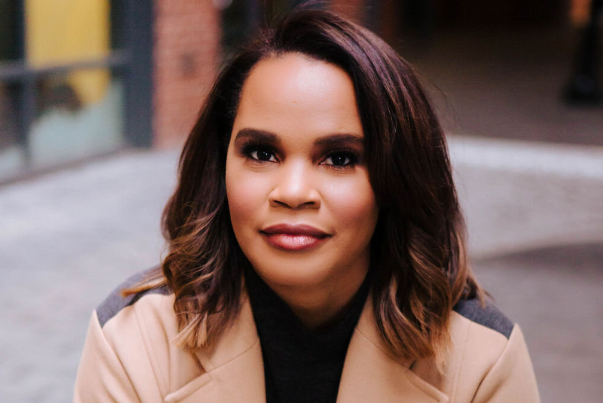
CNN legal analyst and former federal prosecutor Laura Coates has taken to Instagram to explain Section 2 of the Voting Rights Act.
“This comes down to power,” she said — a simple sentence that captures the gravity of a legal battle that could reshape American democracy.
As the U.S. Supreme Court weighs a case that could redefine how race factors into voting rights, Coates’ breakdown — titled “Section 2 Explained” — has gone viral for making sense of an issue that is both technical and deeply human. Behind the legal jargon lies a question that cuts to the core of America’s identity: Do racial minorities still need explicit legal protection to ensure fair representation at the ballot box?
What Is Section 2 of the Voting Rights Act?
Passed in 1965, at the height of the civil rights movement, the Voting Rights Act (VRA) was landmark legislation designed to end racial discrimination in voting.
Coates explains that Section 2 specifically prohibits discrimination in voting on the basis of race, making it illegal for state or local governments to enact laws, district maps, or voting procedures that reduce or “dilute” the voting power of minority groups.
“It prevents gerrymandering,” Coates said in her video, referring to the practice of redrawing district lines to weaken the political influence of certain groups. “You want to try to draw lines around different minority populations so they have less ability to vote a candidate of their choosing. That’s called voter dilution.”
Section 2 vs. Section 5: What Changed
Coates drew a critical distinction between Section 2 and Section 5 — another key part of the Voting Rights Act that was “gutted” by the Supreme Court in 2013’s Shelby County v. Holder.
Section 5 required states and localities with histories of racial discrimination to get preclearance — prior approval from the U.S. Department of Justice — before changing their voting laws or district boundaries. The Supreme Court’s conservative majority struck down the formula that determined which jurisdictions were subject to preclearance, calling it “archaic” and suggesting that America had entered a “post-racial era.”
“Back on that in a moment,” Coates added wryly in her explanation, signaling what many civil rights lawyers have long argued — that such claims of a post-racial America have proven dangerously naive.
The Current Case: Louisiana at the Center of a National Struggle
The Supreme Court case now before the justices — Louisiana v. Callais — tests whether race can still be considered when drawing political maps under Section 2.
At issue is the creation of a second majority-Black congressional district in Louisiana. Civil rights advocates, led by Janai Nelson, president of the NAACP Legal Defense and Educational Fund, argue that the state’s Black voters — roughly one-third of the population — deserve more equitable representation.
Opponents claim that factoring race into map-drawing is itself a form of discrimination, echoing arguments made in affirmative action cases.
“The Supreme Court is weighing whether race should ever be factored into Section 2 or the Constitution more broadly,” Coates said. “Their arguments are not unlike what they have said in the past when it comes to affirmative action — that we’re in a post-racial world.”
Why It Matters: Power and Representation
The stakes are monumental. If the Court limits or reinterprets Section 2, majority-minority districts — areas where racial minorities collectively hold voting power — could disappear across the country.
That would likely tilt the balance of power in Congress, not through voter choice, but through redistricting that dilutes minority influence.
As Coates stressed, “This could dramatically transform the congressional map if you take away majority-minority districts.”
In plain terms, it’s not just about lines on a map. It’s about who gets a voice in democracy — and who doesn’t.
A Legal Issue, A Human Consequence
What makes Coates’ explanation resonate is not just her clarity, but her empathy. She reminds viewers that behind every legal argument is a lived reality — one shaped by centuries of systemic exclusion from the ballot box.
Her remarks also serve as a quiet rebuke to the notion that America has outgrown racial inequality. From voter ID laws to polling place closures in Black and Latino neighborhoods, modern voter suppression often hides behind bureaucratic or political justifications. But its impact is real — and disproportionately borne by communities of color.
The question before the Court, then, is whether the law will continue to recognize that reality.
The Bigger Picture: Voting Rights on the Edge
If the Court’s conservative majority follows its reasoning from Shelby County and the recent affirmative action rulings, Section 2 could be weakened — perhaps beyond recognition.
Legal scholars warn that this would amount to the final dismantling of the Voting Rights Act, leaving racial minorities with little recourse against discriminatory voting systems.
As Coates succinctly put it, “This comes down to power.”
The power to draw districts.
The power to choose leaders.
The power to define what democracy means in practice.
And for millions of Americans, that power remains far from equally distributed.