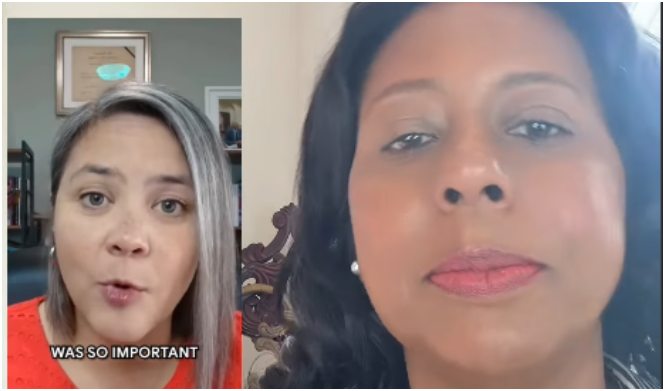
A decade after Republicans launched a sweeping redistricting strategy known as Project REDMAP, attorney and political commentator Danielle Bess says many Americans still do not fully understand how the effort reshaped congressional power nationwide.
In a recent Instagram video, Bess warned viewers that Republicans have spent years strategically targeting state legislatures to gain long-term control over congressional maps and electoral outcomes.
“Republicans have been planning to steal your vote since 2011 and most people have never even heard of it,” Bess said.
Bess made the remarks during a discussion with Marina Jenkins, executive director of the National Democratic Redistricting Committee (NDRC), the organization founded by former U.S. Attorney General Eric Holder and former President Barack Obama to combat partisan gerrymandering and voting map manipulation.
Project REDMAP — short for Redistricting Majority Project — was launched by Republican strategists ahead of the 2010 midterm elections with a focused plan to win control of key state legislatures before the once-a-decade redistricting process began in 2011.
According to Jenkins, the strategy succeeded in allowing Republicans to redraw congressional boundaries in ways that gave the party structural advantages lasting for years.
“They had a really coordinated strategy to take over state houses across the country to ensure that they had control of redistricting,” Jenkins said in the interview. “They were successful and they built an incredible amount of bias into the national congressional map.”
The strategy became one of the most consequential political operations of the modern era because congressional district boundaries largely determine how voters are grouped and which party is favored in elections.
Critics of partisan gerrymandering argue that heavily manipulated maps can allow politicians to effectively choose their voters rather than voters choosing their representatives.
Bess argued the effects of Project REDMAP are still visible today in election outcomes where Democrats may win more votes nationally while Republicans maintain legislative advantages.
“So even when we vote for Democrats nationally at a higher rate, Republicans still win,” Bess said. “That’s not democracy.”
The renewed attention on Project REDMAP comes as voting rights groups, lawmakers and legal advocates continue battling over congressional maps in states including Alabama, Georgia, North Carolina, Texas and Florida, where courts have repeatedly reviewed claims of racial or partisan gerrymandering.
The National Democratic Redistricting Committee was formed in response to those concerns and has focused on litigation, ballot initiatives and state-level organizing efforts aimed at creating what it calls fairer electoral maps.
Bess also framed the issue as part of a broader long-term political strategy battle heading into future election cycles.
“They are always planning,” she said. “And if we don’t start planning, they’ll do the same thing in 2028.”
Project REDMAP has remained controversial because supporters argue redistricting is an inherently political process controlled by whichever party wins elections, while opponents say extreme partisan map-drawing weakens democratic representation and voter influence.