A viral video from an unidentified church is igniting sharp debate online after a group of self-described “prayer warriors” laid hands on a young girl.
The young girl had said she was thankful for her stepmother because “she listens better than my actual mom.”
The moment unfolded during a church program where children were invited to share what they were grateful for at a podium. The clip shows the girl’s mother abruptly telling her to “get it together,” visibly angered by the child’s comment.
Within seconds, several church leaders surrounded the girl, labeling her statement as spiritually influenced and commanding the “demon” to flee from her body.
What followed has divided the internet.
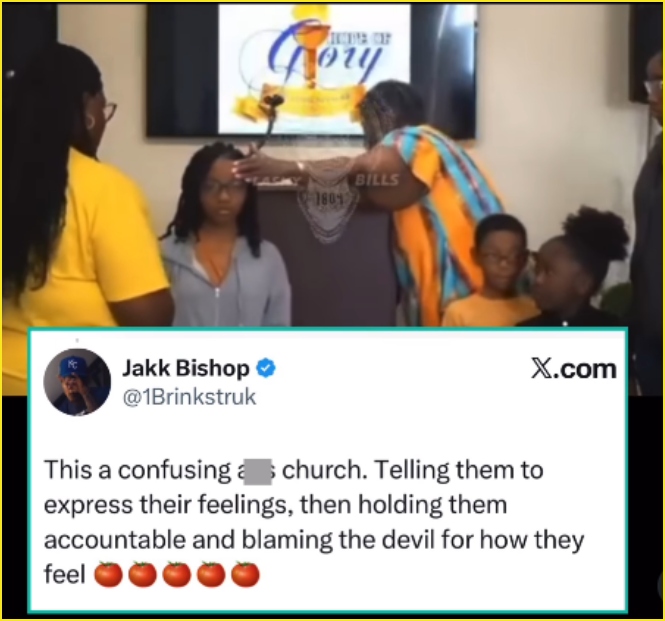
Deliverance or Distress?
Supporters of the church’s actions insist the child’s tone and timing were disrespectful, suggesting she intentionally wanted to embarrass her mother. They argue that leaders were within their rights to correct what they perceived as dishonor.
But an equally vocal wave of criticism says the adults crossed every line.
Many parents and mental health advocates argue that the girl expressed a completely valid emotional truth — that she feels heard by her stepmother — and was shamed, spiritualized, and publicly humiliated for it.
“Calling a child’s feelings ‘the devil’ is emotional violence,” wrote one commenter. Others said the church had weaponized deliverance practices to police a child’s personal relationships and protect a parent’s ego.
Several viewers noted how quickly the girl shifted from gratitude to fear, calling the scene “disturbing,” “traumatizing,” and “a misuse of spiritual authority.”
A Mirror for Bigger Issues
The viral reaction underscores a broader cultural conversation: how some religious spaces handle children’s honesty, blended family dynamics, and emotional expression.
Family therapists reached online point to a familiar pattern — adults prioritizing public image over a child’s internal world. In many Black and Pentecostal church traditions, they noted, criticism voiced by a child is often reframed as rebellion or spiritual attack.
But critics say this incident highlights why many younger people are distancing themselves from institutions they feel silence their real experiences.
Whether viewers see a child “acting out” or a community misusing faith tools depends largely on their own upbringing and beliefs.
But most agree on one thing: the girl’s simple expression of gratitude should never have escalated into a spiritual intervention.