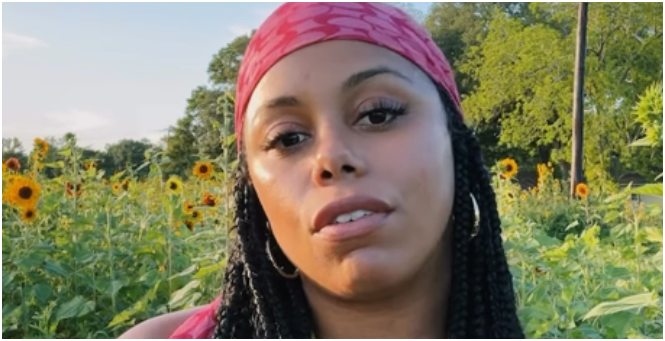
A powerful Mother’s Day video from filmmaker and creator Starling has started an emotional campaign online by connecting the history of slavery to modern-day stories of incarcerated women giving birth alone in American jails and prisons.
In the video, posted to Instagram alongside promotion for her film Born Captive, Starling delivers a haunting message about Black motherhood, incarceration and systemic neglect.
“400 years. It never stopped. It just changed uniforms,” she said.

The director traced a historical line from slavery-era forced births to present-day reports of incarcerated women allegedly being denied medical care during labor.
“For 400 years, Black women have been forced to birth in bondage in this country,” Starling said. “On slave boats, on plantations, in fields and in chains.”
She then referenced multiple modern cases involving women who reportedly gave birth while incarcerated and without proper medical assistance.
Among the names she cited was Andrea Circle Bear, who died from COVID-19 complications after giving birth while in federal custody, as well as women in Connecticut, Florida, Alabama, Texas, Georgia and Kentucky who allegedly delivered babies alone inside jail cells, prison showers or detention facilities.
In one of the most heartbreaking moments of the video, Starling referenced a Kentucky woman who reportedly “chewed through her umbilical cord after she gave birth alone on a county jail floor.”
She also spoke personally about her own family’s connection to incarceration.
“The early 2000s, my mama locked up for unpaid probation fees,” Starling said. “She gave birth in handcuffs and chains.”
The emotional presentation quickly spread across social media, with viewers expressing horror over stories of women allegedly being ignored while in labor and questioning why pregnant incarcerated women continue to face such conditions in the United States.
Starling also highlighted broader statistics surrounding pregnancy and incarceration, claiming that approximately 58,000 pregnant women enter American jails and prisons annually and that more than 2,000 babies are born while their mothers are in custody each year.
She further criticized the lack of oversight, noting that many states reportedly do not track outcomes involving incarcerated pregnant women and newborns.
“Twenty-two states don’t even track the outcomes of mothers and children and the babies who are born in their custody,” she said.
Advocates for prison reform and maternal health have long argued that incarcerated pregnant women face heightened medical risks, inadequate prenatal care and dangerous labor conditions. Human rights organizations have also pushed for bans on shackling pregnant inmates, a practice several states have restricted but critics say still occurs.
Starling framed the issue as part of a larger conversation about race, incarceration and maternal mortality in America.
“We have the highest Black maternal mortality rate in the developed world and we are still putting pregnant women in chains,” she said.
The filmmaker ended the video by urging viewers to support her Born Captive campaign, which she says is focused on changing laws and ending prison births in the United States.
“If what I said don’t sit right with you,” Starling told viewers, “then get involved in this movement to end prison birth in this country.”