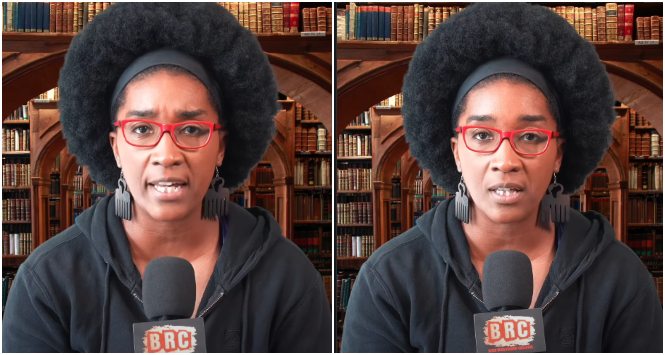
A political activist and community organizer has argued that America’s political problems run deeper than partisan divisions, insisting that the nation’s two-party system is fundamentally broken and in need of replacement.
Melody Angel, president and founder of the Black Revolutionary Collective (BRC), shared her views in a video that discussed pertinent issues about political representation, voter dissatisfaction, and the future of American democracy.
“The solution is not to fix the two-party system,” Angel said. “It cannot be fixed. The solution is to build something new.”
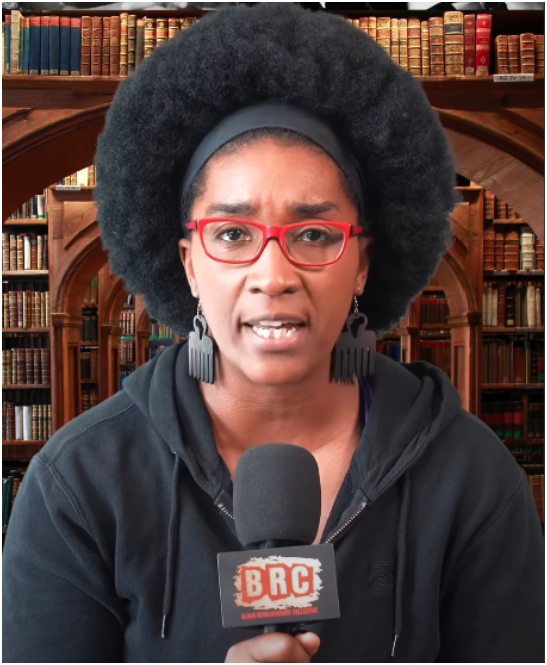
Her remarks come at a time when public trust in political institutions remains low and many Americans express frustration with both major political parties.
Angel argued that the United States is unusual among major democracies because political power is overwhelmingly concentrated in two dominant parties.
“The U.S. is one of the only major democracies on earth that runs on just two political parties,” she said. “Not because it’s the best way, but because the system was engineered over time to make any alternative nearly impossible.”
Pointing to public dissatisfaction with government, Angel noted that Congress often receives low approval ratings despite high reelection rates for incumbents.
She also highlighted the growing number of Americans who identify as politically independent rather than Republican or Democrat.
“Over 40% of Americans identify as independent,” Angel said. “That means the largest political group in America has no party.”
According to Angel, restrictive ballot access laws and entrenched political structures make it difficult for third-party candidates and alternative movements to gain traction.
She contrasted the U.S. system with countries such as Germany, Sweden, Canada, and New Zealand, which operate under multi-party systems and often form coalition governments.
“Citizens feel they have a real choice because they actually do,” she said.
One of the most controversial aspects of Angel’s commentary centered on the Electoral College. She argued that the institution’s origins are tied to compromises made during the nation’s founding era, including those involving slavery.
“The Electoral College was created in 1787 partly to give smaller states more weight and partly because it was a compromise that protected the influence of slave-holding states,” she said.
Angel contended that the current system causes presidential campaigns to focus disproportionately on a small number of competitive battleground states while voters in reliably Democratic or Republican states receive less attention.
“If you live in California, Texas, or New York, your presidential vote is functionally meaningless,” she argued. “Candidates don’t need to campaign for you because you don’t matter in the math.”
Her comments reflect a broader national debate over electoral reform, including proposals to abolish or modify the Electoral College, expand ballot access for third-party candidates, and adopt voting systems that give voters more choices.
While supporters of the current system argue that it helps preserve political stability and protects the interests of smaller states, critics have increasingly questioned whether it adequately reflects the political diversity of the American electorate.
For Angel, however, the issue goes beyond electoral mechanics.
“The question is not whether America can afford to change,” she said. “The question is whether America will change before it destroys itself.”
The statement has resonated with some viewers who share concerns about political polarization and voter disenchantment, while others have challenged her conclusions about the causes of the nation’s political divisions.
As debates about democracy, representation, and political reform continue, Angel’s message underscores a growing sentiment among some Americans that dissatisfaction with the political system extends far beyond disagreements between Democrats and Republicans.