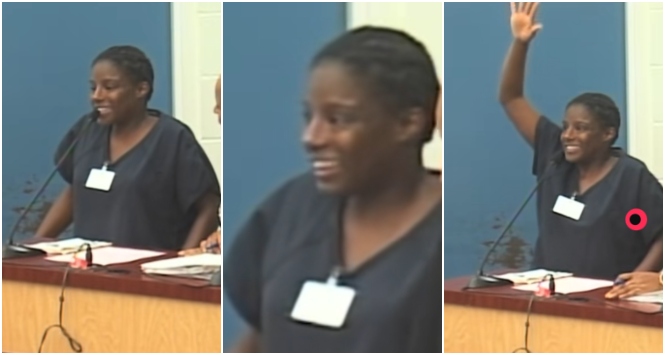
After months of online outrage and courtroom heartbreak, 26-year-old Imarah Aaliyah Bryan — the Florida woman whose repeated arrests sparked national debate over how the justice system treats people with cognitive disabilities — is finally getting the second chance she deserves.
Bryan, who had been jailed twice this year for low-level offenses, was released from custody this week. But this time, she didn’t walk out alone. A group of compassionate community members, moved by her story, stepped in to ensure she had a safe place to stay, access to medical care, and emotional support.
The heartwarming update was shared by content creator @therobbieharvey, who has been following Bryan’s case since her first viral court appearance. In a new video, the creator revealed that a local woman who couldn’t get Bryan “off her mind” helped secure her release — and immediately began working to stabilize her life.
“You don’t have to prove nothing to me, girl. I just want you to prove it to yourself,” the woman tells Bryan in the video.
“Without you, it wouldn’t be possible,” Bryan replies tearfully. “I probably would still be sleeping in my sweater.”
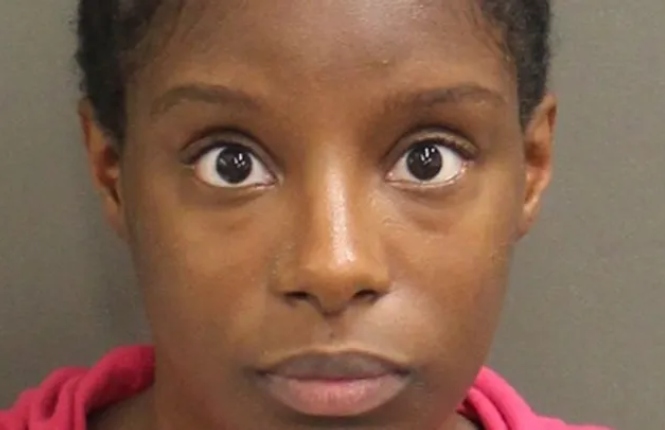
In the emotional footage, Bryan can be seen expressing disbelief at simple comforts most people take for granted — a shower, a bed, fresh grapes, and the freedom to watch television.
“I really couldn’t believe I was really in the shower,” she says. “Then I’m going to eat grapes. Then I’m going to watch TV on a real TV where I can change the channel and turn it up.”
According to the update shared by @therobbieharvey, the volunteers helping Bryan have already arranged for her to restart her medication, and they’re working to get her Medicaid, Social Security, counseling, and stable housing.
“This is what happens when the government fails — and the community steps up,” Harvey said in her video, thanking those who intervened when the system did not.
A Pattern of Systemic Neglect
Bryan’s case first made headlines earlier this year when she was jailed for 50 days after allegedly stealing $140 worth of items from a Target in Orlando. Her quiet, confused demeanor in court — and the fact that she appeared to have cognitive delays — led many to question why she wasn’t diverted to mental health treatment instead of incarceration.
Weeks later, Bryan was arrested again — this time for allegedly drinking a $1 sparkling water inside a Dollar General before paying for it. She was banned from the store and held on a $1,000 bond. The back-to-back arrests drew criticism from disability rights advocates who said her situation reflected a broader failure of the justice system to accommodate neurodivergent individuals.
While public defenders, advocates, and online supporters rallied for her release, Bryan cycled through jails and courtrooms — without stable housing or care.
Her repeated arrests became a haunting example of what legal experts call “the criminalization of disability,” in which people with special needs are punished for behaviors tied to their conditions instead of being offered help.
A Turning Point
Now, for the first time in months, Bryan is surrounded by people determined to help her heal. The woman who reached out to her described feeling spiritually led to find her.
“God told me that I needed to find her,” she said. “I think she just needed somebody to just be in her corner.”
Bryan, who revealed she had prayed and journaled for a friend, broke down upon realizing her wish had come true.
“Can somebody please just please be my friend?” she recalled writing. “I can’t even believe that this is really happening.”
Her story has since sparked renewed calls for reform.
“Fighting back tears over here. Don’t know why our system couldn’t do the same thing,” someone commented on @therobbieharvey’s post on Instagram.
What happened to Bryan is not an isolated incident — but her recovery could serve as a roadmap for change. The compassion of strangers, it turns out, did what institutions could not: it restored her dignity.
As another viewer commented beneath the video, “This is what love looks like when the system fails. We need more of this — and fewer court dates.”