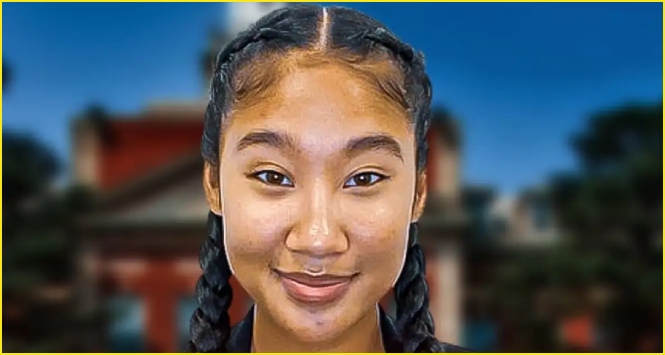
A Howard University student’s decision to publicly renounce her membership in Delta Sigma Theta Sorority, Inc. just one month after pledging, ignited a firestorm across social media last year.
The 2024 incident reopened a century-old debate at the intersection of faith, identity, and Black Greek life.
Zora Sanders, a sophomore at Howard at the time, posted a public resignation letter, citing religious convictions as the reason she could no longer remain in the historic sorority.
Quoting the Biblical verse “Thou shalt have no other gods before me,” Sanders described a spiritual reckoning that began during her initiation process. She said she became uncomfortable with references to the goddess Minerva, a long-standing symbol of wisdom in Delta Sigma Theta’s iconography.
“The rituals I participated in are in direct conflict with my Christian beliefs,” Sanders wrote. “I cannot serve both God and any other power. I choose Christ.”
Her decision — rare but not unprecedented — has since divided opinion across the Black college community, especially within the “Divine Nine,” the collective of nine historically Black fraternities and sororities that have shaped African American civic and social life for over a century.

Faith, Sisterhood, and a Public Reckoning
For some, Sanders’ renouncement represents a spiritual victory. One viral comment on Instagram read:
“Since I repented, renounced, and denounced the Greek letter organization I was a member of back in 2020, I’ve been praying for others to do the same. Prayers are being answered. Peace and blessings to Zora Sanders.”
But for others — especially members who see their organizations as pillars of service, education, and empowerment — Sanders’ move feels like an attack on institutions that have historically supported Black advancement.
“This isn’t just about one student,” said Dr. Monique Harvey, a Howard University alumna and Delta Sigma Theta member for 25 years. “It’s about how social media turns complex spiritual and cultural conversations into viral spectacle. Zora is entitled to her convictions — but that doesn’t erase the legacy of thousands of women who have used Delta to fight injustice and serve their communities.”
A Broader Movement of Denouncements
Sanders’ post comes amid a growing trend of Black Greek members publicly denouncing their organizations — often on religious grounds.
Shortly after Zora’s incident, The Washington Post reported that hundreds of former members of the Divine Nine have taken to TikTok and YouTube, describing their experiences as spiritually incompatible with their Christian faith.
In one viral video, content creator Candace Junée, a former member of Alpha Kappa Alpha, called her initiation “openly demonic” and said her participation “opened doors” to spiritual struggles. Her video amassed 1.7 million views.

Other testimonies focus less on faith and more on organizational disillusionment. One woman, identified as Angela, said her HBCU chapter’s suspension and lack of institutional support left her “feeling abandoned.”
“In that moment, I realized this is a business first,” Angela said. “Sisterhood and service come second.”
These accounts have spread widely in an age where the sacred and the social collide in real time online.
The Divine Nine Responds
Leaders of the Divine Nine have largely pushed back on claims of “idolatry.”
Elsie Cooke-Holmes, International President of Delta Sigma Theta, told The Washington Post that fewer than one percent of members choose to leave and that the sorority “will not be distracted from our audacious social justice and civil rights agenda.”
“Lifetime commitment in Delta doesn’t mean bowing to gods,” said Shavon Arline-Bradley, an associate minister and longtime Delta member. “It means committing to public service and sisterhood.”
Others within the Black Greek system say the denunciations reflect a larger generational shift, where younger members question long-standing traditions through the lens of personal spirituality and transparency.
A Mirror of Modern Identity
The story of Zora Sanders, although over a year old, definitely strikes a nerve, not because it’s entirely new, but because it captures something deeply current.
Sanders has declined interviews since her post, but her letter, now shared thousands of times across platforms (but the original has been deleted), places her at the center of a debate that reaches far beyond Howard’s campus.
For many, the question remains the same one Sanders herself posed — if not directly, then spiritually:
Can you serve God and love sisterhood at the same time?