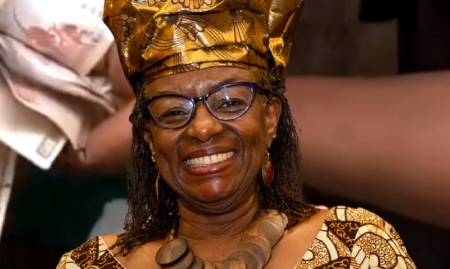
In the early 1990s, the idea that women could borrow money from a bank and reliably repay it was widely doubted in parts of Kenya.
But Jennifer Riria set out to challenge that assumption — and ultimately helped transform financial access for millions of women.
Riria is the founder of Kenya Women Finance Trust (KwFT) and Kenya Women Holding, institutions created to provide loans, savings accounts and financial services tailored specifically to women entrepreneurs.
“In the early 90s, nobody was thinking a woman can borrow a loan in this country and repay,” Riria said in a recent interview.
From Rural Beginnings to Financial Leadership
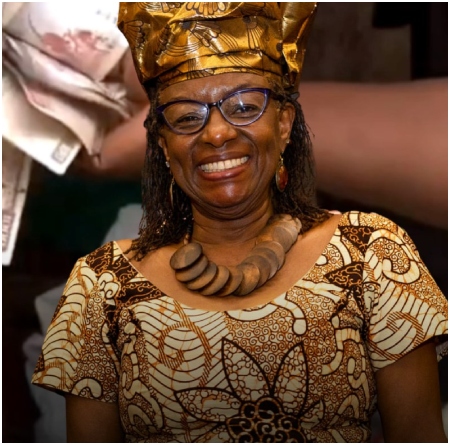
Riria grew up in a rural village in Kenya and did not initially envision a career in finance.
Her life took a challenging turn at the end of high school when she experienced an unplanned pregnancy. Determined to continue her education, she moved away from home with her baby and enrolled in university.
“I went to my sister’s and I took my baby with me to university,” she recalled.
After earning an education degree in Tanzania, she later received a scholarship to pursue a master’s degree in the United Kingdom.
During that time, Riria said she often depended on the kindness of strangers while raising her child and studying abroad.
“Wherever I went with my child, I found very kind people who even fed us when we didn’t have any food,” she said.
Building Financial Opportunities for Women
Motivated by her own experiences and the barriers women faced in accessing financial services, Riria later founded Kenya Women Finance Trust, one of the country’s leading microfinance institutions focused on women.
At the time, many financial institutions were reluctant to lend to women, particularly those in rural communities or informal businesses.
Riria believed the problem was not women’s ability to repay loans but the lack of systems designed to support them.
“Most of Africa is rural, although urbanisation is taking root now,” she said. “The financial systems that deliver financial services to women are still eluding women.”
Innovative Lending Model
Through KwFT, Riria introduced programs encouraging responsible borrowing and repayment among women entrepreneurs.
One approach included annual gatherings in Nairobi where women could repay loans and attend business training sessions.
The organization also offered incentives for timely repayments.
“If you repay, we’ll give you $50. If you pay, we’ll give you $75. If you pay, we’ll give you $100,” Riria explained. “Like that, it was incremental. But the women had to prove that they can repay.”
The strategy helped demonstrate that women borrowers could manage credit responsibly while growing small businesses.
Expanding Financial Inclusion
Over the years, the institutions founded by Riria have helped millions of Kenyan women access loans, open savings accounts and build businesses in sectors ranging from agriculture to retail.
Her work has become an influential example of how targeted financial services can empower women economically while strengthening communities.
Today, Riria is widely recognized as one of Africa’s leading advocates for financial inclusion — proving that a vision once dismissed by many could reshape an entire sector of banking.