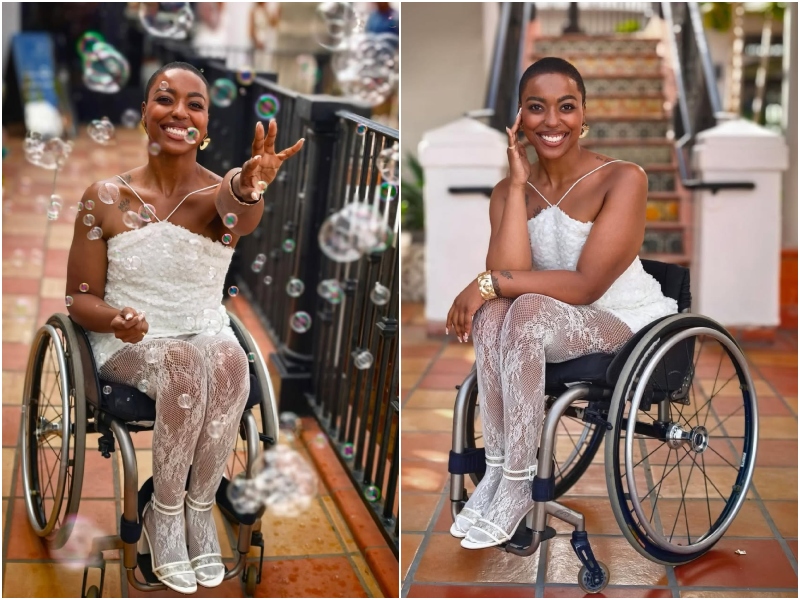
When Denisha Davis rolls onto a runway, the audience rarely knows the full story behind her presence—the pain, persistence, and self-reinvention that brought her there.
Davis, now 29 and living life as a model and influencer, survived what she describes as the moment that “changed everything”: a stray bullet in Cedar Rapids, Iowa, that left her incompletely paralyzed at 18.
“At the time, doctors gave me a one-percent chance of walking,” she recalled in a video posted by Ability360. “For the last eight years, I’ve been learning how to live with a disability… and all the side effects that come with it.”
Her injury didn’t silence her ambitions. If anything, it sharpened them.

A Dream Interrupted—But Not Erased
Modeling wasn’t some sudden reinvention for Davis. It was a childhood ambition—one she carried long before violence forced her life into a different chapter.
“I’ve always wanted to model,” she said. “I love getting dressed, doing makeup, and just playing dress-up. It’s important for happiness.”
Happiness, for her, isn’t a luxury. It’s part of her survival plan.
“Healing physically, healing mentally, forgiving yourself, forgiving those that have ever done you wrong—I think that’s big in the healing journey,” she said.
In the fragmented world of gun-violence survivors, Davis’ outlook is striking. Many live with pain, isolation, or anger. Davis channels hers into representation, visibility, and—by her own measure—joy.
Reclaiming Identity and Celebrating Culture
As a Black woman with a disability, Davis stands at an intersection where public representation is still rare. She says those identities strengthen her, especially during Black History Month.
“Growing up, there were times when I was almost embarrassed of where I came from and my culture,” she said. “But the older I got, I realized it’s nothing to be embarrassed about. My skin color, who I am, where I come from—it’s perfect just as it is.”
Her confidence today feels earned, not assumed. She didn’t see many faces or bodies that looked like hers in modeling. So she became one.
Visibility as a Lifeline
Davis knows the power of being seen. “I haven’t had many role models to look up to,” she said. “So the life that I live—I want to be a role model for other people… children, even adults.”
Her message is simple but heavy with truth:
“Be kind to others. Be kind to yourself. Be compassionate. Spread love. Spread kindness. It can just let someone know they’re not invisible.”
For people living with disabilities, especially young Black women navigating systems that often overlook them, Davis’ presence is more than inspirational. It’s corrective. It rebukes stereotypes, widens the lens of beauty, and insists that joy and ambition don’t disappear after trauma—they adapt.
A Story Bigger Than Survival
Gun violence changed the course of Davis’ life, but it did not define it. She did that herself. Today, she moves through the world with a runway-ready confidence, a visible disability, and an unapologetic mission: to ensure others see what she didn’t always see growing up—a future that includes them.
And in her own words, that visibility can be the difference between feeling forgotten and feeling human.
“It can just let someone know that they’re not invisible.”