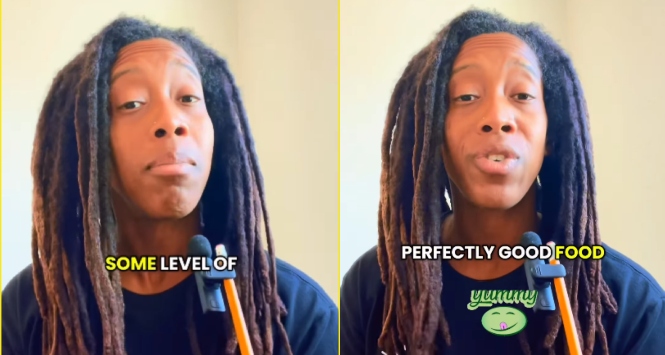
When government support falters, the community steps in. That’s the message at the heart of a viral video by Mutual Rise (@mutualrise), a grassroots organization redefining what it means to fight hunger in America.
As cuts to SNAP (Supplemental Nutrition Assistance Program) benefits from Nov. 1 leave millions of low-income families scrambling to put food on the table, Mutual Rise’s founder has one message: “There’s no need to panic when you have community.”
In the clip, which has resonated with thousands online, the organizer breaks down how her group has fed more than 600 people in just six months, without relying on government aid. Her method is simple, practical, and deeply human: use collective power and business partnerships to redirect food waste into nourishment.
“Food stamps are being cut,” she begins in the video. “But here’s how we’re going to feed our communities anyway. Three easy steps.”

The approach is as clear as it is actionable:
- Start or partner with a nonprofit whose mission is to freely feed neighbors facing food insecurity.
- Connect with local food businesses—restaurants, bakeries, grocery stores, and even food trucks—to request surplus or unsold food.
- Use your nonprofit’s EIN so those businesses can make tax-deductible donations instead of throwing perfectly good food away.
The brilliance of the model lies in its simplicity: turning food waste into food security. For small restaurants and bakeries, it’s a way to reduce loss; for struggling families, it’s a lifeline. And for communities hit hardest by SNAP cuts, it’s empowerment in action.
“Some businesses don’t even care about the tax write-off,” she explains. “They just want to get the wasted food off their hands so they can get in new product.”
The result? A network of mutual aid that doesn’t wait for policy change, it builds survival systems from the ground up.
Mutual Rise’s message strikes a chord in a year when millions of Americans have lost or seen reductions in food assistance due to expiring COVID-era relief measures. For those already balancing rising rent and grocery costs, even small cuts in benefits can mean skipped meals or empty cupboards. But instead of despair, Mutual Rise is modeling something different: community logistics as resistance.
This is the same spirit that fueled historic Black mutual aid societies, neighborhood food co-ops, and church-led outreach efforts during the civil rights movement. It’s not charity. It’s solidarity.
“It’s time to go out and do what we can with the resources we have to help our communities survive,” the post reads.
In a country where food deserts and policy rollbacks leave millions vulnerable, the power of mutual aid, neighbors feeding neighbors, feels both radical and refreshingly practical.
As the founder of Mutual Rise puts it, “It’s up to us to build systems that work for us.”
And that, in itself, might be the most sustainable solution of all.