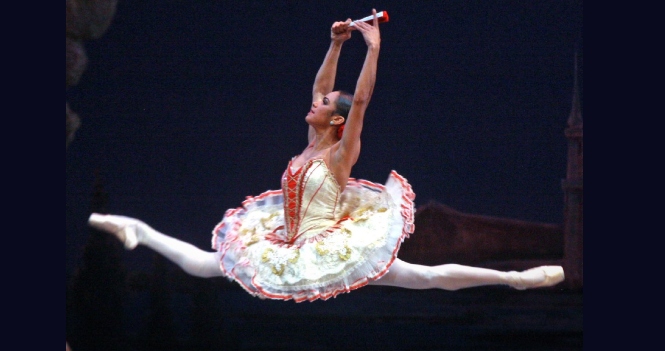
Misty Copeland has just concluded an extraordinary journey in modern dance history. After dedicating 25 years to the American Ballet Theatre (ABT ) and spending a decade as the company’s first-ever Black female principal dancer, she took her final bow on Wednesday night at Lincoln Center, surrounded by loved ones, lush bouquets, and emotional tributes.
The event was truly special. The Fall Gala at Lincoln Center in Manhattan celebrated Misty’s remarkable career, which has reshaped the landscape for Black women in ballet. Among the illustrious guests were Oprah Winfrey, Debbie Allen, Phylicia Rashad, and Jim Parsons, who all stood in applause as Misty, radiating grace and dignity, took her last curtain call.
Misty, now 42, made history in 2015 by becoming the first Black woman to be promoted to principal dancer in ABT’s 75-year legacy. This groundbreaking achievement broke barriers in a highly exclusive art form. Yet, her path to such success was filled with challenges.
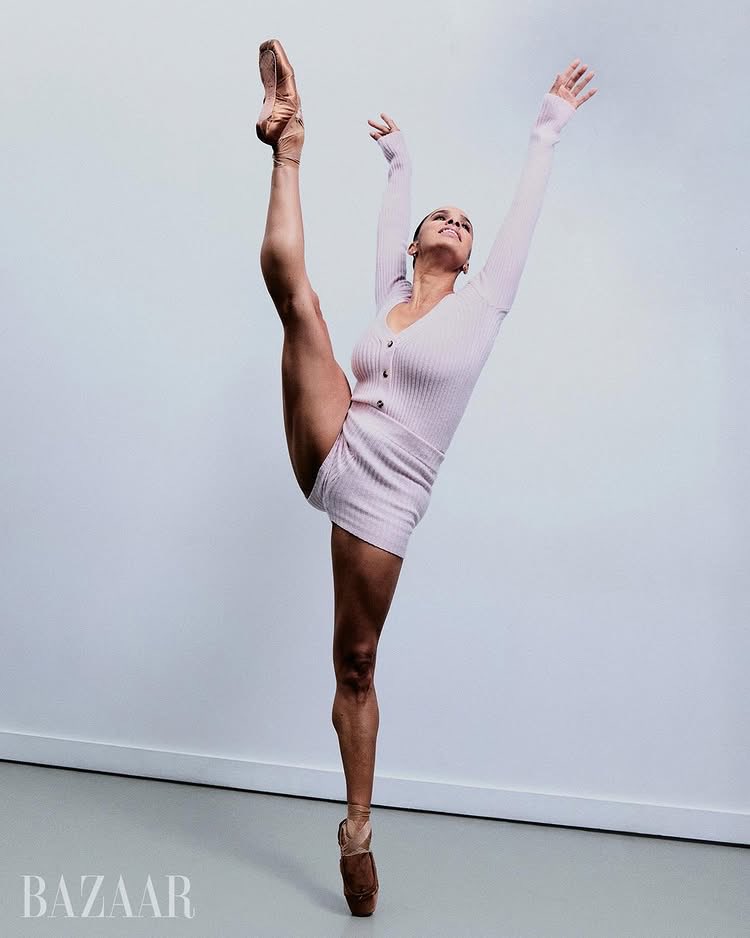
Born in Kansas City and raised in California, Misty didn’t begin her ballet training until she was 13, an age many professionals deem “too late.” She didn’t have the resources typically linked to classical arts. “I didn’t even hear classical music until I was a teenager,” she once shared. However, what she lacked in access, she compensated for with sheer determination.
By the age of 32, Misty had triumphed over hurdles that would have discouraged many. In 2015, she disclosed that she had endured six stress fractures in her tibia, three of which were nearly complete breaks. Doctors told her she would never dance again. Yet, seven months later, equipped with a metal plate in her leg, she was back dancing en pointe.
At her farewell performance, Misty danced with the same fervor that earned her international acclaim. She graced the stage with a poignant pas de deux from “Romeo & Juliet” and performed to Frank Sinatra’s “That’s Life” and “My Way,” reflecting her journey of doing things on her own terms.
During her curtain call, Oprah and other attendees rushed to the stage to present flowers, and in a heartwarming surprise, Misty’s husband and young son joined her, prompting tears of joy from the audience.
In an interview with The New York Times, Copeland humbly reflected on her legacy. “My whole career is proof that when you have diversity, people come together,” she expressed. “So many young Black and brown people didn’t even know Lincoln Center was a place they could step foot in. When they see my poster on the front, they feel like it opens their minds to a whole new world.”
She is absolutely right. For many, Misty Copeland was more than a dancer; she served as a symbol of representation. She was proof that dreams can be achieved, transitioning from community centers to the world’s most prestigious stages. Misty demonstrated to young Black girls that they could embody grace, strength, and excellence simultaneously and belong in every space.
Though she is retiring from the stage, Misty plans to remain in the spotlight, focusing on mentorship, advocating for diversity, and increasing access to the arts for underrepresented youth. “It’s time for me to move to the next stage,” she shared with the Associated Press.
As she took her final bow under Lincoln Center’s shimmering lights, Misty Copeland left behind more than just a legacy. She created a roadmap for resilience, representation, and possibility.
Even when the music fades, her influence will endure.