
Monica Cannon‑Grant, a once‑prominent Boston community activist and founder of the Violence in Boston nonprofit, has been sentenced in federal court to four years of probation and six months of home confinement.
The sentencing on Thursday, Jan. 29, 2026, came after she pleaded guilty to a series of federal fraud charges, according to court records and reporting.
U.S. District Court Judge Angel Kelley also ordered Cannon‑Grant, 44, to complete 100 hours of community service annually while on probation and to pay $106,003 in restitution, with forfeiture to the government to be determined later.
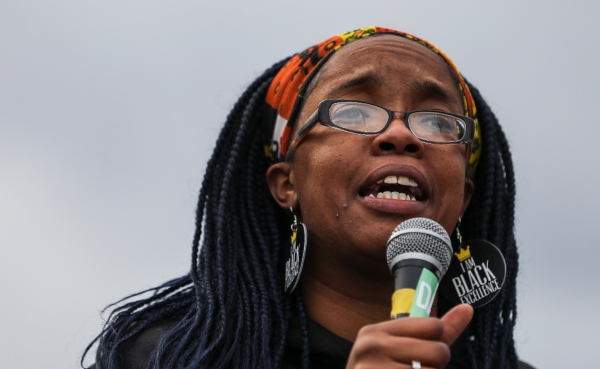
Conviction and Charges
Cannon‑Grant pleaded guilty in September 2025 to 18 counts involving wire fraud, mail fraud, conspiracy and tax violations tied to schemes that federal prosecutors said diverted thousands of dollars in donations and pandemic relief funds for personal use rather than for the nonprofit’s stated mission.
Prosecutors outlined multiple ways in which Cannon‑Grant misused funds, including:
- Using donated money meant to reduce violence and support community causes for travel, meals, shopping and personal expenses.
- Defrauding the City of Boston’s COVID‑19 relief programs and rental assistance funds by misrepresenting income and eligibility.
- Filing false tax returns and failing to file others.
Her late husband, Clark Grant — initially charged alongside her — died in a motorcycle crash in 2023, and his charges were dismissed.
Federal Prosecutors’ Position
Federal prosecutors had recommended an 18‑month prison term, characterizing Cannon‑Grant’s actions as a calculated deception of donors and government programs.
Assistant U.S. Attorney Dustin Chao told the court that “you don’t get to steal if you do good things,” underscoring that charitable or community work does not excuse criminal conduct.
Judge’s Sentencing Decision
Despite the prosecution’s request for incarceration, Judge Kelley opted against prison time, emphasizing probation and structured supervision instead.
In announcing the sentence, the court underscored that probation with home confinement still imposes significant restrictions and oversight while allowing Cannon‑Grant to remain in the community under supervision.
Impact and Reaction
Cannon‑Grant rose to prominence during the national movement following the 2020 police killing of George Floyd and helped lead efforts to address violence and support underserved communities.
She was recognized as Bostonian of the Year by The Boston Globe Magazine for her advocacy efforts.
However, defense attorneys argued that she also did meaningful community work, such as feeding thousands during the pandemic and assisting with rental assistance programs, suggesting that her sentence should reflect both her misconduct and her contributions.
Aftermath for Violence in Boston
Following Cannon‑Grant’s indictment in 2022, Violence in Boston — the nonprofit she led — ceased operations, and its social media presence has been largely inactive.
The case highlights how federal fraud and tax charges can significantly affect trust in nonprofit organizations, especially those rooted in community activism.

