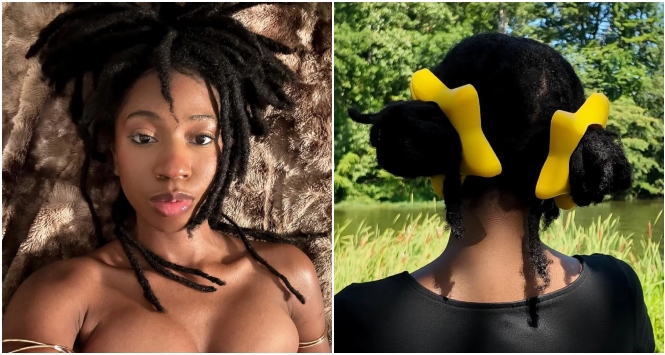
A high-stakes intellectual property battle is unfolding in federal court over the rights to a magnetic hair accessory designed for textured and loc’d hair.
The dispute, known as the Breromi Hair Clique Lawsuit, pits young Black inventor Breana Askew, founder of the Breromi brand, against competitor Kirsten Owens in a case that has sparked discussions about innovation, minority entrepreneurship, and the limits of patent protection.
The Invention: Hair Clique

Askew, a self-taught designer with skills in sewing, 3D modeling, and sculpting, launched Breromi in 2023. By early 2024, she introduced the Hair Clique, a magnetic hair accessory created to secure natural and thick hair without painful tension.
Using two magnetized halves, the device allows users to form ponytails or add stylish accents like space buns. The product quickly gained traction in online hair care communities.
Askew maintains that she carefully documented her development process, holding timestamps and records to demonstrate originality and confirm a patent-pending status.
Claims of Copying and Legal Filings

In mid-2025, Askew discovered that Owens had launched a similar product marketed as the Hair Hoop, which Askew alleges shares striking similarities in both design and branding.
After Breromi issued a cease-and-desist letter, the dispute escalated when Owens filed a lawsuit in the U.S. District Court for the District of Oregon (Owen v. Askew et al, No. 6:2025cv01272).
Owens claimed that criticism and online advocacy against her business led to harassment and reputational harm. She sought a preliminary injunction, which Judge Ann L. Aiken granted in part on August 7, 2025. The court barred Askew and activist Kiandria Demone Boyce from encouraging others to file complaints with Owens’ business partners but stopped short of imposing a total gag order.
Community and Industry Response

The lawsuit has gained momentum on social media, where supporters have rallied behind Askew. A GoFundMe campaign titled “Protect Black Creators: Support My Legal Battle” has raised over $13,000 to cover her legal costs and patent fees. Activist Boyce has also defended Askew’s invention publicly, framing the case as emblematic of the struggles minority inventors face in protecting their intellectual property.
Entrepreneurship advocates argue the lawsuit reveals a recurring problem: underrepresented innovators often face appropriation of their ideas by competitors with more resources. Despite patent applications, many inventors lack the financial and legal backing needed to withstand drawn-out disputes.

Why This Case Matters
The Breromi Hair Clique Lawsuit highlights several key legal and cultural issues:
- Patent Pending Limits: While a “patent pending” status gives inventors leverage, it does not shield them from lawsuits or guarantee protection against infringement.
- Prior Art & Originality: Courts must weigh documentation and timelines to determine originality and potential infringement.
- Barriers for Minority Innovators: Askew’s case underscores how systemic challenges make it harder for Black entrepreneurs to defend intellectual property.
As the case moves forward, legal experts note that the outcome could influence how inventors in competitive markets, especially in the beauty industry, approach IP defense. For Askew, the fight is not only about her design but also about safeguarding opportunities for minority innovators.
“This isn’t just my battle—it’s about protecting Black creators everywhere,” Askew wrote on her fundraising page.
The court proceedings remain ongoing, with further hearings and rulings expected in the coming months.