
Carole Hopson wanted to fly since she was four years old, lying on the grass in South Jersey, watching planes descend toward Philadelphia International Airport while her grandmother asked: “Who do you think is on that plane? Where are they coming from?”
But for decades, she kept that dream a secret.
She became a journalist, then a corporate executive at Foot Locker and L’Oréal. She earned graduate degrees from Columbia University. By all external measures, she was successful. Yet the whisper never went away.
At 30, on a dinner date with the man who would become her husband, she finally said it out loud for the first time: “I want to fly a plane.”
“It was like you take that top off a soda and it goes – I felt like I could breathe,” Hopson recalled in an interview on LinkedIn News’ Everyday Better podcast.
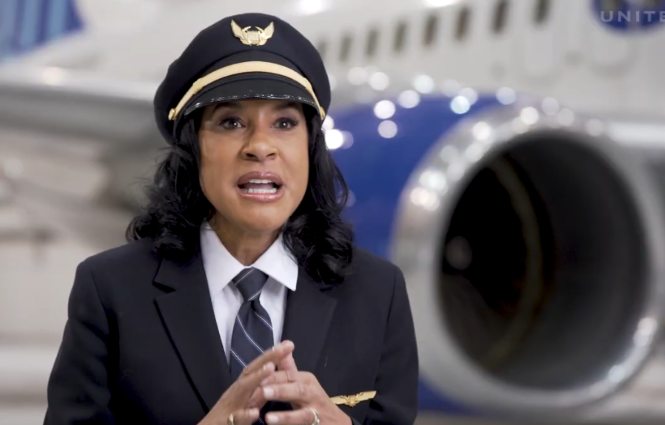
That admission launched a two-decade journey that would see her leave six-figure corporate pay for $16-an-hour flight instruction, weather the industry collapse after September 11, raise two sons, and finally – at age 50 – get hired at a regional airline.
Today, at 58, Hopson is a captain for United Airlines flying Boeing 737s. She is one of fewer than 200 Black women in the United States who fly for a living, and one of less than two dozen Black female captains in the country.
“I went from making six figures a year to being a flight instructor and making $16 an hour, and I had never been happier,” she said.
Hopson’s path was neither impulsive nor fast. After her husband bought her gift certificates for a “discovery flight” – a introductory lesson – she wanted to quit her job immediately. He counseled patience.
“He said, ‘Why don’t you and I create an exit strategy for you?'” Hopson recalled. “It’s how you go and when you go – a plan, a departure. Almost like when you take a flight.”
That exit strategy took six years. It involved moving out of Manhattan, buying a home for tax purposes, getting married, and methodically earning pilot licenses one by one – private, instrument, multi-engine, certified flight instructor.
“The difference between a dream and a goal is a date,” Hopson said. “Put a date on every one of those dreams.”
She earned her licenses just as the September 11, 2001, attacks devastated the aviation industry.
“That felt like the air went out of my balloon,” she said. Her husband advised her to wait – for a decade, he predicted, the industry would struggle.
Instead, she had two sons and spent 14 years at home, flight instructing part-time and always returning in time for the school pickup line.
When she turned 50, she looked up and said to her husband: “It’s time for me to fish or cut bait.”
‘Start Small’
Hopson’s rise through commercial aviation followed a deliberate ladder: a small Cessna 172, then a regional airline, then United, and finally the left seat as captain at 58. Federal aviation regulations will require her to retire at 65.
“You can’t go from the first floor to the 10th floor without climbing a lot of steps,” she said. “You can’t eat that apple whole.”
She now uses her cockpit voice to instill confidence in passengers, a skill she says she learned as a mother.
“People get to the airport – there’s more traffic, more weather, they’re going through security, they’re shaking and stirred,” she said. “I need to come out on that microphone and make you feel good. In 37 seconds, instill confidence.”
Clearing the Path for Others
Hopson is also a published author. Her historical fiction novel, “A Pair of Wings,” tells the story of Bessie Coleman, who in 1921 became the first Black woman to earn a pilot’s license – 20 months before Amelia Earhart. Coleman, the daughter of a slave, learned French as an adult to train in France after no American flight school would accept her. She died at 34.
“How is it that I never knew of her?” Hopson asked. “Bessie Coleman became a maverick who charted a path that did not exist.”
Hopson has dedicated herself to widening that path. Through her Jet Black Foundation, she aims to send 100 Black women to flight school by 2035. Twenty percent of every book sale and all her speaking fees go toward that goal.
“My husband says if it’s not nailed down, I should just give it away,” she laughed. “But it makes me wealthy.”
When asked what qualities help someone pursue a “one true thing,” Hopson offered five steps: assess where you are and where you want to go; research the path; honestly evaluate your strengths and weaknesses; get to work on your weaknesses; and clear your path – including convincing those closest to you.
She recalled a question from a late friend, actress Suzanne Douglas: “What would you do if you knew you could not fail?”
“Just because you’re afraid doesn’t mean you don’t do it,” Hopson said. “It means you surround yourself with people who will help you get through the thing that makes you most afraid. And usually the thing that makes you most afraid is the thing that makes you the strongest.”
As she approaches the end of her flying career, Hopson measures herself against a simple metric:
“Would the 25-year-old me be proud of the 60-year-old me? Would she seek me out as a friend? If I can answer that in the affirmative, I’m doing the right thing.”
She added:
“You can have everything. It’s just really hard to have it all at once. I eat my crab cakes first. I’ll eat my chocolate cake at the end of my meal. I want the sweetness of life to be here where I have less time in front of me than I do behind me.”

