On what should have been the happiest day of her life, Gladys Ricart, a 33-year-old bride from Ridgefield, New Jersey, was preparing to walk down the aisle in her handmade white gown.
Family and friends filled the living room, laughter mingling with the rustle of silk and the scent of roses.
Cameras flashed as she handed each bridesmaid a bouquet and a kiss on the cheek — a final moment of joy before a horror that would stun the nation and ignite a lasting movement against domestic violence.
Moments later, Agustin Garcia, Ricart’s ex-boyfriend, entered her home dressed in a tuxedo and carrying a briefcase. Without a word, he reached inside, pulled out a .38-caliber revolver, and opened fire. Ricart collapsed in her wedding dress — the bouquet still in her hand.
By the time police arrived, the bride was dead.

A Murder Caught on Tape
The shocking murder unfolded on Sept. 26, 1999, inside Ricart’s Ridgefield home. The tragedy was captured on a videotape that was meant to record her wedding preparations. That footage — showing Garcia’s calm entrance and Ricart’s final seconds — became crucial evidence in his prosecution.
Neighbors later said that Ricart had ended her relationship with Garcia months earlier after discovering his infidelity. Those close to her described him as controlling and jealous, unable to accept the relationship’s end — especially when he learned that Ricart had found love again and planned to marry another man.
Garcia drove to Ricart’s home on her wedding day, dressed as if attending a ceremony of his own. The briefcase he carried contained the murder weapon.
He fired three shots before being subdued and arrested at the scene.
The Trial and the Defense’s Blame Game
During his trial, Garcia’s defense team attempted to tarnish Ricart’s reputation, suggesting she had provoked his jealousy and mental instability. But the jury rejected those claims. The evidence was overwhelming — the videotape, eyewitness accounts, and Garcia’s premeditated actions all pointed to a deliberate killing.
He was convicted of first-degree murder and sentenced to life in prison.
Superior Court Judge Daniel P. Mecca later ruled that Ricart’s estate should receive damages for her wrongful death, a small measure of justice for a family robbed of a daughter, sister, and bride.
A Tragedy That Sparked a Movement
Ricart’s murder became a symbol of the silent suffering of domestic violence victims — particularly among Latina women, who often faced cultural stigma when leaving abusive relationships.
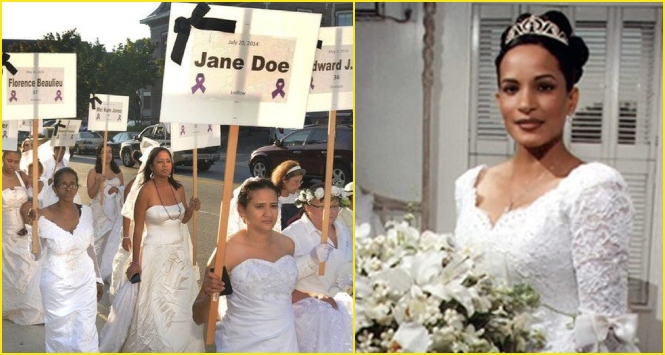
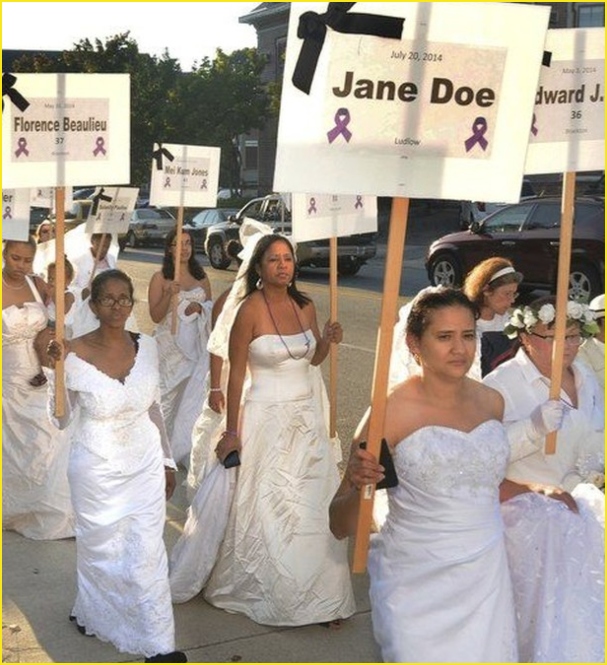
Her death inspired the annual Brides’ March (La Marcha de las Novias), a grassroots movement that began in New York City in 2001. Each year, women dressed in white bridal gowns march through city streets to honor Gladys Ricart and other victims of domestic violence, carrying flowers in their memory and demanding action.
The movement, which started in Washington Heights — a Dominican-American community much like Ricart’s — has since spread to other cities across the United States and Latin America.
“Gladys died in her wedding dress, but she became a symbol in it,” said one organizer during the first march. “We march so that no other woman’s dream day ends in tragedy.”
A Deeper Reflection on Power and Control
Gladys Ricart’s murder highlights the devastating consequences of possessiveness and entitlement in relationships — and the dangers that can arise when victims attempt to reclaim their independence.
Experts on domestic violence say the most dangerous time for a survivor is often after she decides to leave. Studies show that abusers who feel they’ve lost control are more likely to resort to violence. Ricart’s death tragically fits that pattern.
Her story is not just about one man’s rage but a cultural problem — where jealousy masquerades as love and control is mistaken for devotion.

More Than Two Decades Later
Over twenty years have passed since that fateful day in Ridgefield, but Gladys Ricart’s story continues to resonate. Her face — radiant in a wedding gown — remains a haunting reminder of the cost of silence and the importance of speaking out against abuse.
Each September, when marchers don white dresses and carry roses through the streets, they honor her legacy not with sorrow alone, but with solidarity.
What began as a tragedy in a small New Jersey living room became a national call to action — one that continues to save lives by reminding survivors that they are not alone.