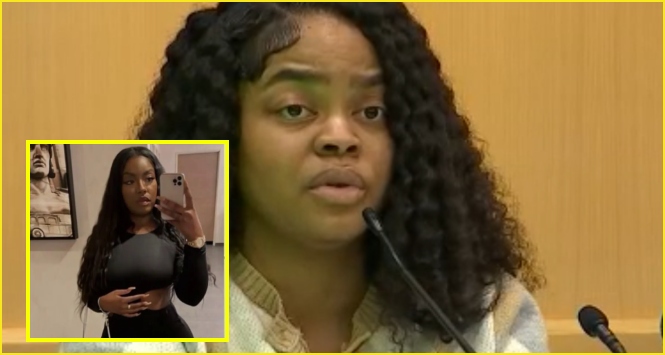
Thirty-one-year-old Sakiyna Thompson told a Broward County jury on Monday that she “blacked out” during a fatal confrontation that left 23-year-old Kayla Hodgson dead in 2022.
In a gripping courtroom testimony that blurred the lines between jealousy, rage, and alleged loss of control, prosecutors describe the incident as a “premeditated act of jealousy,” stemming from an alleged love triangle involving Thompson, Hodgson, and a mutual romantic partner.
According to the Broward Sheriff’s Office, Thompson flew from New York to South Florida just days before the killing—intent, they say, on confronting Hodgson about dating her ex-boyfriend.
Hodgson was found stabbed dozens of times inside her apartment at the Tamarac Village complex in July 2022. Investigators later said the scene was so violent it left even seasoned detectives shaken.
A Confrontation Turns Fatal
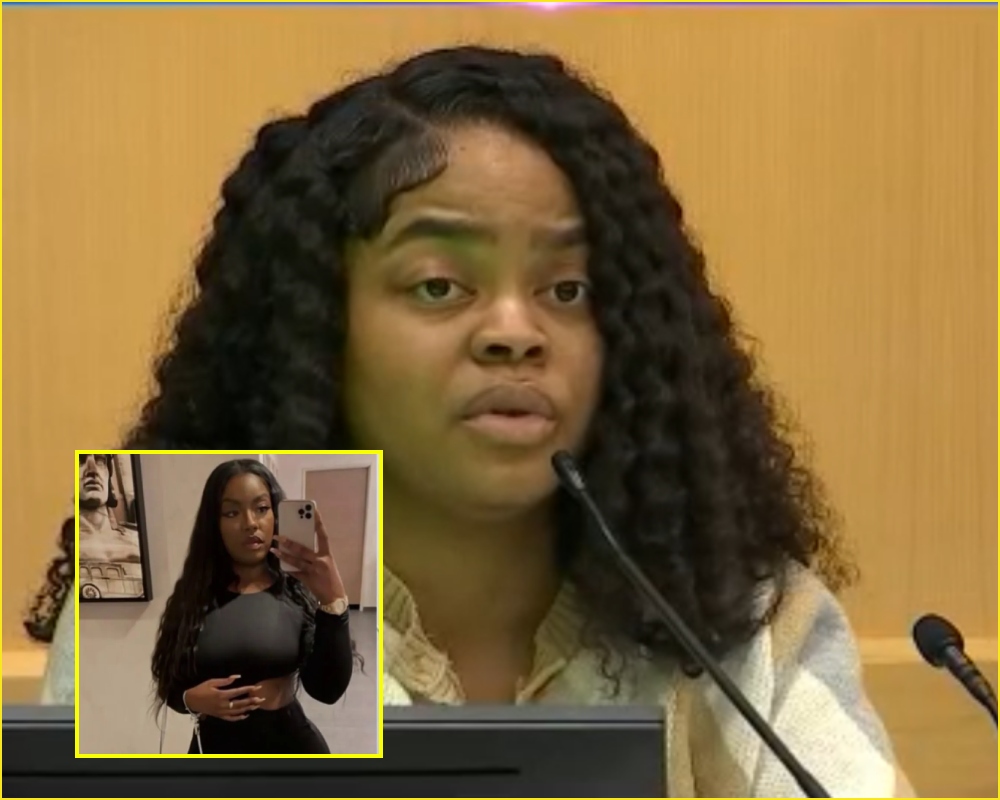
Taking the witness stand for the second day in her defense, Thompson recounted a tense and chaotic confrontation she claims spiraled out of control. She testified that she went to Hodgson’s apartment uninvited, hoping for a “woman-to-woman” conversation about their mutual relationship with the same man.
But according to Thompson, the conversation quickly escalated.
“She attacked me,” Thompson told jurors, alleging Hodgson punched her in the face and cut her abdomen with a piece of glass. Thompson, who said she was two months pregnant at the time, claimed she grabbed the glass to defend herself—but then lost consciousness.
“I blacked out,” she said softly, describing the moments before she came to and found Hodgson lying motionless on the floor. “I was walking in the blood.”
Forensic evidence, however, paints a far more deliberate picture. Autopsy photos shown in court revealed Hodgson suffered dozens of stab wounds, consistent with what prosecutors say was a sustained and frenzied attack.
Aftermath and Alleged Cover-Up
Following the stabbing, Thompson admitted to jurors that she changed into the victim’s clothes, attempted to clean the scene, and discarded evidence in the trash—all before leaving without calling police.
“I was scared,” she said, describing her panic and disorientation. But prosecutors argue her actions after the killing reveal not fear, but calculation.
Assistant State Attorneys reminded jurors that Thompson had shown signs of obsession in the months leading up to the attack. When Hodgson blocked her on social media, prosecutors say, Thompson grew increasingly enraged—fueling the jealousy that ultimately turned deadly.
“She didn’t black out,” the prosecution insisted during cross-examination. “She planned it, she carried it out, and she tried to cover it up.”
The Legal Battle Over Intent
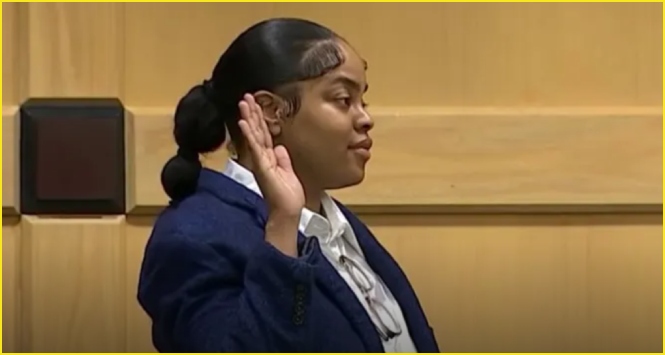
At the heart of the case lies a crucial question: Was this a crime of passion or premeditated murder?
Thompson’s claim of blacking out echoes a controversial defense known in legal circles as “automatism”—a state in which a defendant argues that their actions were involuntary due to a psychological or physiological break. While exceedingly rare and difficult to prove, it raises deep questions about human control under emotional stress.
Legal analysts say the defense faces an uphill battle. “Claims of blackout or dissociation often fall flat without corroborating evidence, especially when the aftermath shows deliberate behavior,” one criminal law expert observed. “Changing clothes and disposing of evidence undermines the argument of a total loss of control.”
If convicted of first-degree murder, Thompson faces life in prison without parole.
Jury to Deliberate
After nearly two years of legal wrangling and a week of emotional testimony, the defense rested Monday afternoon. Jury deliberations are scheduled to begin Tuesday morning.
As the courtroom emptied, the haunting image lingered—of a young woman whose life ended in violence, and another who insists she can’t remember how it happened.
Whatever the verdict, this case serves as a reminder of how jealousy, emotion, and human fragility can collide with devastating consequences.