A Florida mother is speaking out after a deeply controversial hospital experience in which she was required to attend a virtual court hearing while in active labor, after refusing a recommended C-section.
Cherise Doyley, a professional birthing doula from Jacksonville, says the ordeal left her feeling “afraid,” “confused,” and ultimately violated, raising serious questions about patient rights and medical decision-making during childbirth.
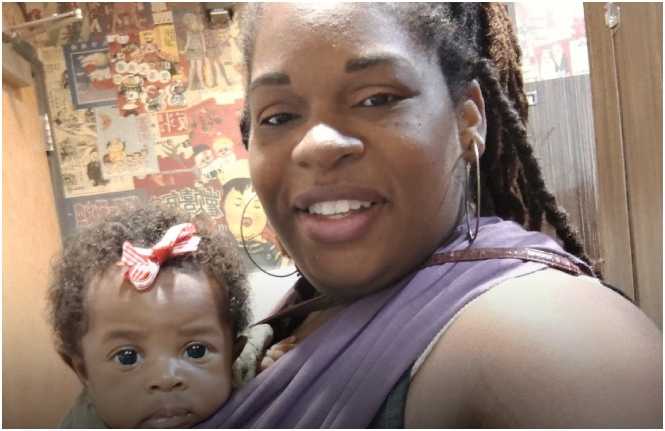
Doyley arrived at UF Health Jacksonville in September 2024 while in labor with her fourth child. Despite doctors warning of a potential uterine rupture, a rare but serious complication, she told medical staff she wanted to attempt a vaginal birth rather than undergo another C-section.
A uterine rupture, while life-threatening, occurs in roughly 1 in 300 deliveries and is more likely in patients attempting vaginal birth after a prior cesarean section.
Doyley said she understood the risks but made an informed decision based on her past experiences with surgical recovery.
“It was a very hard recovery for me every single time,” she said. “It was something that I just didn’t want to go through again.”
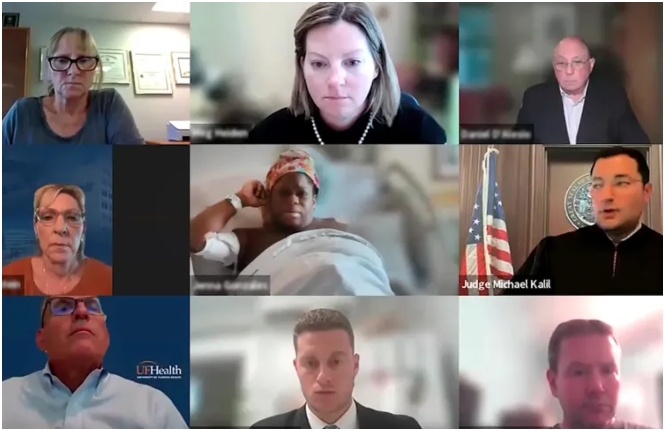
However, in her 12th hour of active labor, Doyley said a nurse entered her room with a tablet and informed her she would be appearing in a Zoom court hearing. On the call were doctors, attorneys, hospital staff, and a judge, later identified as Michael Kalil.
“That was exactly when I found out that we were going to court,” Doyley said. “I was so afraid. I was confused. I did not know what was going on or what to expect.”
According to reports, the state filed an emergency petition, at the hospital’s request, seeking judicial authorization to perform a C-section in the interest of the unborn child. Doyley, who reportedly had no legal representation during the hearing, repeatedly asked for a lawyer or patient advocate.
During the proceedings, she firmly asserted her autonomy.
“I still have rights as an American citizen and as a patient that I am allowed to decide what goes on with me and my body and my baby,” she said.
She also expressed fears about the potential consequences of surgery, pointing out her responsibilities as a mother.
“If I die from a C-section, nobody on this call is going to take care of my children,” she added.
After approximately three hours of testimony, the judge did not order an immediate C-section but ruled that doctors could proceed without her consent if an emergency arose.
That scenario unfolded overnight, when doctors reported a drop in the baby’s heart rate and performed an emergency C-section. Doyley gave birth to a baby girl, who was admitted to the neonatal intensive care unit (NICU).
Despite the outcome, Doyley says the experience has left lasting emotional scars.
“When we use the courts to basically strong-arm, bully someone into an unnecessary medical procedure against their will, it’s akin to torture, in my eyes,” she said.
The case highlights a complex legal and ethical tension in U.S. healthcare: while mentally competent patients generally have the right to refuse medical treatment, pregnancy can create exceptions. In some jurisdictions, hospitals may seek court intervention if they believe a fetus’s life is at risk.
The American Medical Association maintains that patient autonomy is a fundamental principle of medical ethics, though conflicts can arise in high-risk pregnancies.
Officials from the hospital declined to comment, citing patient privacy laws under the Health Insurance Portability and Accountability Act (HIPAA). Meanwhile, prosecutors stated their role was limited to presenting facts for judicial consideration—not making medical decisions.
As Doyley continues to share her story, her case is fueling national debate over maternal rights, medical consent, and the role of the courts in healthcare decisions, particularly in high-stakes moments like childbirth.