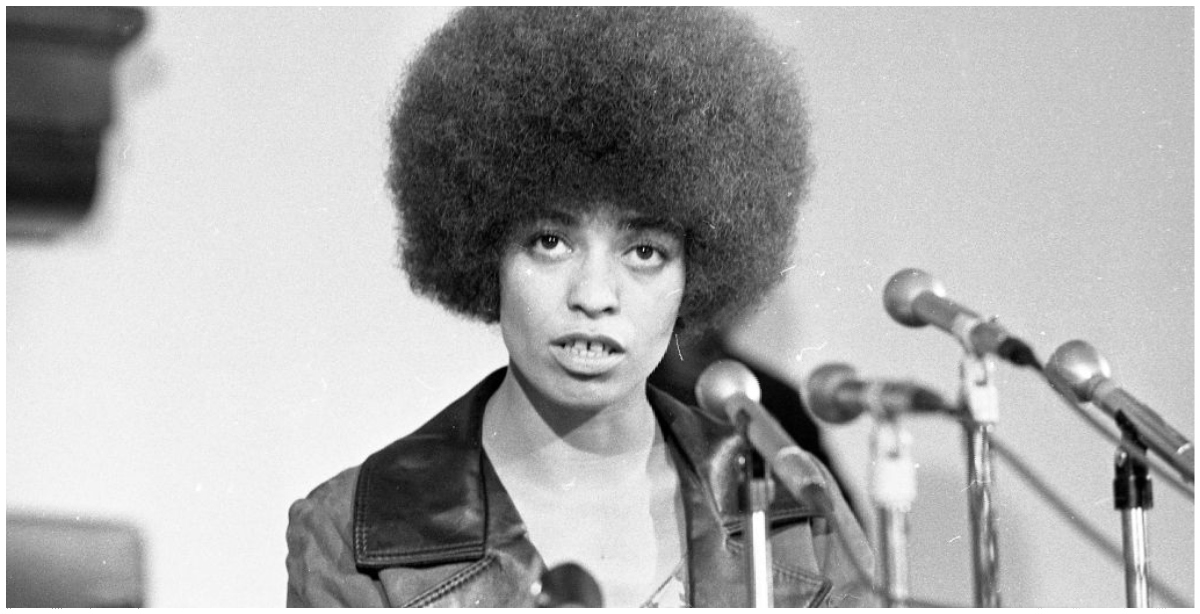
- Date of Birth: January 26, 1944
- Place of Birth: Birmingham, Alabama
Few American intellectuals and activists have left a mark on political history quite like Angela Davis. Known for her unapologetic activism, sharp academic scholarship, and decades-long fight against racism, mass incarceration, and inequality, Davis became one of the most recognizable revolutionary voices of the 20th century — and remains deeply influential today.
Born on January 26, 1944, in Birmingham, Alabama, Davis grew up in a neighborhood nicknamed “Dynamite Hill,” where Black families routinely faced racist bombings during the segregation era. The violence and racial hostility surrounding her childhood would shape her political consciousness for decades to come.
Early Life and Education
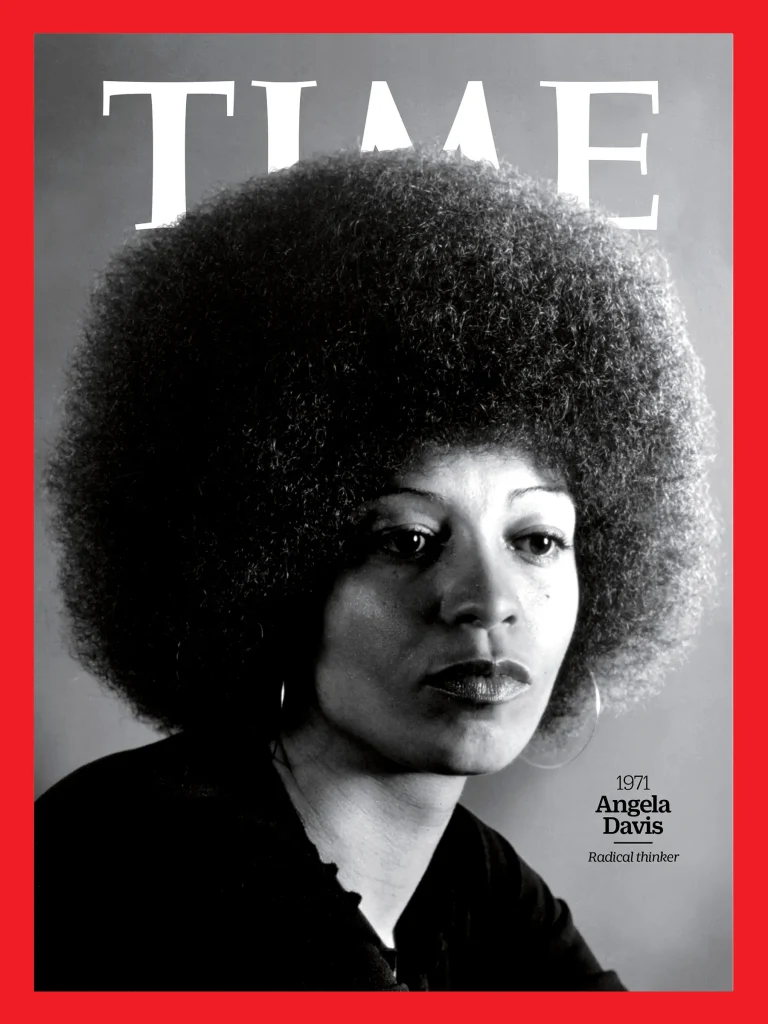
Davis attended segregated schools in Birmingham before earning a scholarship to Brandeis University, where she studied philosophy and French. While at Brandeis, she became a student of influential philosopher Herbert Marcuse, a thinker associated with the Frankfurt School whose teachings profoundly shaped her political worldview.
Her education later took her abroad to the University of Frankfurt and eventually to the University of California, San Diego, where she continued postgraduate studies in philosophy.
During the 1960s, Davis became increasingly involved in anti-war activism, Black liberation movements, and socialist organizing. She joined the Communist Party USA and worked alongside members of the Black Panther Party.
UCLA Controversy and Political Firestorm
In 1969, Davis became an acting assistant professor of philosophy at University of California, Los Angeles. However, her employment quickly became a national controversy after California officials, including then-Governor Ronald Reagan, pushed for her removal because of her Communist Party membership.
Although a court initially ruled the firing unconstitutional, UCLA later dismissed Davis again over speeches administrators described as inflammatory. The controversy transformed her into a national political figure and symbol of resistance against government repression.
Arrest, FBI Manhunt and the “Free Angela Davis” Movement
Davis became internationally famous in 1970 after guns registered in her name were linked to a deadly courtroom takeover in Marin County, California, involving activist Jonathan Jackson and the Soledad Brothers case.
Accused of conspiracy, kidnapping, and murder, Davis went underground and was eventually added to the FBI’s Ten Most Wanted Fugitive List by FBI Director J. Edgar Hoover.
Her arrest sparked a worldwide campaign demanding her release. The “Free Angela Davis” movement drew support from artists, activists, intellectuals, and musicians across the globe. Songs supporting her cause included “Angela” by John Lennon and Yoko Ono, as well as “Sweet Black Angel” by The Rolling Stones.
After spending more than a year in jail, Davis was acquitted in 1972 by an all-white jury after jurors concluded prosecutors failed to prove she participated in the plot.
Academic Career and Prison Abolition Advocacy
Following her acquittal, Davis embarked on an international speaking tour and became one of the most prominent Black feminist scholars in the world.
She later taught at several universities, including San Francisco State University and University of California, Santa Cruz, where she became Distinguished Professor Emerita in Feminist Studies and History of Consciousness.
In 1997, Davis co-founded Critical Resistance, a group dedicated to dismantling what she famously called the “prison-industrial complex.” Her work helped popularize prison abolition as a mainstream political and academic framework.
Davis authored several influential books, including:
Her scholarship consistently examined the intersections of race, gender, capitalism, incarceration, and liberation movements.
LGBTQ+ Advocacy and Modern Influence
In 1997, Davis publicly came out as a lesbian in an interview with Out magazine, further cementing her role as a groundbreaking voice across multiple liberation struggles. Alongside her longtime partner, scholar Gina Dent, Davis has advocated for Black liberation, prison abolition, and Palestinian solidarity.
Over the decades, Davis has remained active in movements ranging from anti-war campaigns to Occupy Wall Street and the movement for racial justice following police killings of Black Americans.
In 2020, Time named her one of the world’s 100 most influential people. In 2025, she received an honorary doctorate from University of Cambridge.
Legacy
Angela Davis remains one of the most debated and influential political thinkers in modern American history. Admirers celebrate her as a fearless revolutionary scholar who challenged systemic racism and incarceration. Critics have long questioned some of her political affiliations and controversial international positions.
Yet regardless of political perspective, Davis’s influence on Black political thought, feminist theory, prison reform, and social justice activism is undeniable.
From Birmingham’s segregated streets to global lecture halls, Angela Davis transformed herself into an enduring symbol of resistance, intellectual power, and radical Black activism.
Official Website and Verified/Public Profiles
- Official website: Angela Davis Official Website
- Yale profile: Angela Davis at Yale Whitney Humanities Center