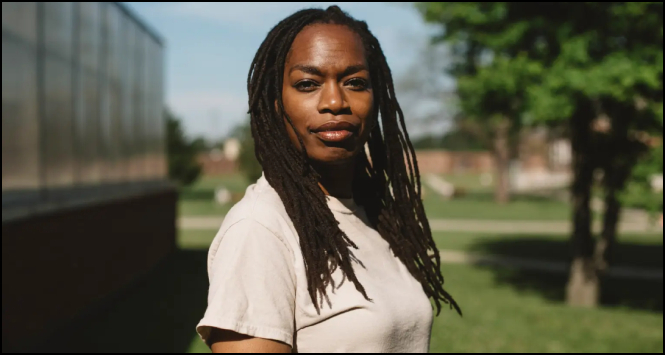
Once known only through the lens of her darkest hour, Michelle Daniel Jones—formerly Michelle Engron Jones—is now a nationally recognized scholar, artist, and advocate.
Through her inspiring work, she is reshaping how society views justice, accountability, and human potential.
Nearly three decades ago, in 1997, a 24-year-old Jones stood before an Indiana judge after being convicted of the death of her 4-year-old son.
“Everything that has happened is horrible, and I accept responsibility for it,” she told the court. “I will just try to tell you I am not a murderer, and I will try to do the best I can with what I have left of my life.”
She meant every word.
After serving more than 20 years in prison, Jones emerged not broken, but transformed. Today, at 53, she is in the final stages of her Ph.D. in American Studies at New York University, her academic journey defined by an unrelenting pursuit of truth and justice for those too often erased from the historical record.
Academic Firepower From the Margins
While incarcerated, Jones became a published scholar and playwright, producing research on carceral history and co-writing The Duchess of Stringtown, a theatrical work that debuted in Indianapolis shortly after her release in 2017.
Her intellectual promise caught national attention, earning her admission—and later, controversial rejection—from Harvard University’s Ph.D. program.
Harvard’s reversal, allegedly due to concerns about full disclosure of her past, drew backlash from civil rights advocates and scholars who accused the institution of elitism and racial bias. But NYU saw her value, and Jones embraced the opportunity.
Today, her dissertation focuses on the creative survival strategies of incarcerated women, especially those engaged in the Alabama Prison Arts and Education Project.
Her work questions the dominant narratives around incarceration and sheds light on subjugated knowledge from within prison walls.
Leading Change on the Outside
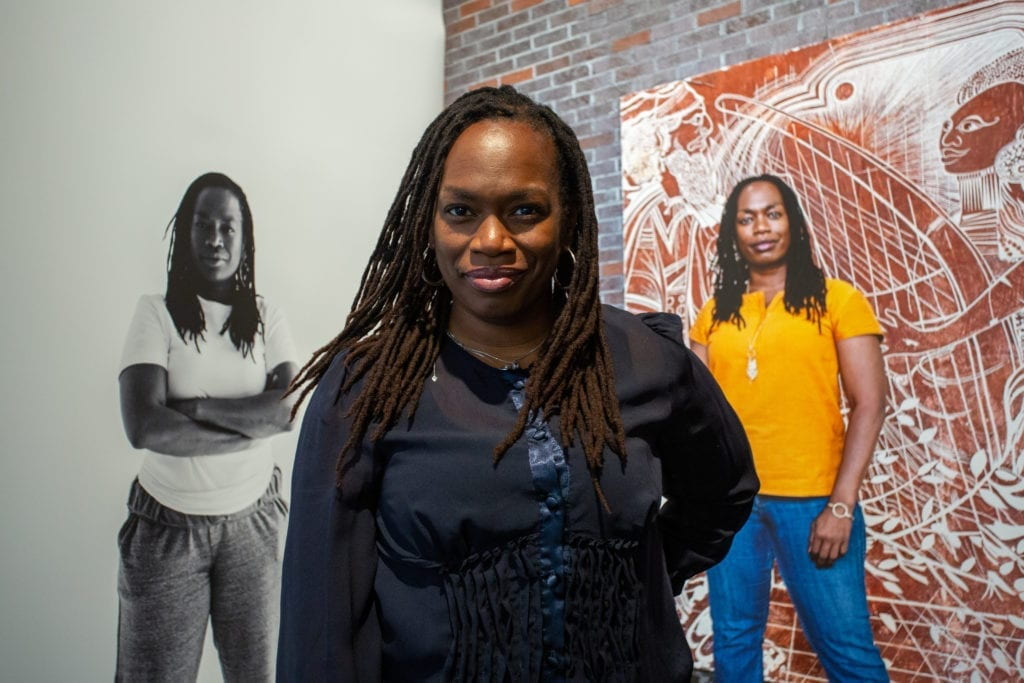
Jones is not only a scholar but a leader. She serves as executive director and board president of Constructing Our Future, a housing and reentry nonprofit in Indiana founded by incarcerated women.
She also sits on boards or advisory panels for numerous justice-focused organizations, including Worth Rises, The Correctional Association of New York, and The Education Trust, among others. Her lived experience and academic rigor make her a powerful voice in national conversations around mass incarceration, second chances, and equity.
From Books to the Stage
Jones’s activism seamlessly intersects with art.
She uses theater, photography, and dance to challenge the way we view criminality and identity. Her recent art installation, Point of Triangulation: Intersections of Identity, has been exhibited at NYU’s Gallatin Galleries and the African American Museum in Philadelphia.
In 2023, she co-edited Who Would Believe a Prisoner?: Indiana Women’s Carceral Institutions, 1848–1920, a groundbreaking collaborative history with contributions from incarcerated and formerly incarcerated women.
The work reframes the historical narrative of women’s imprisonment in Indiana and elevates voices long silenced.
A Life Rewritten, A System Challenged
Michelle Daniel Jones’s story is not an easy one.
It is not neat. But it is honest, hopeful, and human. From the confines of a prison cell to the halls of NYU, her journey is a challenge to all who believe in the finality of judgment and the impossibility of redemption.
Her life’s work asks us to reconsider what justice should look like—not just punishment, but possibility.