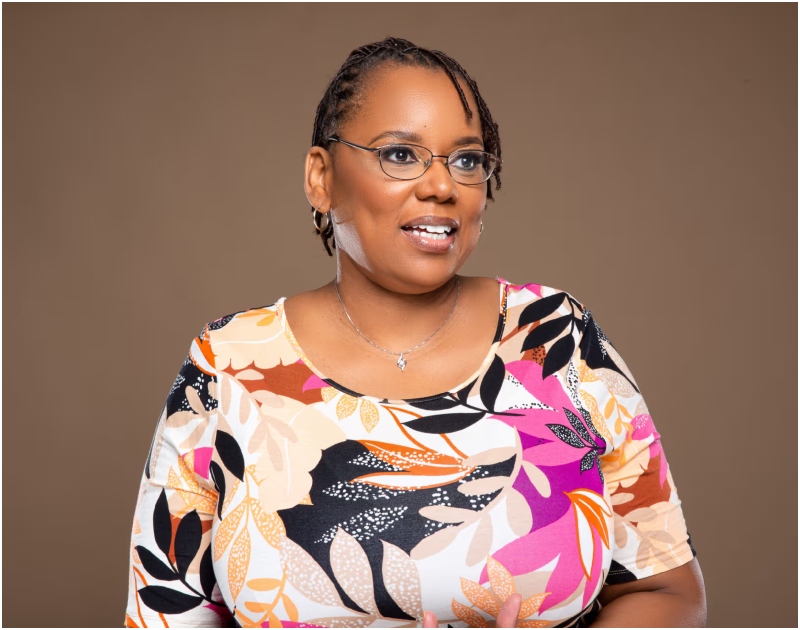
Dr. Carlotta A. Berry, a professor of electrical and computer engineering at the Rose-Hulman Institute of Technology in Indiana, is emerging as one of the most influential voices reshaping how science, technology, engineering, and mathematics (STEM) are taught, accessed, and understood in the United States.
Through a blend of creative curricula, hands-on robotics, mentorship, and storytelling, Berry is working to make STEM fields more inclusive—particularly for Black students, women, and historically marginalized communities that have long been underrepresented in technology.

From Spelman to Robotics Leadership
Berry’s journey into engineering began at Spelman College, where she earned a mathematics degree in 1992. She later completed a dual-degree bachelor’s program in electrical engineering at the Georgia Institute of Technology in 1993 before earning a Ph.D. in electrical and computer engineering from Vanderbilt University in 2003, with a focus on human-robot interaction.
Reflecting on her transition from Spelman to Georgia Tech, Berry told AfroTech that the experience revealed stark contrasts in learning environments.
“I went from a very small liberal arts college… to basically an engineering factory,” she said, noting how anonymity in large institutions often leaves students—especially Black women—without adequate support.
Those early experiences would later inform her mission as an educator.
Making Robotics Accessible and Human
Berry began her academic career as an assistant professor at Tennessee State University in 2003 before joining Rose-Hulman in 2006. From the outset, she sought to challenge traditional approaches to robotics education, which she found detached and inaccessible.
Her frustration stemmed from early encounters with robots locked behind glass cages—machines students could code but not touch.
“I said someday if I ever became a college professor, I was going to do robotics in a way that was more authentic,” Berry explained.
Today, her robotics courses emphasize interaction, creativity, and cultural relevance, allowing students to physically engage with technology while understanding its broader social impact.
Equity at the Center of STEM
Berry’s work goes far beyond the classroom. In 2020, she founded two nonprofits—Black in Engineering and Black in Robotics—alongside her educational consulting firm, NoireSTEMinist. These initiatives focus on increasing access, visibility, and mentorship opportunities for underrepresented communities in STEM.
“A big part of the mission… is to increase visibility and access to communities that are often overlooked,” she told AfroTech.
In her teaching, Berry intentionally highlights the contributions of Black researchers and women, challenging dominant narratives in engineering education. She also connects STEM concepts to students’ everyday interests—from basketball and fashion to hair design—making technical learning more relatable.
Robots, History, and Cultural Storytelling
Berry’s approach uniquely blends engineering with cultural education. She names her robotics projects after Black historical figures, including Martin Luther Zing, Rosie Sparks, Sojourney Toots, and Malcolm Xplorer.
By doing so, she teaches complex technical skills while honoring Black leadership and innovation.
“I can teach the technical aspects of robotics while also highlighting Black leaders and innovators,” she said.
Books, Fiction, and Early STEM Exposure
Beyond engineering, Berry uses storytelling as a tool for early STEM engagement. Her children’s book series, “There’s A Robot!”, introduces K–4 learners to technology through diverse characters—an intentional effort to normalize Black children as future engineers and innovators.
“Parents and teachers say… ‘I’ve never seen a book like this with Black kids on the cover,’” Berry noted.
She has also authored romance novels under the pen name Carlotta Ardell, weaving STEM themes into popular fiction and exploring the personal lives of Black women in technical fields.
Mentorship, Community, and Global Impact
Named to Forbes’ 50 Over 50: Innovation list in 2024, Berry continues to stress that community engagement is essential to innovation.
“I have to leave the classroom and go into the streets to meet people where they are,” she said. “Community is the infrastructure that innovation stands on.”
Looking ahead, Berry plans to continue teaching while pursuing personal projects, including an autobiography titled “From Barbies to Bots: My Unexpected Journey to STEM.”
For students in Africa and across the global Black diaspora, Berry’s work offers a powerful reminder: STEM excellence does not require abandoning culture—it can be built upon it.
This story is based on a report published by AfroTech on December 16, 2025.