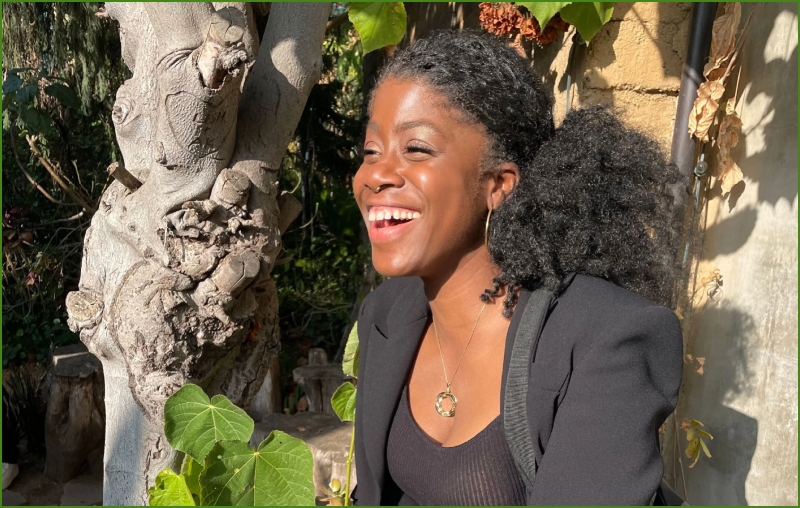
Kenya N. Robinson’s path to a master’s degree from Yale School of Art looks nothing like the traditional academic ladder. In fact, she climbed it without the single credential almost everyone else considers mandatory: a bachelor’s degree.
Her story — full of grit, talent, reinvention, and defiance of expectation — has resurfaced thanks to a viral video celebrating her unconventional rise. But the full picture is even richer: a life shaped by curiosity, creativity, and a refusal to accept the limits others tried to place on her.
From Dean’s List to Dropout — and Another Beginning
Robinson began her college years conventionally. She studied anthropology, served as a school ambassador, was repeatedly named to the Dean’s List, and pledged Alpha Kappa Alpha. Then she veered off course.
One semester, she dropped out.
No clear plan. No guaranteed future. Just instinct — and a ticket to Los Angeles.
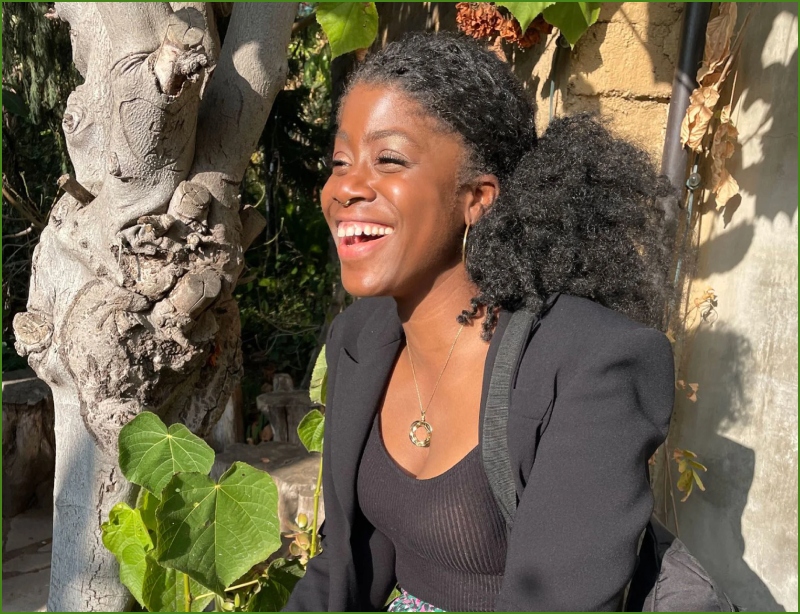
Fashion, Modeling, Sculpture… and the Smithsonian
In LA, Robinson enrolled in fashion design school and walked runways at LA Fashion Week. When her ambitions shifted again, she moved to Brooklyn to pursue sculpture. That decision carried her work into the Smithsonian and later the New York Times, which profiled her performance art.
Her creative résumé became so substantial that it eventually became her academic credential.
A Long Shot Application — and a Yes From Yale
When her mother fell ill, Robinson decided she wanted the stability of teaching. An MFA would make that possible. Yale — arguably the most competitive art program in the country — became her target.
But she had no bachelor’s degree. Still, she applied. She submitted her life’s work as her academic record. Yale accepted her.
The university saw what traditional metrics couldn’t: mastery gained through experience, experimentation, and relentless drive.
Loss and Triumph
Before Robinson could complete her program, her mother passed away. The grief marked her first year in New Haven, but she pressed on. Her father was with her the day Yale confirmed the degree she had earned — an MFA in Sculpture.
Today, she continues to produce art, teach, and challenge assumptions about who belongs in elite creative spaces.
A Voice Rooted in Personal and Cultural Truths
In a 2013 Bomb Magazine interview, Robinson spoke candidly about identity, privilege, and the unusual path that shaped her career. Growing up in Gainesville, Florida — a place where culture, academia, and Southern conservatism collide — gave her a lifelong sense of contradiction and curiosity.
Her work often probes race, class, consumerism, and the invisible rules of American culture. And her time at Yale deepened that inquiry, especially as she found herself navigating “male, white, Western privilege” — not as an outsider seeking permission, but as an artist asserting her agency.
“I know how to operate in the world,” she said. “And both perspectives are valid.”
The Lesson in Her Journey
Looking back, Robinson does not regret dropping out. The twist in her path became the most interesting part of her story — and a reminder that life’s detours can be the real education.
“There is no wrong path,” she says in the viral video. “Just keep walking.”
Her story lands at a moment when many Americans are rethinking the rigid structures of higher education, questioning long-held assumptions about credentials, affordability, and access. Kenya Robinson’s life is proof that talent can outpace résumé lines — and that sometimes institutions recognize it.
A Reminder for Anyone Feeling Off Track
Robinson’s success wasn’t linear. It wasn’t tidy. But it was hers — and she walked it with boldness.
In a country where the cost of higher education can discourage even the most determined students, Kenya N. Robinson offers a counter-story: you don’t have to start the “right” way to end up exactly where you’re meant to be.
Her journey is more than inspirational. It’s instructive.
It challenges the idea that there is one correct path toward achievement.
And it reminds us that sometimes the most powerful degree is belief in one’s own potential.