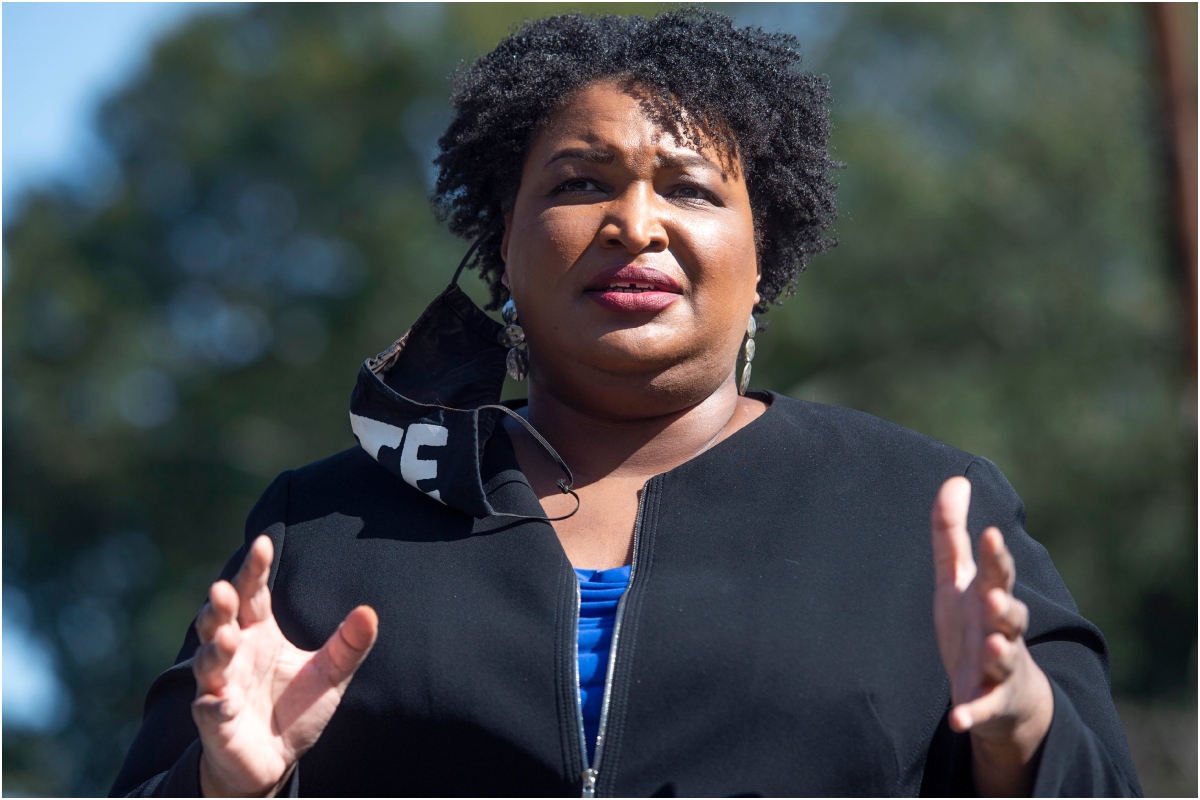
Stacey Abrams has entered the political crossfire following the Senate’s controversial vote to end the Republican-led government shutdown.
The vote has fractured Democrats and reignited a bitter intraparty feud over courage, leadership, and the direction of the party.
In a sharply worded video shared by Crooked Media, the former Georgia gubernatorial candidate accused eight Democratic senators of “performative pragmatism” after they joined Republicans to invoke cloture — effectively moving toward ending the shutdown without securing an extension of Affordable Care Act (ACA) subsidies.
“These are not regular times,” Abrams said. “America is undergoing an authoritarian overthrow. This is a battle between the type of government we have — a democracy that responds to the people — and the one they want: a tyrannical consolidation of power.”
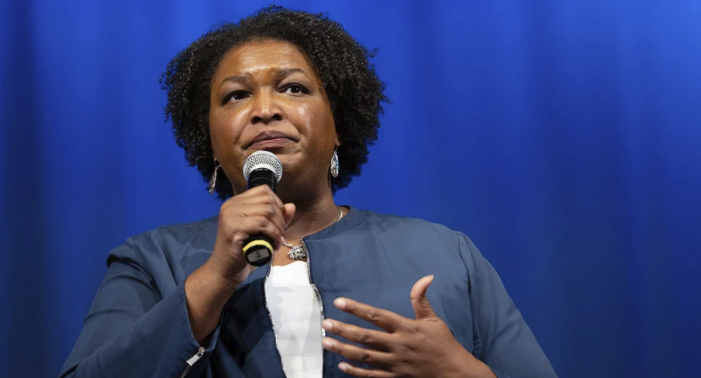
The agreement, which passed a key procedural hurdle Sunday, Nov. 9, 2025, by a 60–40 vote, allowed federal agencies to reopen but left millions of Americans facing potential health insurance premium hikes if ACA tax credits expire next year.
Progressive activists called the deal a surrender, accusing Democratic leadership of lacking the resolve to confront Republican brinkmanship.
Progressives Turn Their Fire Inward
The decision to back down on ACA subsidies has thrown the Democratic Party into turmoil. Progressive groups — already frustrated by what they see as a timid establishment — say this vote could define the next election cycle.
Rep. Ro Khanna (D-Calif.), who has been openly mulling a presidential run, said the party needs “new faces with bold ideas.” Liberal advocacy networks like Indivisible, Our Revolution, and the Progressive Change Campaign Committee called on Senate Majority Leader Chuck Schumer to resign.
“The legacy of Chuck Schumer is caving, not winning,” said Adam Green, co-founder of the Progressive Change Campaign Committee.
Others were more blunt. A senior House Democratic staffer texted NBC News from church, saying they were “praying for forgiveness for the thoughts I’m having about Senate Dems.”
Even Sen. Chris Murphy (D-Conn.), typically measured, voiced frustration:
“The people were on our side. We were building momentum. We could have won. Giving in now will embolden [Trump].”
Abrams: This Is About Power
In her message, Abrams positioned the shutdown fight as a test of moral and political will. She accused Republicans of being willing to “starve children, the elderly, and the disabled” to fund billionaire tax breaks — and warned Democrats against normalizing such cruelty through compromise.
“Yesterday’s decision tells the GOP that if they are mean enough, cruel enough, and patient enough, we will give up,” she said. “This isn’t about politics. This is about power.”
Abrams urged Americans to turn frustration into action by flooding social media with their health insurance cost increases using the hashtag #JustFixIt, and tagging members of Congress to pressure them into renewing ACA tax credits.
Her message echoed the populist energy of her earlier campaigns, but with a darker edge — framing the moment as a democratic crisis rather than just a policy dispute.
Inside the Democratic Divide
The eight Democrats who voted with Republicans — Sens. Jeanne Shaheen and Maggie Hassan of New Hampshire; Catherine Cortez Masto and Jacky Rosen of Nevada; Dick Durbin of Illinois; John Fetterman of Pennsylvania; Tim Kaine of Virginia; and Angus King of Maine (an independent who caucuses with Democrats) — defended the move as pragmatic.
King called it “a victory” that keeps the door open for a December vote on ACA subsidies.
“As of this morning, our chances were zero,” he said. “As of tonight, maybe 50%.”
But to progressives, that optimism rings hollow. The fear is that the Democratic brand — already tarnished among working-class voters — risks collapsing under the weight of its own caution.
A Party at a Crossroads
House Minority Leader Hakeem Jeffries tried to contain the fallout, praising most Democrats for waging “a valiant fight,” while deflecting questions about the eight who broke ranks.
Still, the calls for accountability are growing louder. Sherrod Brown, the former Ohio senator seeking a comeback in 2026, denounced the deal as “a bad one for Ohioans.”
Meanwhile, Abrams’ speech has become a rallying cry across social platforms. Her call to “fight where our leaders will not” encapsulates a mood of disillusionment — but also defiance — among Democratic voters who believe the party’s moral compass has drifted.
As one progressive strategist put it on X: “The base isn’t just angry. They’re heartbroken. But heartbreak can be a powerful organizing tool.”
This showdown underscores a deepening identity crisis within the Democratic Party — torn between pragmatism and principle, governing and resisting. Abrams’ fiery rhetoric may resonate with a frustrated base, but it also highlights the leadership vacuum haunting the party’s upper ranks.
If Democrats can’t reconcile their internal fractures, Republicans may not need to win the next fight — the Democrats could simply lose it on their own.